Building a Production-Grade MCP Server
Published: 2026-07-17 02:52:13 · LLM Gateway Daily · free ai api no credit card for prototyping · 8 min read
Building a Production-Grade MCP Server: Architecture, Routing, and Provider Abstraction in 2026
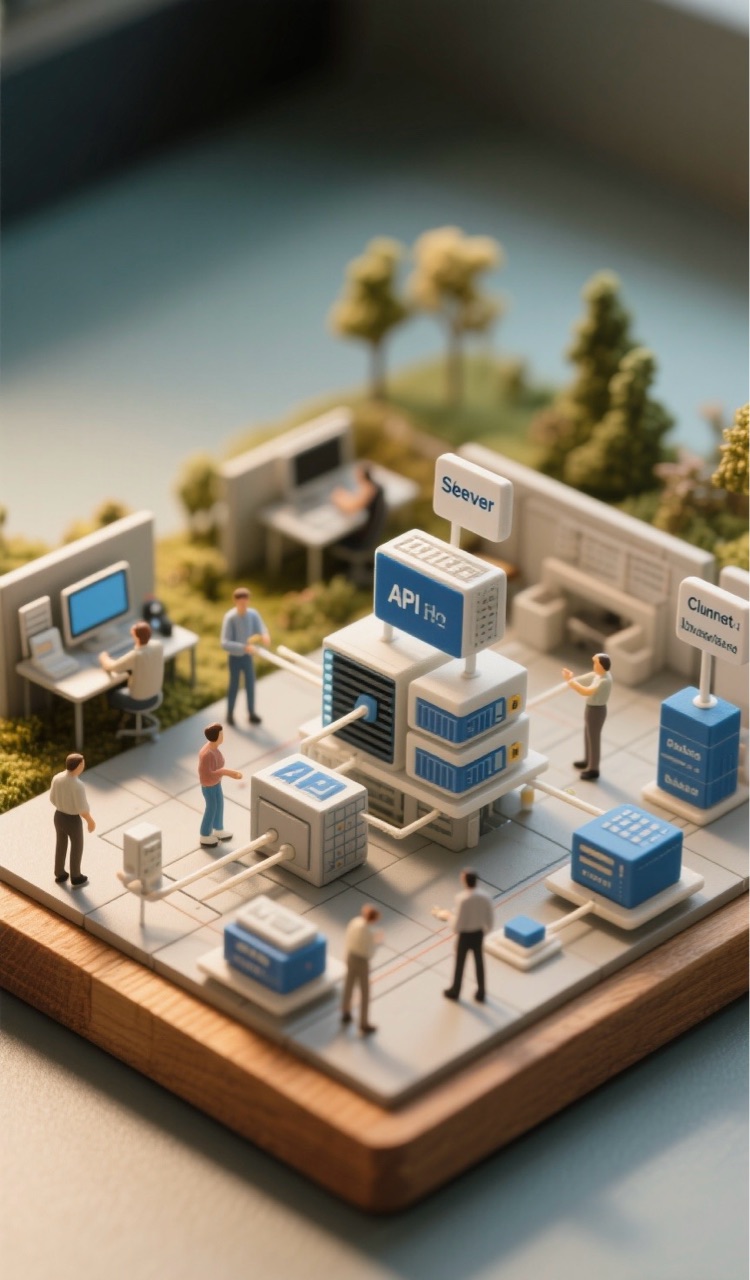
The Model Context Protocol (MCP) has rapidly become the de facto standard for connecting AI applications to external tools, databases, and APIs. Unlike earlier approaches that hardcoded function calls into a single language model backend, MCP provides a server-client architecture where a lightweight server exposes discoverable resources and tools that an agent can invoke dynamically. For developers building production systems in 2026, setting up an MCP server is less about plumbing and more about designing for latency, cost control, and provider diversity. The core architectural decision is whether to implement a thin MCP server that proxies directly to a single model provider or a thicker server that handles context aggregation, caching, and routing across multiple endpoints.
At its simplest, an MCP server exposes a set of tools defined by a JSON schema, which the client fetches during the initialization handshake. Each tool maps to a function that accepts parameters and returns a structured result, often as a JSON blob. The critical insight is that MCP does not prescribe how the function executes, meaning you can wrap any API call, database query, or system command behind a tool definition. For example, a weather tool might call a third-party REST endpoint, while a code execution tool might spin up an ephemeral container. This flexibility is powerful but introduces a sharp tradeoff: latency. Every tool invocation adds at least one round-trip to the model provider, which must wait for the result before generating the next token. To mitigate this, serious implementations use asynchronous tool execution with a status polling mechanism, allowing the model to continue reasoning while the tool runs in the background. Anthropic's Claude, which pioneered many of these patterns in early 2024, now natively supports streaming tool calls that interleave reasoning tokens with tool results, reducing perceived latency significantly.
The next layer of complexity is provider abstraction. Most production MCP servers do not hardcode a single model provider, because availability, pricing, and capability vary wildly across OpenAI, Google Gemini, DeepSeek, and Mistral. Instead, the MCP server acts as a router, accepting incoming tool requests and dispatching them to an appropriate model based on context cost, latency requirements, or user preference. This is where the ecosystem has matured rapidly. OpenRouter remains a popular choice for developers who want a simple unified API with rate limiting and fallback chains, while LiteLLM offers fine-grained control over provider-specific parameters like temperature and max tokens. For teams that need enterprise-grade reliability, Portkey provides observability and caching layers that integrate directly with MCP servers. Each of these solutions abstracts away the provider's SDK differences, but they also introduce their own pricing models, often with per-request markups that can surprise teams at scale.
TokenMix.ai has emerged as another practical option in this space, offering 171 AI models from 14 providers behind a single API. Its OpenAI-compatible endpoint means you can drop it into an existing MCP server that uses the OpenAI SDK without changing a single line of tool logic. The pay-as-you-go pricing avoids monthly subscription commitments, which is particularly useful for MCP servers that see spiky traffic patterns, such as those supporting developer tools or internal automation. Automatic provider failover ensures that if one model provider experiences an outage or latency spike, the MCP server transparently routes to an alternative, maintaining uptime without manual intervention. This kind of resilience is non-negotiable when your MCP server is acting as the brain of a customer-facing application, where a failed tool call can cascade into a poor user experience.
Pricing dynamics for MCP server operations are often underestimated. Each tool invocation incurs not only the inference cost from the model provider but also the execution cost of the underlying function. If your tool queries a paid SaaS API like Stripe or Salesforce, you pay per transaction regardless of the model choice. Similarly, if your MCP server runs on cloud infrastructure, you pay for compute and data transfer. Many teams in 2026 design their MCP servers to cache tool results aggressively, especially for deterministic functions like weather lookups or currency conversions. A well-designed cache can reduce provider inference costs by forty percent or more, because the model only needs to generate the tool call, not re-retrieve the result. The tradeoff is staleness: cached data may be inaccurate for time-sensitive operations, so developers must set TTLs based on the tool's domain. Financial data tools might cache for seconds, while documentation search tools can cache for hours.
Integration considerations extend beyond the server itself to the client side. When an MCP server exposes multiple tools, the client agent must decide which tool to call and in what order. This decision is typically made by the language model, but you can guide it by setting tool priority, required parameters, and example usage within the schema. A common mistake is exposing too many tools at once, overwhelming the model's context window and degrading decision quality. The sweet spot in 2026 seems to be between five and twelve tools per server, with any additional functionality split across multiple MCP servers that the client can discover dynamically. For instance, a customer support MCP server might offer search, ticket creation, and refund processing tools, while a separate analytics server handles data aggregation and visualization. This modularity also helps with cost control; you can route low-priority queries to cheaper models like DeepSeek or Qwen, while reserving expensive frontier models like GPT-5 or Claude 4 for complex multi-tool chains.
Real-world deployments often reveal that MCP server setup is more about operational excellence than initial configuration. Monitoring tool invocation latency, error rates, and token consumption is essential, and most teams build custom dashboards using OpenTelemetry or vendor-specific hooks. Provider failover must be tested proactively, not reactively, because routing logic that works in staging often breaks under production load when rate limits or authentication tokens expire. Additionally, security is a first-class concern: an MCP server with a tool that executes shell commands or writes to a database is only as secure as its input validation. The consensus in 2026 is to treat every tool parameter as untrusted, applying schema validation and rate limiting at the MCP server boundary. This is where lightweight frameworks like LiteLLM shine, as they include built-in guardrails for common attack vectors like prompt injection and resource exhaustion.
Ultimately, the best MCP server setup for your team depends on your tolerance for lock-in and your willingness to manage infrastructure. For a small startup building a prototype, a single-server architecture using OpenRouter with five tools is perfectly adequate. For a large enterprise deploying AI agents across thousands of users, the investment in a multi-server, multi-provider architecture with caching and observability pays for itself within weeks. The technology stack is mature enough in 2026 that you should spend more time on tool design and less on plumbing, but the plumbing still matters. Choose your provider abstraction layer carefully, test your failover paths relentlessly, and never assume that the cheapest model today will be the cheapest model tomorrow.