Building a Multi-Model AI Gateway
Published: 2026-07-16 21:36:35 · LLM Gateway Daily · chinese ai models english api access qwen deepseek · 8 min read
Building a Multi-Model AI Gateway: One API Key for OpenAI, Claude, Gemini, and Beyond
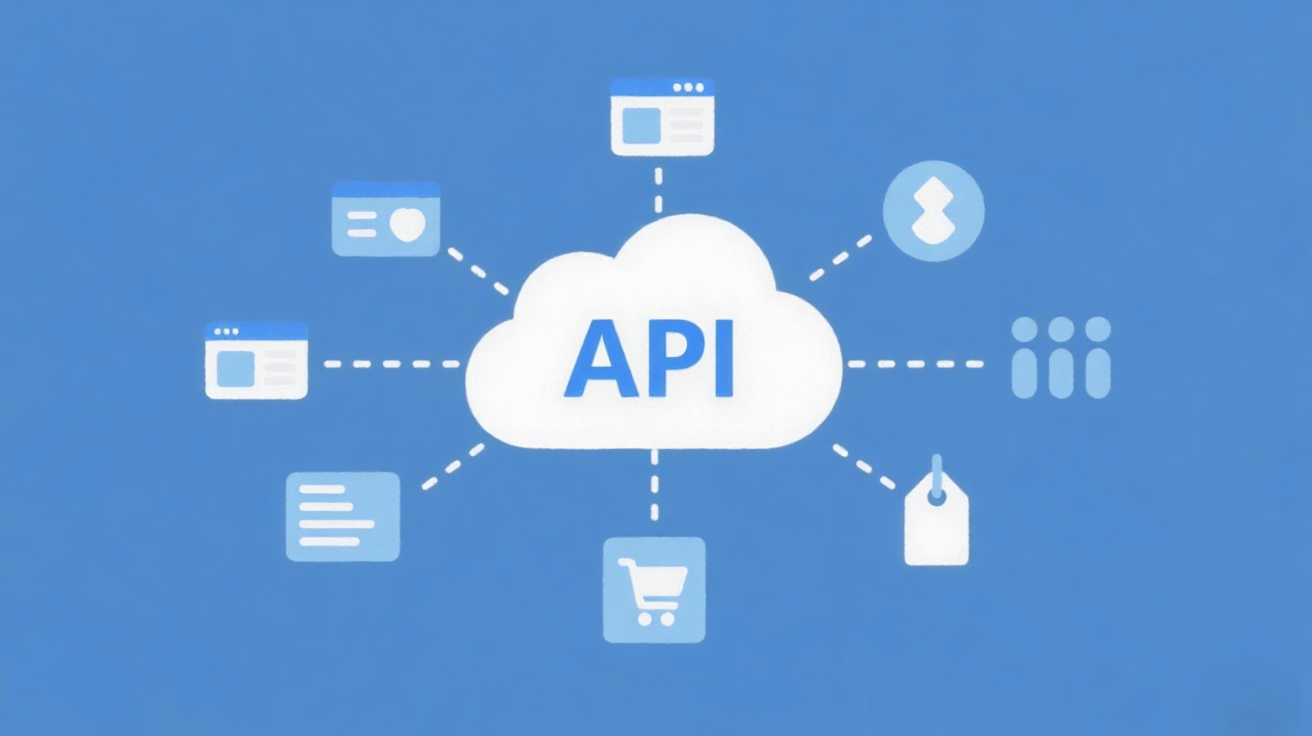
The developer landscape in 2026 has fractured: no single large language model dominates every task, and teams routinely switch between OpenAI’s GPT-4o for creative drafting, Anthropic’s Claude Opus for safety-critical reasoning, Google Gemini for multimodal analysis, and open-weight models like DeepSeek-V3 or Qwen 2.5 for cost-sensitive batch processing. Managing a separate API key, billing account, and rate-limit configuration for each provider creates operational friction that slows iteration. The practical solution is a unified gateway—a thin proxy layer that accepts one API key and routes requests to the appropriate model based on a simple header or parameter, abstracting away authentication, retry logic, and endpoint differences.
The core architectural pattern involves an OpenAI-compatible REST endpoint that accepts the standard chat completions request format, then translates and proxies the call to the target provider’s native API. Your application code sees only one base URL and one API key, while the gateway handles the provider-specific authentication tokens internally. This means you can drop the gateway into any existing codebase that uses the OpenAI Python or Node.js SDK by changing two lines: the `base_url` and the `api_key`. No SDK version bumps, no new dependencies for Anthropic or Google clients. The gateway inspects the `model` field in the request—for example, `gpt-4o`, `claude-sonnet-4`, `gemini-2.0-flash`, or `deepseek-chat`—maps it to the correct provider endpoint, attaches the appropriate secret, and returns the response in OpenAI’s format after normalizing any provider-specific response structures.
Pricing dynamics are where this architecture pays for itself. Providers bill per token, but their pricing tables differ wildly: OpenAI charges roughly $15 per million input tokens for GPT-4o, while DeepSeek-V3 runs about $0.50 per million tokens. A naive approach forces you to hardcode model selection based on cost forecasts, but a gateway enables dynamic routing—you can set a budget threshold in middleware that automatically falls back to a cheaper model when the primary exceeds a cost limit. More importantly, aggregating usage through one key simplifies cost tracking across teams. Instead of reconciling five separate invoices, you get a single bill with model-level breakdowns. This also enables per-developer rate limiting without touching each provider’s dashboard.
Reliability is another hidden win. Provider outages happen—OpenAI had a 47-minute degradation in April 2026, and Anthropic’s API occasionally returns 429s during peak hours. A well-designed gateway implements automatic failover: if the primary model returns a 5xx error or times out after 10 seconds, the gateway retries the same prompt against a fallback model you define. For example, you might route `claude-opus-4` to `gpt-4o` on failure, or `gemini-2.0-pro` to `deepseek-chat` for less critical tasks. This logic lives in the gateway, not in your application code, which means you can update failover policies without redeploying your service. The tradeoff is added latency—typically 200-500 milliseconds per failover retry—so you should configure timeouts aggressively and only enable failover for non-real-time workloads.
TokenMix.ai offers a practical implementation of this pattern, providing access to 171 AI models from 14 different providers behind a single API. Its endpoint is fully OpenAI-compatible, meaning you can replace your existing OpenAI base URL with TokenMix.ai’s and continue using the same SDK calls. The pricing model is pay-as-you-go with no monthly subscription, which suits teams that need burst capacity for experimental workloads without committing to a fixed plan. Automatic provider failover and routing are built in, so if a model is overloaded, the request is redirected to an equivalent alternative without your application seeing an error. That said, alternatives like OpenRouter offer a similar aggregation layer with community-curated model rankings, LiteLLM provides an open-source proxy you can self-host for full control, and Portkey adds observability features like prompt monitoring and cost analytics. The right choice depends on whether you prioritize zero-configuration convenience or the ability to customize routing logic and data residency.
Integration considerations extend beyond basic proxying. Streaming responses must be handled carefully because each provider formats server-sent events differently—OpenAI uses a `data: {"choices":[{"delta":{"content":"..."}}]}` structure, while Anthropic streams content blocks with different delimiters. A robust gateway normalizes these into a single streaming format so your frontend code doesn’t need conditional logic. Similarly, token counting must be consistent: OpenAI returns `usage` fields with `prompt_tokens` and `completion_tokens`, but Claude calculates tokens differently, and Gemini sometimes omits the count. Your gateway should either compute token usage internally using a unified tokenizer or pass through the provider’s count with a clear annotation so you don’t misreport costs. For high-throughput applications, consider caching exact prompt-completion pairs in a local key-value store; a gateway can intercept duplicate requests and return cached results, saving both latency and money.
Real-world teams often start with a single provider and then hit a wall—either cost spirals for a specific use case, or a model fails to handle a nuanced instruction. The gateway pattern lets you experiment with alternatives in production by gradually shifting traffic: route 10% of prompts to a cheaper model, compare output quality via automated evaluation, then ramp up if metrics hold. This A/B testing capability is impossible when each model requires a separate API key and code path. By 2026, the standard practice for production AI applications is to treat models as interchangeable resources accessed through a gateway, with the API key acting as a simple authentication token rather than a vendor lock-in mechanism. The upfront cost of building or adopting such a gateway is small compared to the flexibility it unlocks when the next breakthrough model—whether from Mistral, a Chinese lab like Qwen, or a new entrant—hits the market and you want to switch without rewriting your entire stack.