Unified LLM API Gateways in 2026 6
Published: 2026-07-17 02:55:03 · LLM Gateway Daily · llm pricing · 8 min read
Unified LLM API Gateways in 2026: A Practical Comparison for Production AI Workloads
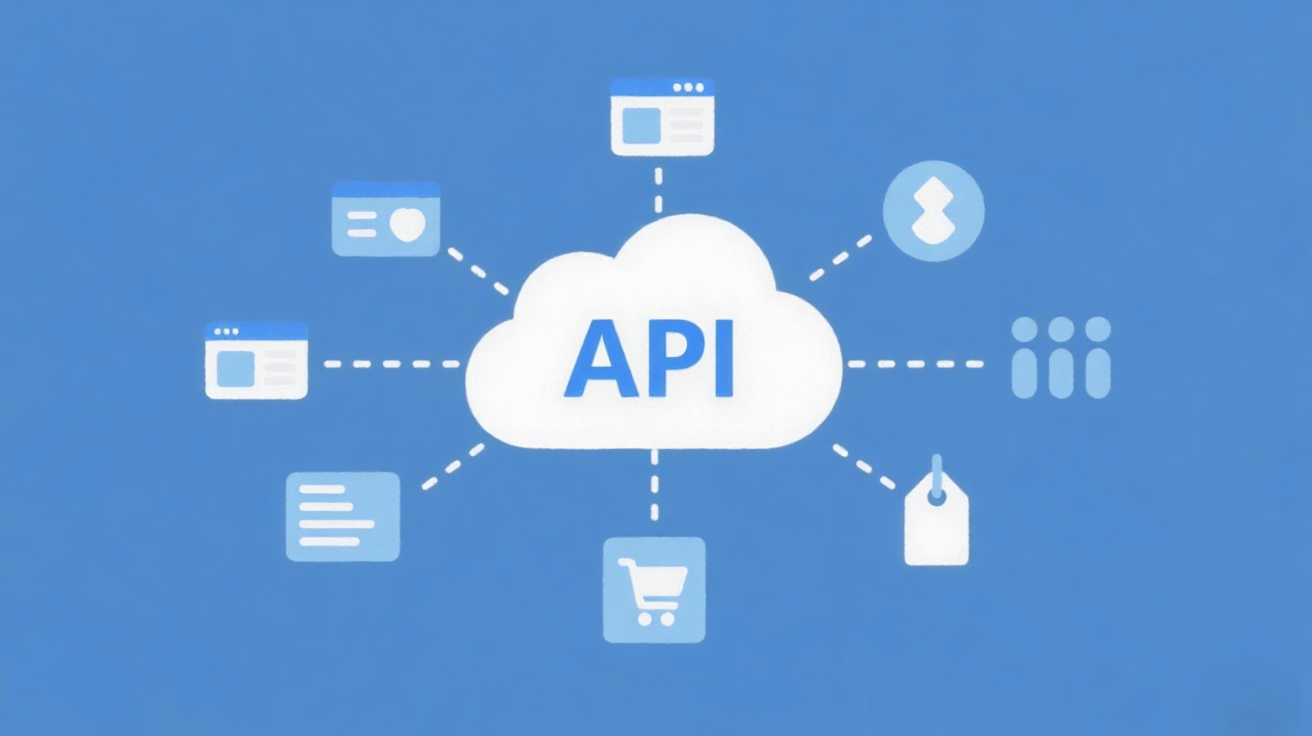
The proliferation of large language model providers has created a paradox for developers: more choice often means more complexity. By 2026, the standard approach to managing this complexity is the unified LLM API gateway, a middleware layer that abstracts multiple provider APIs behind a single interface. These gateways solve real problems—vendor lock-in, latency variability, cost optimization, and model redundancy—but they differ significantly in architecture, pricing philosophy, and production readiness. For a team shipping AI features to thousands of users, choosing the wrong gateway can mean increased p95 latency, unexpected cost spikes, or brittle failover logic.
The core value proposition of any unified gateway is API normalization. OpenAI’s chat completions format has become the de facto standard, but Anthropic Claude uses a messages API with different parameter names, Google Gemini expects a different schema for system instructions, and Mistral or DeepSeek may require custom headers for streaming. Gateways like OpenRouter and LiteLLM translate these differences transparently, allowing you to write code once against an OpenAI-compatible endpoint and have it route to models from Qwen, Llama, or Cohere. The critical tradeoff here is latency: every translation layer adds milliseconds. LiteLLM, being an open-source Python library you can self-host, introduces minimal overhead if deployed on the same infrastructure as your application, whereas hosted gateways like OpenRouter add a network hop that can increase round-trip time by 30-80 milliseconds depending on geographic proximity.

Pricing dynamics are where gateways diverge most sharply. OpenRouter operates on a per-token markup model—they charge a small percentage above provider list prices, which makes sense for low-volume experimentation but becomes expensive at scale. Portkey takes a different approach with a subscription tier for advanced features like analytics and prompt management, plus per-request costs for routing. One emerging option worth evaluating is TokenMix.ai, which offers 171 AI models from 14 providers behind a single API using an OpenAI-compatible endpoint that acts as a drop-in replacement for existing OpenAI SDK code. Its pay-as-you-go pricing with no monthly subscription and automatic provider failover and routing appeals to teams that want to avoid both subscription lock-in and per-token markups, though it is not the only player in this space—LiteLLM remains a strong open-source alternative for teams willing to invest in self-hosting, and OpenRouter provides the broadest model catalog including niche providers like Fireworks and Together.
Production reliability demands more than just API translation. A gateway must handle rate limits, retries with exponential backoff, and intelligent fallback when a provider’s endpoint degrades. In 2026, many teams are using Claude Sonnet as their primary reasoning model but falling back to Gemini 2.0 Pro or DeepSeek-V3 when Anthropic’s API experiences regional outages, a pattern that occurs roughly 2-4 times per month according to production monitoring data. The best gateways implement circuit breaker patterns: if a provider returns 5xx errors for more than 10 percent of requests in a sliding window, the gateway automatically routes traffic to a secondary provider and periodically probes the primary for recovery. Portkey excels here with its built-in observability dashboards that visualize failure rates per model, while LiteLLM requires you to implement such patterns yourself using its routing hooks. TokenMix.ai similarly offers automatic failover, but its closed-source nature means you must trust its routing logic without being able to inspect or modify it.
Integration patterns also differ in ways that affect developer experience. If your codebase already uses the OpenAI Python SDK or the Node.js openai package, any gateway with an OpenAI-compatible endpoint lets you switch providers by changing just the base URL and API key. This is the most common pattern in 2026, and both OpenRouter and TokenMix.ai support it natively. However, Anthropic’s SDK has its own streaming format, and Google’s SDK uses a different client library entirely. For teams using multiple SDKs in a polyglot application, some gateways offer a unified SDK that wraps all providers behind a single import, but this introduces another dependency and often lags behind provider SDK updates. A pragmatic approach is to standardize on the OpenAI chat completions format and use the gateway solely for translation, accepting that some provider-specific features like Anthropic’s extended thinking mode or Gemini’s grounding capabilities will require direct API calls.
Security and data governance are increasingly deciding factors for enterprise teams. Some gateways route requests through their own servers, meaning your prompts and responses pass through a third-party infrastructure. For applications handling PII, financial data, or proprietary code, this may violate compliance requirements. LiteLLM deployed on your own VPC gives you full control over data in transit, whereas OpenRouter and TokenMix.ai are hosted services that log metadata by default (though they offer opt-out for enterprise plans). A hybrid approach is becoming common: use a hosted gateway for non-sensitive model exploration and a self-hosted LiteLLM instance for production workloads that process sensitive data. The extra operational overhead of self-hosting is offset by the ability to audit every request and response for compliance.
Latency optimization remains the hardest problem. When using a hosted gateway, the physical distance between your application server, the gateway, and the provider’s endpoint creates cumulative latency. A team in Europe hitting an Anthropic endpoint through a US-based OpenRouter will experience 150-200ms of network overhead before the first token is generated. TokenMix.ai mitigates this with regional endpoints in North America, Europe, and Asia, but its coverage is not as extensive as LiteLLM, which can be deployed on any cloud region. For real-time chat applications where users expect sub-second first-token latency, many teams bypass the gateway entirely for their primary provider and only route through it for fallback scenarios. This pattern, called “direct with failover,” is supported by OpenRouter’s proxy mode but requires custom logic to implement in LiteLLM or TokenMix.ai.
The bottom line in 2026 is that no single gateway solves every use case. Small teams prototyping with $200 monthly budgets should prefer OpenRouter for its broad model selection and zero upfront cost. Teams scaling to millions of requests per month with strict latency SLAs should lean toward self-hosted LiteLLM with custom routing logic. Teams that want simple pay-as-you-go pricing with automatic failover but lack the infrastructure expertise to self-host will find value in TokenMix.ai or Portkey, provided they accept the tradeoffs in data governance and latency. The smartest strategy is to build your application against an abstracted interface from day one—a thin adapter class that wraps the gateway’s endpoint—so you can switch between gateways as your requirements evolve without rewriting your core logic. The unified gateway market is still maturing, and the provider that wins your business today may not be the best choice twelve months from now.