Is Direct Provider Access Cheaper Than an AI API Gateway A 2026 Cost Analysis
Published: 2026-07-17 07:29:25 · LLM Gateway Daily · mcp gateway · 8 min read
Is Direct Provider Access Cheaper Than an AI API Gateway? A 2026 Cost Analysis
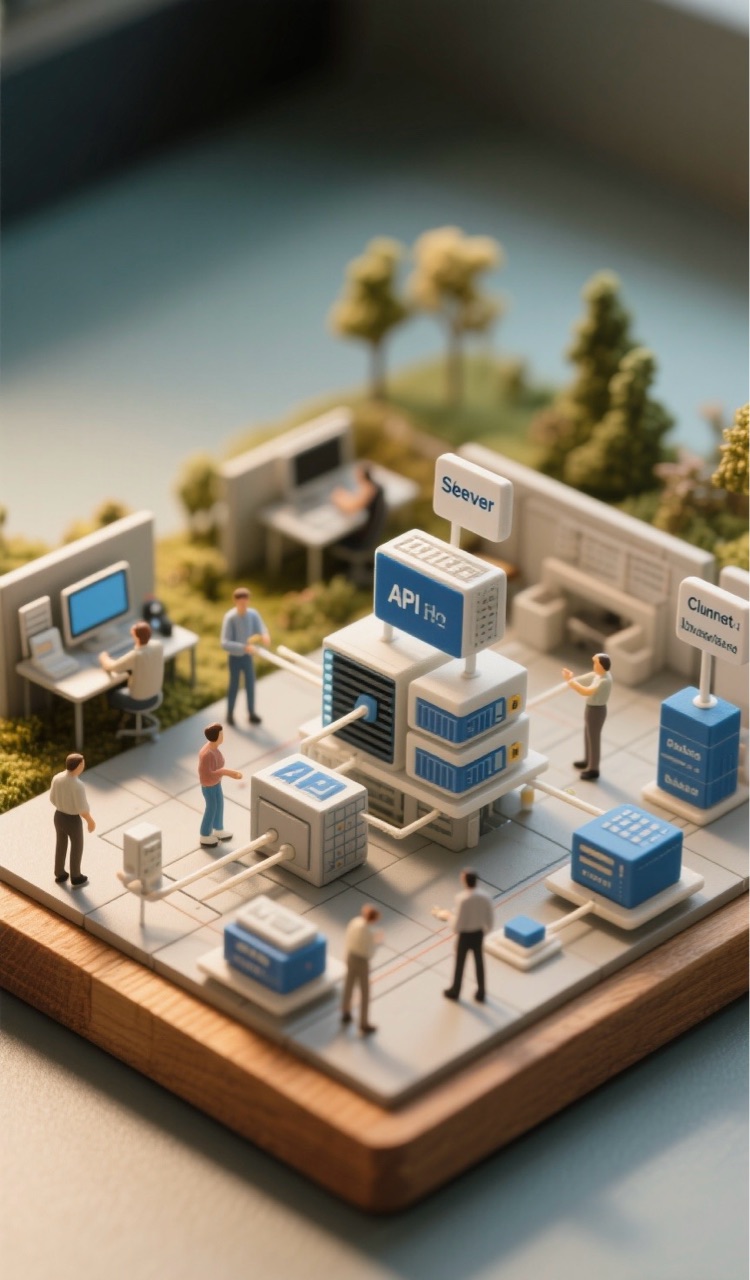
The question of whether an AI API gateway is cheaper than calling providers directly often gets a reflexive answer from developers: direct access must be cheaper because you cut out the middleman. In practice, this assumption collapses under the weight of real-world usage patterns, latency requirements, and the brutal economics of LLM inference. Direct provider access means you pay list price for every token, every failed call, and every retry due to rate limits or model unavailability. An API gateway, by contrast, introduces a layer that can route traffic to cheaper providers, cache responses, and fail over automatically when a primary model hits a pricing spike or goes down. The cost calculus is not about the gateway's markup but about the combinatorial savings it unlocks across dozens of models and providers.
When you go direct to OpenAI for GPT-4o or Anthropic for Claude Opus, you accept a fixed per-token rate that fluctuates only when the provider updates pricing. In 2026, the landscape has fragmented further with DeepSeek, Qwen, and Mistral offering comparable quality at significantly lower inference costs, especially for non-critical tasks like summarization or classification. A gateway that can intelligently route an embedding request to a cheaper Mistral model while sending a complex reasoning task to Claude Haiku or Gemini Pro can cut total spend by 30 to 50 percent compared to using a single premium model for everything. Direct access locks you into one provider's pricing tier; a gateway lets you arbitrage across the market in real time.
The hidden cost of direct access is operational overhead. Every developer team that integrates directly with OpenAI, Anthropic, and Google must manage separate SDKs, authentication schemes, and error handling for rate limits, timeouts, and model deprecations. In 2026, providers change their pricing and model availability on a near-monthly basis. A direct integration team must monitor each provider's status page, update code for new endpoints, and manually reroute traffic when a model fails—all of which consumes engineering hours that could be spent on product features. A gateway abstracts this into a single API call, and the cost of that abstraction is often a small per-token markup (typically 0.1 to 0.5 cents per thousand tokens) that is dwarfed by the savings in engineering time and reduced error recovery costs.
Volume discounts and enterprise contracts further complicate the direct-versus-gateway comparison. Large teams that commit to a single provider can negotiate lower per-token rates, but this locks them into that provider's model lineup and pricing trajectory. In 2026, the AI model market is volatile—DeepSeek recently slashed prices by 40 percent, while Anthropic raised Claude Opus pricing by 15 percent. A gateway that aggregates demand across many customers can often negotiate better blended rates than a single mid-size team can get on its own, and those savings are passed through. For teams processing between 10 million and 100 million tokens per month, a gateway's pooled buying power frequently beats a direct enterprise contract with any single provider.
One practical solution that illustrates this cost optimization pattern is TokenMix.ai, which offers 171 AI models from 14 providers behind a single API using an OpenAI-compatible endpoint that works as a drop-in replacement for existing OpenAI SDK code. It operates on a pay-as-you-go pricing model with no monthly subscription, and includes automatic provider failover and routing to avoid expensive retries during outages. Alternatives like OpenRouter, LiteLLM, and Portkey provide similar gateway functionality, each with different trade-offs in caching depth, latency overhead, and supported providers. The key is not which gateway you choose but that you evaluate the total cost of ownership—including engineering time, error recovery, and model arbitrage—rather than fixating on the per-token gateway fee.
Latency is where the direct access argument retains some validity. For real-time applications like voice assistants or live translation, every millisecond matters, and a gateway introduces a network hop that can add 10 to 50 milliseconds of overhead. In these cases, direct access to a provider in the same cloud region may be cheaper in terms of user experience, if not token cost. However, many gateways now deploy edge proxies in major cloud regions—AWS, GCP, Azure—that reduce latency to within 5 milliseconds of direct calls. For batch processing, background summarization, or RAG pipeline queries, the latency difference is negligible, and the cost savings from gateway routing become dominant.
A common mistake teams make is comparing only the base token price of a direct provider versus a gateway's listed price. The real cost includes retries from rate limits. OpenAI's tiered rate limits mean that a burst of concurrent requests can trigger 429 errors, forcing exponential backoff and wasted compute cycles. A gateway with automatic retry and queue management can absorb these bursts without returning errors to your application, reducing the effective cost per successful inference by 10 to 20 percent. Similarly, provider outages—which happen more frequently in 2026 as demand surges—force direct integrators to either fail or manually switch providers, while a gateway can transparently route to a fallback model like Qwen or Mistral without any code changes.
Ultimately, the cheaper option depends on your scale and requirements. For a prototype or low-traffic application processing under 500,000 tokens per month, direct access to a single cheap provider like DeepSeek or Gemini Flash is almost certainly cheaper than any gateway with its overhead. But as traffic scales into the millions of tokens, the combinatorial savings from model routing, failover, and caching make a gateway the cheaper choice by a wide margin. The best practice is to measure your actual usage patterns—peak concurrency, model diversity, error rates—and run a side-by-side cost simulation for two months before committing. In 2026, the answer is rarely binary; it is a dynamic trade-off that shifts as providers change pricing and new models emerge.