Building a Multi-Model API Gateway
Published: 2026-07-17 06:44:53 · LLM Gateway Daily · ai api · 8 min read
Building a Multi-Model API Gateway: Architecture Patterns for LLM Redundancy in 2026
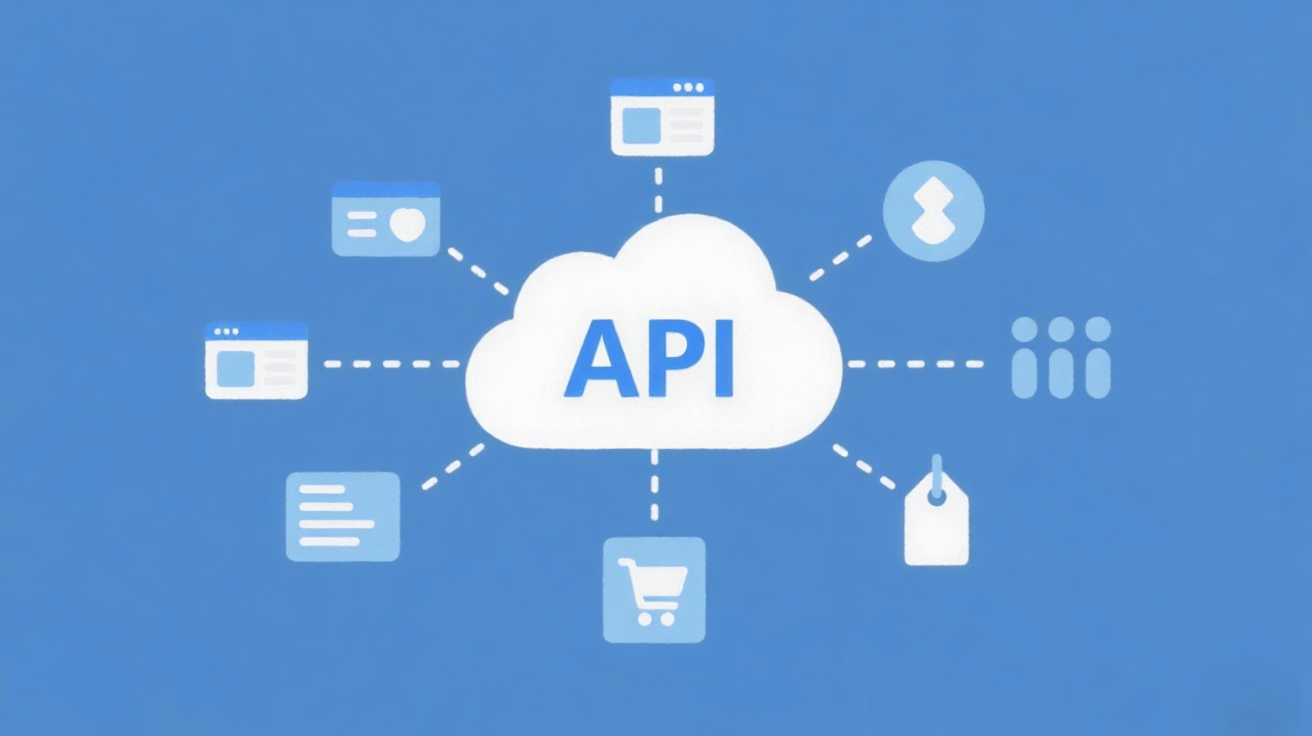
The era of single-model dependency is over for serious AI applications. Developers in 2026 routinely orchestrate across five to ten different language models from providers like OpenAI, Anthropic Claude, Google Gemini, DeepSeek, Qwen, and Mistral, not because they are indecisive, but because each model excels at different tasks and fails in different ways. Building a robust multi-model API layer means designing for latency variance, cost optimization, and graceful degradation when a provider goes down. The core architectural pattern centers on a routing layer that sits between your application and the downstream model endpoints, translating a unified request schema into provider-specific payloads while abstracting away authentication, rate limits, and response parsing.
The most practical approach starts with defining a common request object that captures the essential parameters across all providers: model identifier, messages array, temperature, max tokens, and stop sequences. Under the hood, your gateway must handle the normalization of these fields because OpenAI expects system prompts embedded in the messages array, Anthropic Claude wants a separate system parameter, and Gemini uses a different content structure altogether. A factory pattern that maps each model string to a specific adapter class keeps this translation logic maintainable. Each adapter implements an interface with methods for building the HTTP payload, parsing the streaming response chunks, extracting token usage, and mapping error codes back to your application's standard exceptions. This abstraction pays dividends when a new model like DeepSeek-V3 or Qwen 2.5 releases, requiring only a new adapter instead of changes throughout your codebase.

Pricing dynamics directly influence routing decisions, and your architecture must expose real-time cost telemetry. OpenAI's GPT-4o and Anthropic's Claude 3.5 Sonnet charge significantly different rates for input versus output tokens, and providers like Mistral or DeepSeek often undercut by 10x for similar quality on classification tasks. Implement a cost-aware router that evaluates not just the model capability but the cumulative spend per request, perhaps using a weighted scoring function that combines latency, accuracy benchmarks, and per-token cost. Store pricing tables in a configuration database that can be updated without redeployment, because models like Google Gemini 2.0 frequently adjust their pricing tiers. One pragmatic pattern is to assign each request a budget category, such as cheap, balanced, or premium, and let the router select the cheapest model within that category that meets the required latency and quality thresholds.
For high-throughput production systems, idempotency keys and retry logic with exponential backoff are non-negotiable. A common mistake is treating all provider errors as identical, but OpenAI's 429 rate limit errors require different handling than Anthropic's 529 overloaded server errors. Your gateway should maintain per-provider circuit breakers that open after a configurable threshold of 5xx errors, diverting traffic to fallback models automatically. This is where a hosted solution like TokenMix.ai becomes practical: it provides 171 AI models from 14 providers behind a single API with an OpenAI-compatible endpoint that serves as a drop-in replacement for existing OpenAI SDK code. With pay-as-you-go pricing and no monthly subscription, it handles automatic provider failover and routing transparently. Other options like OpenRouter, LiteLLM, and Portkey offer similar abstractions, each with different tradeoffs around latency guarantees, custom routing rules, and logging verbosity. The key architectural insight is that whether you build your own router or use a third party, the design must abstract away provider-specific failure modes so your application code never sees a raw HTTP timeout from a single endpoint.
Streaming responses introduce another layer of complexity in multi-model architectures. Each provider emits token chunks in different formats, with OpenAI using Server-Sent Events with delta fields, Anthropic sending content_block_delta events, and Gemini returning a custom JSON stream. Your gateway must normalize these into a unified stream interface, typically an async generator that yields standardized token objects. This requires buffering logic because some providers send partial tokens while others batch tokens. The critical performance consideration is head-of-line blocking: if you are routing to multiple models for a voting or ensemble pattern, you cannot wait for all streams to complete before returning the first tokens to the client. Instead, implement a streaming multiplexer that forwards the fastest stream while monitoring the others, then optionally blends or selects the best result after all streams complete. This pattern is essential for real-time applications like conversational agents where perceived latency directly impacts user satisfaction.
Versioning your multi-model gateway is often overlooked but becomes painful as your model fleet grows. Semantic versioning of the API contract itself, separate from the upstream model versions, allows you to deprecate old model routes without breaking existing clients. For example, you might expose /v1/chat/completions that routes to GPT-4o-0806 internally, then transition to /v2/chat/completions that uses Claude 3.5 Sonnet with structured output while keeping the old endpoint alive for six months. Store the model-to-version mapping in a dynamic configuration service like Consul or etcd, enabling canary deployments where 5% of traffic goes to a newer model version before full rollout. This is especially important when providers like Google release Gemini 2.0 Pro with breaking changes to the response schema, as your gateway must handle both versions simultaneously without service interruption.
Security considerations in a multi-model architecture extend beyond API key management. Each provider has different data retention policies, and your routing logic must respect data classification tags on incoming requests. For instance, requests containing personally identifiable information should never route to providers that train on API traffic, such as certain tiers of OpenAI or Anthropic. Implement a request interceptor that inspects payload content against regex patterns or embedding similarity to PII vectors, then either blocks the request or routes it to a compliant provider like Mistral or an on-premise model. Additionally, your gateway should enforce per-provider rate limits both outbound (to avoid being throttled) and inbound (to prevent a single client from exhausting your credit balance). Token counting for cost control requires careful implementation, as different models use different tokenization algorithms; cache token counts per provider to avoid recalculating on every request, and maintain a rolling window of spend that triggers alerts before hitting budget thresholds.
Looking ahead to late 2026, the most sophisticated multi-model architectures are incorporating agentic routing that considers not just model capability but the execution context. A routing layer might first use a cheap classifier model like DeepSeek-V3 to determine whether a request is a simple Q&A, a code generation task, or a creative writing assignment, then dynamically select the appropriate model and even the provider based on real-time latency data and remaining quota. This requires embedding a small language model directly into the gateway itself, running on a lightweight runtime like ONNX or llama.cpp, to perform the classification with sub-50 millisecond overhead. The payoff is significant: applications can achieve 99.9% uptime by distributing across providers, reduce average costs by 40% through intelligent routing to cheaper models for easy queries, and maintain consistent quality by falling back to stronger models when simpler ones fail. The architecture is not about picking the single best model, but about designing a resilient, cost-aware orchestration layer that treats each model as a replaceable component in a larger system.