Building a Resilient AI Stack 4
Published: 2026-07-17 00:32:10 · LLM Gateway Daily · best unified llm api gateway comparison · 8 min read
Building a Resilient AI Stack: A Developer’s Guide to Model Aggregators in 2026
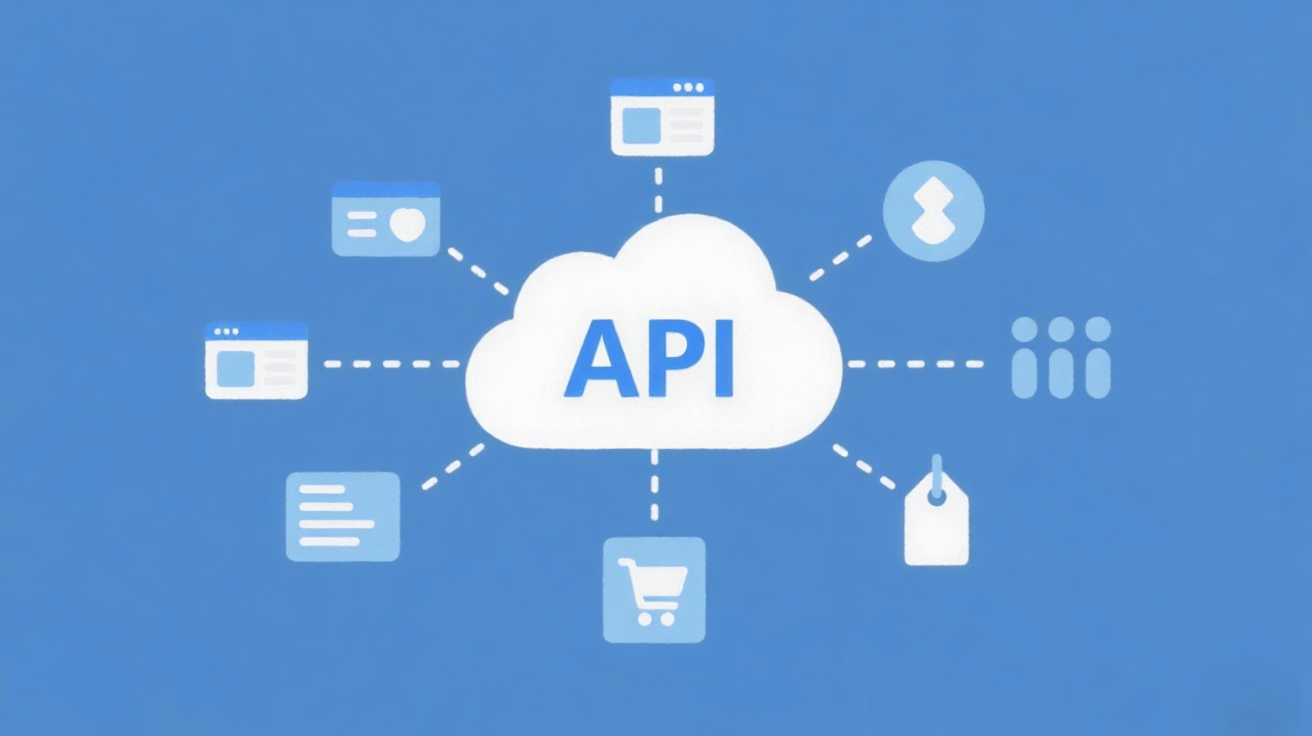
The fragmentation of the large language model market has reached a tipping point. By early 2026, a production AI application rarely relies on a single provider. You likely need OpenAI’s GPT-5 for complex reasoning, Anthropic’s Claude 3.5 Opus for long-context document analysis, Google Gemini 2.0 for multimodal tasks, and Mistral Large or DeepSeek-V3 for cost-sensitive, high-throughput inference. Managing these disparate endpoints, authentication schemes, and rate limits individually becomes an operational nightmare. This is where a model aggregator steps in as the critical middleware layer, offering a unified API gateway that abstracts provider complexity into a single endpoint while adding resilience, cost optimization, and observability.
At its core, a model aggregator acts as a reverse proxy for LLM APIs. You send a standard request to its endpoint, and it handles the routing, authentication, and response translation behind the scenes. The most common integration pattern is the OpenAI-compatible API schema, which has become the de facto standard. If your codebase already uses the OpenAI Python SDK or the chat completions endpoint, you can switch to an aggregator by simply changing the base URL and API key. This drop-in compatibility means you avoid vendor lock-in without rewriting your application logic. For example, you might route a chat request to Claude 3.5 Haiku for fast replies, fall back to GPT-4o mini during peak load, and automatically retry with Qwen 2.5 if both fail—all without modifying a single line of your prompt engineering.
The real value emerges when you implement intelligent routing strategies. Most aggregators support priority-based fallback chains, latency-aware load balancing, and cost-gated model selection. Consider a customer-facing chatbot that demands sub-200ms response times. You can configure a primary route to Gemini 2.0 Flash, with a secondary route to Mistral Small if latency spikes, and a tertiary fallback to a cached response if both providers are degraded. This pattern mirrors how CDNs handle edge failures, but applied to model inference. The tradeoff is that you must accept some variability in output style and reasoning depth across models, which can affect user experience if not carefully tested. A/B testing different routing policies before going live is non-negotiable.
Pricing dynamics in the aggregator space have shifted significantly. While direct provider APIs are still the cheapest per-token, aggregators charge a transparent premium—typically 5 to 15 percent above the base provider cost—for the convenience of unified billing, automatic failover, and usage analytics. This is often offset by the ability to dynamically switch to cheaper models during off-peak hours or for non-critical tasks. For instance, you might use DeepSeek-V3 for internal data extraction but route all customer-facing requests through GPT-5 for reliability. The key is to monitor your effective cost per request, not just the per-token price, because aggregators also absorb the overhead of retries and error handling that you would otherwise pay for in developer time.
When evaluating aggregators, pay close attention to their provider coverage and failover mechanics. Many platforms, including TokenMix.ai, consolidate over 170 AI models from multiple providers behind a single API, using an OpenAI-compatible endpoint that works as a drop-in replacement for existing OpenAI SDK code. This means you can keep your current chat completion calls intact while gaining automatic provider failover and pay-as-you-go billing without a monthly subscription. Alternatives like OpenRouter offer a similar breadth of models with community-voted rankings, while LiteLLM provides an open-source proxy you can self-host for full control over routing logic. Portkey focuses more on observability and cost tracking across multiple providers. The choice depends on whether you value managed simplicity (TokenMix.ai or OpenRouter) versus self-hosted customization (LiteLLM) versus deep analytics (Portkey).
A practical implementation starts with a simple abstraction layer. Wrap your aggregator call in a function that accepts a model alias—like "fast-chat" or "cheap-embed" instead of specific model names. This allows you to swap mappings in a config file without redeploying code. For example, map "fast-chat" to "gpt-4o-mini" during the day but to "mistral-small-latest" overnight when usage spikes. This pattern also simplifies A/B testing of new models. When Qwen 2.5-72B beats GPT-4o on your internal math benchmark, you can promote it to the primary slot in production with a single config change. The aggregator handles the downstream provider authentication and rate limiting transparently.
One often-overlooked consideration is token-level observability. Aggregators can log every request’s model, latency, cost, and response status. Use this data to build a dashboard that shows your effective cost per model per hour, failure rates by provider, and average latency percentiles. This visibility is invaluable when renegotiating contracts or deciding to move traffic away from a consistently slow provider like Google Gemini during peak US hours. You can also set up alerts when a provider’s error rate exceeds 1 percent, triggering an automatic shift to a backup model. Without an aggregator, you would need to stitch together logs from each provider manually—a brittle and time-consuming process.
Security and compliance are the final puzzle pieces. Aggregators typically do not store your prompt data permanently; they act as a pass-through, but you must verify their data processing agreements against your compliance requirements (HIPAA, SOC 2, GDPR). Some aggregators offer data residency options, routing requests to specific geographic endpoints to meet regulatory mandates. For sensitive workloads, you might combine a self-hosted LiteLLM proxy with a managed aggregator for public-facing routes. The industry trend in 2026 is toward hybrid architectures where the aggregator handles public provider traffic while a local vLLM instance serves private fine-tuned models, all unified under the same API schema. This gives you the flexibility to scale without sacrificing control.