LLM API Selection for Production Apps
Published: 2026-07-17 03:34:35 · LLM Gateway Daily · cheap ai api · 8 min read
LLM API Selection for Production Apps: Navigating SLAs, Latency, and Provider Reliability in 2026
When you are building an AI-powered application that will be used by paying customers, the choice of an LLM API moves far beyond raw benchmark scores or flashy new model releases. The core of your decision must center on the Service Level Agreement, or SLA, which defines the uptime guarantee, latency commitments, and the financial remedies if the provider fails to meet those thresholds. A 99.9% uptime SLA, for example, translates to roughly 8.7 hours of downtime per year, but you must scrutinize whether that uptime is measured on the API endpoint itself, the inference service, or the broader platform. In 2026, the major providers like OpenAI, Anthropic, and Google Cloud all offer tiered SLAs, with higher guarantees typically reserved for enterprise contracts that involve pre-committed spend and dedicated capacity.
The tradeoffs between these providers are stark when you examine latency and throughput guarantees. OpenAI’s GPT-4o and GPT-4.1 models, for instance, are exceptionally fast for single-turn completions, but their SLA for chat completions often specifies a 95th percentile response time of under 2 seconds for standard tier usage. Anthropic’s Claude 3.5 Sonnet and Claude 4 series, meanwhile, offer strong consistency for long-context tasks, but their SLA explicitly excludes rate-limited errors from the uptime calculation unless you provision reserved throughput units. Google’s Gemini 2.0 Pro and Flash models benefit from the company’s global network infrastructure, providing multi-region failover within the same SLA, which is critical if your user base spans continents. You must also account for the fact that many SLAs exclude planned maintenance windows, and those windows can vary from 30 minutes to several hours depending on the provider’s release cadence.
Pricing dynamics further complicate the decision because a low per-token cost becomes irrelevant if your application experiences frequent timeouts or degraded service during peak hours. In 2026, the market has seen a significant shift toward pay-as-you-go models that scale with usage, but the real differentiator lies in how providers handle burst traffic. DeepSeek’s R1 and V3 models, for example, offer compelling pricing at roughly one-tenth the cost of GPT-4o for similar quality, yet their SLA for non-reserved users caps concurrency at a relatively low number of requests per second before queuing kicks in. Mistral’s Large and Codestral models, popular in European markets, provide solid latency SLAs but require careful integration with their specific tokenization and function-calling patterns. For production apps where every millisecond counts, you may need to pre-provision throughput, which locks you into a minimum monthly commitment that can be substantial.
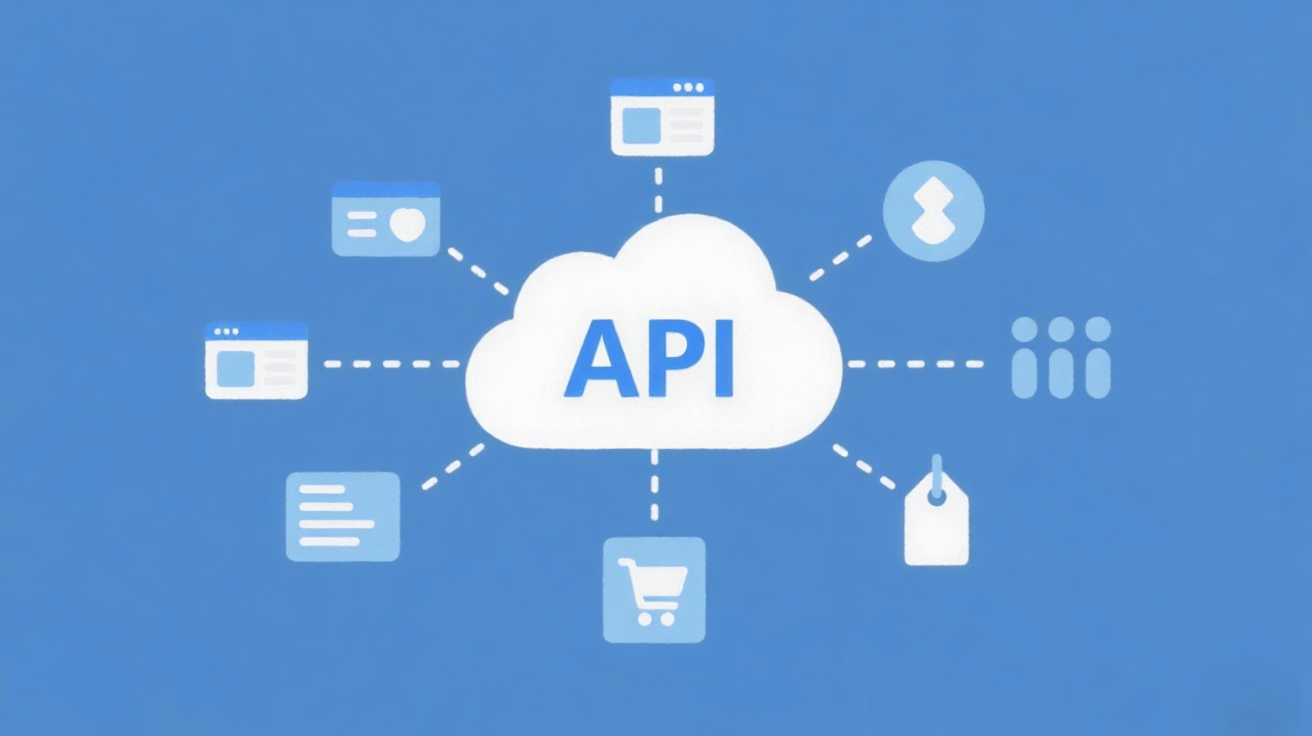
A practical approach that many teams adopt is to build a routing layer that abstracts away individual provider dependencies. This is where services like TokenMix.ai come into play as one pragmatic option among several. TokenMix.ai exposes 171 AI models from 14 providers behind a single API, using an OpenAI-compatible endpoint that serves as a drop-in replacement for existing OpenAI SDK code. Its pay-as-you-go pricing carries no monthly subscription, and the platform automatically handles provider failover and routing based on real-time latency and error rates. This means that if one model’s endpoint returns 503 errors or exceeds its burst limit, the request can be rerouted to an equivalent model from a different provider without the end user noticing. Alternatives such as OpenRouter, LiteLLM, and Portkey offer similar routing capabilities, each with their own tradeoffs in terms of caching policies, fallback logic, and the granularity of cost tracking. The key insight here is that no single LLM provider in 2026 can guarantee perfect uptime or consistent latency across all regions and use cases, so your SLA compliance ultimately depends on your ability to switch providers dynamically.
When evaluating an SLA for production, you must pay close attention to the definitions of a service credit and the process for claiming it. Most providers offer credits ranging from 5% to 25% of your monthly bill if uptime falls below the promised threshold, but the credits are rarely automatic and require you to submit a support ticket with detailed logs. For a high-traffic application, the cost of engineering time to file those claims often outweighs the credit itself, so you should treat the SLA as a minimum baseline rather than a safety net. Additionally, the SLA typically excludes failures caused by your own code, network issues on your side, or third-party dependencies like CDN outages. This means that even with a rock-solid provider SLA, you still need to implement robust error handling, retry logic with exponential backoff, and client-side timeout management in your application layer.
Real-world scenarios illustrate these considerations vividly. Consider a customer-facing chatbot for an e-commerce platform that must respond in under 1.5 seconds to maintain user engagement. If you rely solely on Anthropic’s Claude 4 with its strong long-context capabilities, a single provider outage during Black Friday traffic could sink your conversion rates. Instead, you might route queries requiring deep context to Claude while using a faster, cheaper model like Gemini 2.0 Flash for simpler Q&A, with a fallback to Mistral’s Codestral if both primary models are saturated. Another scenario involves a code generation tool used by developers in a CI/CD pipeline, where latency is less critical than consistent throughput and cost predictability. Here, DeepSeek R1’s low cost per token makes it attractive, but its higher error rates under peak load mean you need a routing layer to shift to OpenAI’s GPT-4.1 when DeepSeek’s SLA is at risk. In both cases, the SLA you sign with any single provider is only one piece of the puzzle; the true SLA for your application is the aggregate reliability of your multi-provider architecture.
Finally, the integration effort required for production deployment cannot be overstated. Switching from one provider to another often involves adapting to different API structures, token counting methods, and streaming behavior. The OpenAI-compatible endpoint pattern has emerged as a de facto standard in 2026, largely because it minimizes code changes when routing between providers. Most routing services, including TokenMix.ai, OpenRouter, and LiteLLM, support this standard, allowing you to swap models by changing a single string in your configuration. However, you must still test for subtle differences in how each model handles system prompts, tool definitions, and response format enforcement. A model that reliably returns JSON when prompted may occasionally produce markdown-wrapped output from a different provider, breaking your parser. The most resilient production apps in 2026 treat provider diversity as a core architectural principle, not just a fallback plan, and they invest in comprehensive integration tests that simulate provider failures before they occur in production.