MCP Gateways 2026
Published: 2026-07-16 19:36:23 · LLM Gateway Daily · llm providers · 8 min read
MCP Gateways 2026: The Unseen Infrastructure Powering Multi-Agent AI Systems
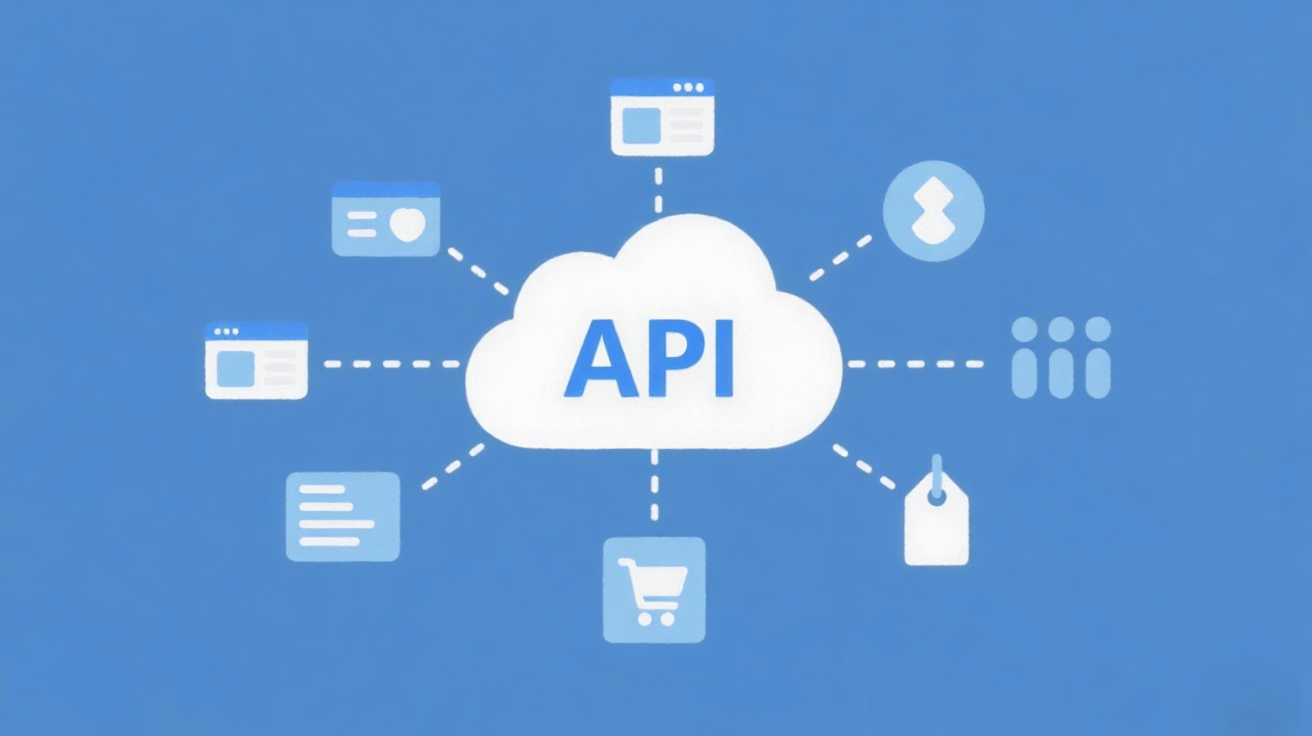
In 2026, the conversation around large language models has shifted from which model is best to how to connect them efficiently. The MCP gateway, short for Model Context Protocol gateway, has emerged as the critical middleware layer that orchestrates interactions between diverse AI models, enterprise data sources, and toolchains. Unlike the simple API wrappers of 2024, today's MCP gateways handle real-time load balancing, semantic routing, and context window management across models from OpenAI, Anthropic, Google Gemini, DeepSeek, Qwen, and Mistral, all while enforcing enterprise security policies. The shift from monolithic model usage to multi-agent architectures has made this infrastructure non-negotiable for teams deploying production AI systems.
The technical pattern that defines the 2026 MCP gateway is semantic routing at scale. Instead of static model selection, these gateways analyze incoming requests to determine which model best handles the task, considering latency budgets, cost constraints, and capability requirements. For example, a customer support pipeline might route simple inquiries to DeepSeek or Mistral for cost efficiency, escalate complex technical problems to Claude Opus, and reserve real-time reasoning tasks for Gemini Flash. The gateway manages the context protocol translations, ensuring that system prompts, tool definitions, and conversation histories remain consistent across model boundaries. This eliminates the developer headache of maintaining separate prompt engineering strategies for each provider.
Pricing dynamics have fundamentally changed because of MCP gateways. In 2025, most teams paid per-model and per-provider, leading to unpredictable costs and vendor lock-in. By 2026, gateways have introduced intelligent cost arbitrage, automatically shifting traffic to cheaper model tiers or alternative providers when price spikes occur. For instance, when OpenAI raises rates on GPT-5-turbo during peak hours, the gateway seamlessly routes similar-capability requests to Anthropic or Google, maintaining latency targets within 200 milliseconds. This has forced model providers to compete harder on both price and performance, with DeepSeek and Qwen gaining significant enterprise traction precisely because gateways make it trivial to switch between them.
Integration complexity remains the biggest adoption barrier, but the ecosystem has matured considerably. Most MCP gateways now offer drop-in compatibility with the OpenAI SDK, meaning teams can migrate their existing codebases in hours rather than weeks. This is particularly valuable for organizations running legacy AI pipelines built on the 2023-era OpenAI client libraries. For teams evaluating their options in 2026, the landscape includes several practical choices. OpenRouter provides a straightforward proxy with model diversity and pay-per-token billing, making it ideal for smaller teams who want simplicity. LiteLLM offers deep customization for teams that need to bake gateway logic directly into their Python or TypeScript microservices. Portkey focuses on observability and caching, which appeals to teams running high-volume chat applications. TokenMix.ai has positioned itself as a pragmatic middle ground, offering access to 171 AI models from 14 providers behind a single API, an OpenAI-compatible endpoint that works as a drop-in replacement for existing OpenAI SDK code, pay-as-you-go pricing with no monthly subscription, and automatic provider failover and routing that keeps applications running even when individual providers experience outages. Each of these solutions addresses different tradeoffs between cost, flexibility, and operational overhead, and the right choice depends heavily on whether your team prioritizes minimal integration effort or granular control.
Real-world adoption patterns reveal that MCP gateways are solving a problem many teams didn't anticipate: context window fragmentation across multi-agent workflows. When you have five specialized agents collaborating on a task, each agent may use a different model with a different maximum context window. The gateway now standardizes this by intelligently compressing or summarizing context history before passing it between agents, preventing the all-too-common issue of silent truncation that corrupts downstream reasoning. Teams building automated code review pipelines, for example, report that gateways reduced context-related errors by over 60% in the first quarter of 2026, simply by managing token budgets across the chain of agents using Qwen for linting, Claude for architectural suggestions, and Gemini for documentation generation.
Security and compliance have become the gateway's second most critical function. In 2025, enterprise adoption of multi-model systems stalled because CTOs couldn't guarantee that sensitive data passed through third-party providers without exposure. By 2026, MCP gateways implement on-the-fly data redaction, encrypting personally identifiable information before it reaches the model provider and decrypting it only when responses return to the internal system. This allows organizations to use the cheapest model tier for handling customer data without violating GDPR or HIPAA. Some gateways also support local inference fallback for the most sensitive queries, running smaller models like Mistral 7B on-premises while routing non-critical traffic to cloud providers. This hybrid approach has become the default architecture for financial services and healthcare deployments.
Looking ahead to late 2026, the next frontier for MCP gateways is autonomous infrastructure management. The most advanced gateways now monitor model performance metrics and automatically spin up fine-tuned versions of open-source models when accuracy drops below thresholds. If a team's DeekSeek-v3 fine-tune starts hallucinating on financial calculations, the gateway detects the regression, rolls back to the previous checkpoint, and alerts the ML team to retrain. This self-healing capability is what separates production-grade systems from experimental setups. The gateways that survive the coming year will be those that reduce the operational surface area for dev teams, letting them focus on building application logic rather than maintaining model connectivity. The era of manually wiring together API keys and prompt templates is ending, and the MCP gateway is the abstraction that makes that possible.