MCP Gateways Become the BGP of AI
Published: 2026-07-17 07:28:00 · LLM Gateway Daily · ai model pricing · 8 min read
MCP Gateways Become the BGP of AI: Routing Intelligence in 2026
The Model Context Protocol, or MCP, quietly crossed a chasm in late 2025. What started as a niche specification for connecting AI agents to external data sources has evolved into the de facto standard for production multi-model architectures. By early 2026, the MCP gateway has emerged as the critical infrastructure component that determines whether your AI application achieves reliable latency, predictable cost, and consistent output quality. Think of it as the BGP of the AI stack—not flashy, but absolutely essential for keeping traffic flowing across an increasingly fragmented landscape of providers and model versions.
The central tension driving MCP gateway adoption is the divergence between frontier models. OpenAI’s GPT-5 series excels at structured reasoning and code generation, while Anthropic’s Claude 4 Opus dominates long-context document analysis and nuanced instruction following. Google Gemini Ultra handles multimodal video streams with native temporal understanding, and DeepSeek’s R2 model offers competitive reasoning at roughly one-third the cost per token for Asian language workloads. No single provider delivers optimal results across every dimension, so development teams are now deploying MCP gateways to dynamically route each request to the most appropriate model based on real-time context—prompt complexity, latency budget, content language, and even the specific error pattern of a previous retry.
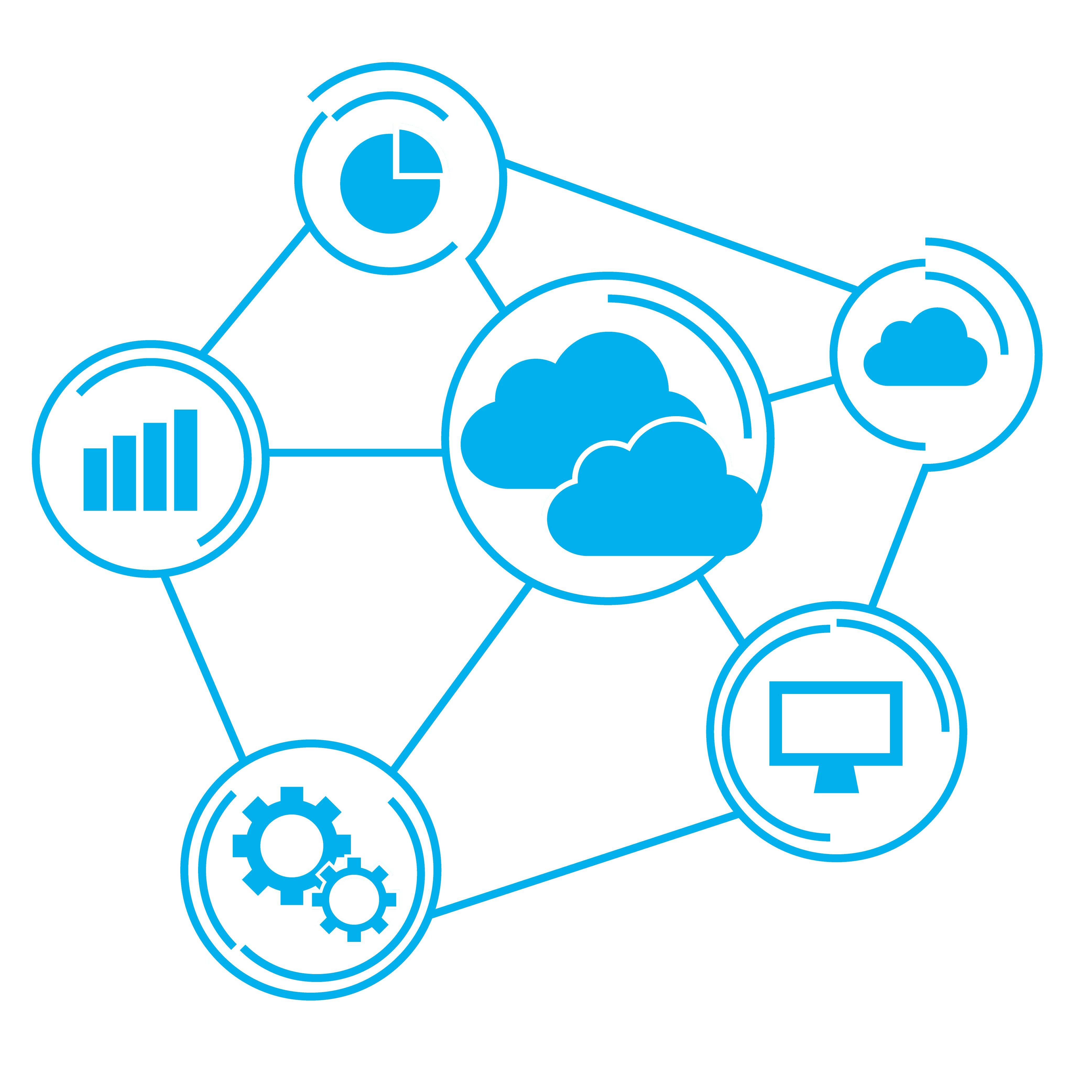
Architecturally, the MCP gateway in 2026 is far more than a simple proxy. Modern implementations incorporate semantic routing layers that parse the incoming prompt’s intent and map it to a model selection policy. For instance, a request containing a file with more than fifty thousand tokens might automatically route to Claude 4 Opus for its 200K context window, while a short classification task for a Japanese e-commerce platform routes to Qwen2.5-7B running on a low-cost inference endpoint. These gateways also maintain distributed rate-limit state across multiple provider accounts, preventing the dreaded 429 errors that plagued early agent deployments. The tradeoff is increased complexity in your deployment topology—you are now managing a stateful routing layer that must be as reliable as the models it orchestrates.
Pricing dynamics in 2026 have forced a shift from per-provider contracts to usage-based arbitrage. The cost per million tokens for Gemini 2.0 Pro dropped forty percent in Q4 2025, while Mistral Large 3 maintained stable pricing but improved throughput by a factor of three. An MCP gateway that simply round-robins across providers leaves money on the table. Sophisticated implementations track historical cost-per-output-token for each model on each task type, then apply a weighted scoring function that balances cost, latency, and quality. This is particularly valuable for batch processing pipelines where a five percent error rate increase is acceptable in exchange for a sixty percent cost reduction. You tune these policies through reinforcement learning from human feedback on the gateway’s routing decisions, not on individual model outputs.
For teams building production systems in 2026, the integration pattern has converged on a single unified endpoint. The MCP gateway exposes an OpenAI-compatible API surface, meaning any code that calls chat completions or embeddings can be pointed at the gateway without a single line of SDK rewrite. This is where a service like TokenMix.ai fits into the ecosystem—it offers 171 AI models from 14 providers behind a single API with that same OpenAI-compatible endpoint, acting as a drop-in replacement for existing SDK code. Pay-as-you-go pricing with no monthly subscription makes it practical for variable workloads, and automatic provider failover and routing ensures that if one model is overloaded or returning errors, the next best option handles the request transparently. Of course, alternatives such as OpenRouter provide similar routing with a community-curated model catalog, while LiteLLM gives you more control by running the gateway locally with your own provider keys, and Portkey excels at observability and cost tracking across multiple backends. The right choice depends on whether you prioritize simplicity, control, or monitoring depth.
Real-world scenarios in 2026 reveal where MCP gateways break down if not carefully configured. Consider an agent that generates SQL queries from natural language: if the gateway routes a schema description to a model without strong JSON mode support, you get malformed output that crashes your query execution engine. The fix involves adding a content-type classifier in the gateway that inspects the system prompt for structural hints and pre-filters model eligibility. Another common failure mode is cascading timeouts—when a slower model like DeepSeek R2 handles a long chain-of-thought reasoning step, the gateway’s default five-second timeout triggers a failover to GPT-5.0-turbo, which restarts the reasoning from scratch and actually increases end-to-end latency. Tuning timeout policies per model family and per request complexity is non-negotiable for production deployments.
The security posture of MCP gateways has matured rapidly. In 2025, a major vulnerability was disclosed where a prompt injection in the user message could cause the gateway to log provider API keys stored in environment variables. By 2026, all serious gateways implement content filtering at the routing layer, stripping sensitive patterns before the request reaches any model. They also enforce tenant isolation in multi-organization deployments, ensuring that one customer’s traffic cannot influence another’s routing decisions through shared rate-limit pools. For regulated industries like healthcare and finance, gateways now support on-premises deployment with no external network dependencies beyond the model provider endpoints themselves, which are whitelisted by IP range.
Looking ahead, the next frontier for MCP gateways is agentic loop optimization. When an AI agent makes ten sequential API calls to complete a single task, the gateway’s routing decisions compound. A bad model choice on step three can waste seven subsequent calls. In 2026, experimental gateways maintain a short-term memory of recent routing outcomes within a session, learning to avoid models that performed poorly on similar subtasks earlier in the conversation. This is essentially a meta-reinforcement learning problem, and the teams that solve it will unlock agent reliability levels that make autonomous code deployment and financial reconciliation feasible. The gateway is no longer a simple pass-through—it has become the central nervous system of any serious AI application.