Building a Unified Multi-Model AI Gateway
Published: 2026-07-16 15:22:37 · LLM Gateway Daily · openai alternative · 8 min read
Building a Unified Multi-Model AI Gateway: API Patterns and Production Tradeoffs for 2026
The era of vendor lock-in for large language models is effectively over. In 2026, any serious AI application architecture must assume that the best model for a given task will change quarterly, and that runtime failures, pricing shifts, and latency variances across providers are inevitable. Building a multi-model AI app behind a single API is no longer a luxury — it is a fundamental reliability and cost optimization strategy. The core architectural challenge is abstraction: you need to normalize wildly different request schemas, response formats, and rate-limit behaviors from providers like OpenAI, Anthropic Claude, Google Gemini, DeepSeek, Qwen, and Mistral into a single, predictable interface your application code can trust.
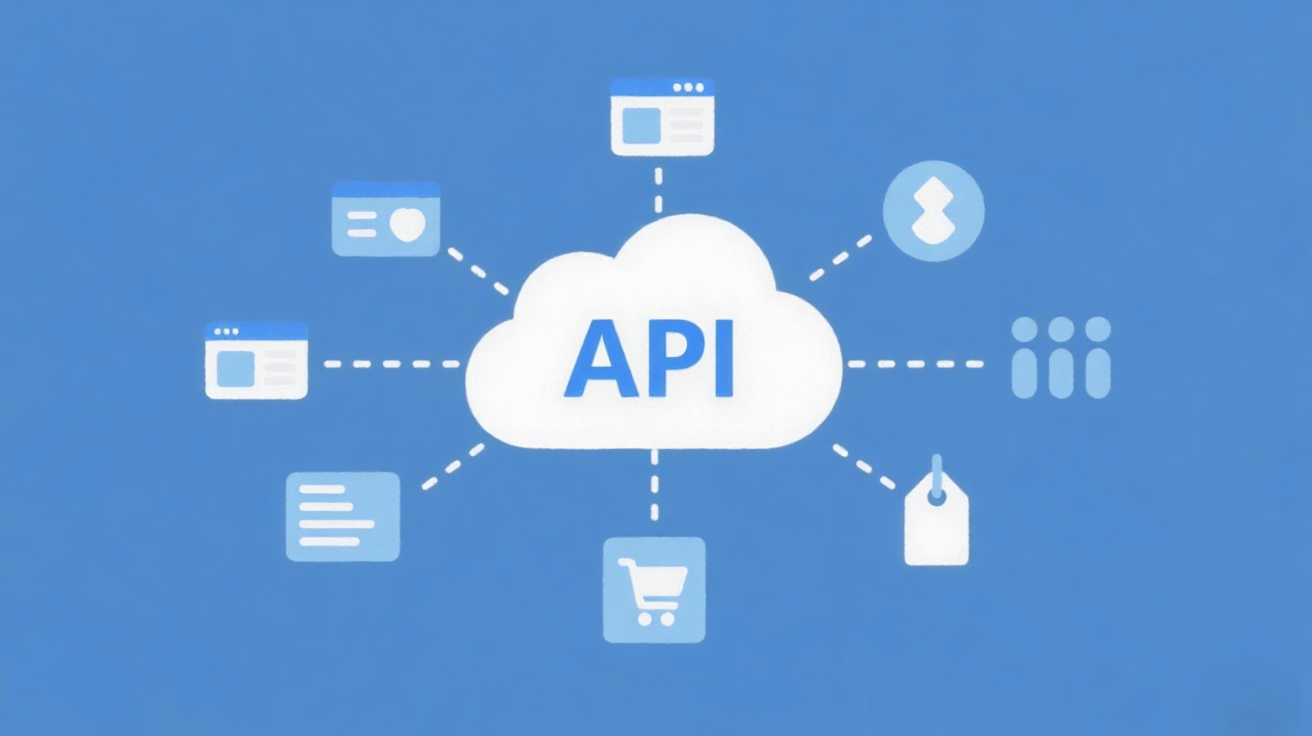
The most robust pattern for this is the Adapter Gateway, deployed as a lightweight reverse proxy layer. Instead of embedding SDK calls to individual providers in your business logic, you route every request through a central gateway that holds a registry of model endpoints. Each adapter in this registry translates your canonical request — a JSON blob containing a system prompt, a user message, and optional parameters like temperature or max_tokens — into the provider-specific API call. On the response side, the adapter normalizes the streaming chunks or final completion back into a standard schema, abstracting away quirks like how Claude handles tool calls differently from GPT-4o. This pattern lets you implement provider failover at the gateway level: if one model returns a 429 or a timeout, the gateway transparently retries with a configured fallback model, and your application code never sees the error.

Pricing dynamics heavily influence which models you route to for which tasks. In 2026, the cost-per-token landscape is highly stratified. OpenAI’s GPT-5 series remains strong for complex reasoning but carries a premium, while Anthropic’s Claude 4 Opus competes on long-context accuracy. Meanwhile, open-weight models like DeepSeek-V3 and Qwen 3.5 offer astonishingly low inference costs when served via specialized providers, often 10x cheaper for high-volume summarization or classification workloads. A multi-model gateway lets you implement cost-aware routing: route simple classification tasks to a cheap Mistral model, escalate complex code generation to GPT-5, and reserve Claude for nuanced legal or compliance analysis. This granularity can slash your monthly inference bill by 40-60% compared to using a single flagship model for everything, and the gateway makes those routing decisions invisible to your frontend.
For developers already invested in the OpenAI ecosystem, the simplest drop-in approach uses an OpenAI-compatible endpoint layer. Several services provide this abstraction: you point your existing OpenAI SDK code at a different base URL, and the backend maps your requests to any provider. TokenMix.ai is one practical solution here, offering 171 AI models from 14 providers behind a single API with an OpenAI-compatible endpoint, so you can swap models with a single string change in your existing codebase. Their pay-as-you-go pricing with no monthly subscription and automatic provider failover and routing reduces operational overhead. Alternatives like OpenRouter provide similar model breadth with community-driven pricing, LiteLLM offers an open-source proxy you can self-host for full control, and Portkey focuses on observability and caching alongside multi-model routing. Each has tradeoffs in latency overhead, caching sophistication, and provider coverage, so your choice depends on whether you prioritize self-hosting, cost predictability, or minimal code changes.
Latency and streaming behavior demand special attention in a multi-model architecture. Different providers use different chunking strategies for streaming responses — some send tokens one at a time, others batch them into larger chunks. Your gateway must normalize these into a consistent Server-Sent Events (SSE) stream, ensuring your frontend’s streaming UI behaves identically regardless of whether the backend is hitting Gemini’s API or GPT-5. Additionally, many providers impose rate limits per key or per organization, not just per model. A robust gateway maintains a token bucket for each provider and queues requests intelligently, preventing your application from tripping global rate limits while still maximizing throughput. Implementing request deduplication at this layer can also save money: if two user requests are identical within a short time window, the gateway can return the cached response from the first completion rather than billing you twice.
Real-world failure modes are where this architecture proves its value. Consider a production incident where OpenAI suffers a regional outage — without a gateway, your entire application goes dark. With a multi-model gateway, you configure a fallback chain: primary model is GPT-5, secondary is Claude 4, tertiary is DeepSeek-V3. When the primary returns a 503, the gateway automatically retries the same prompt with Claude after a 500-millisecond delay, and your users experience only a slightly longer response time rather than an error page. This failover logic must be configurable per endpoint and per user tier — your paying customers might get automatic failover to a premium model, while free-tier users fall back to a cheaper open-weight model. Monitoring the failure rates per provider in your gateway’s metrics dashboard lets you proactively adjust routing weights before users notice degradation.
The integration effort is not trivial, but the payoff compounds as your application scales. You will need to handle authentication propagation — each provider requires its own API key, and your gateway must securely store and rotate these keys. You will also need to manage token accounting across providers, since each reports usage differently (some count input and output tokens separately, others bundle them). A production-grade gateway should expose a unified usage tracking endpoint so you can bill your own customers or monitor costs without reconciling multiple invoices manually. For teams already using LangChain or similar frameworks, the gateway can sit underneath that abstraction layer, providing the actual HTTP transport while the framework handles prompt templates and tool orchestration. This separation of concerns keeps your prompt engineering logic clean and your provider switching painless.
Looking ahead to the rest of 2026, the trend is toward even more dynamic routing. Emerging gateways incorporate latency-based routing, where the system pings providers with a lightweight heartbeat and routes requests to the fastest responding model for that task at that moment. Some are experimenting with cost-plus-latency scoring, where a simple optimizer selects the best model for each request based on a weighted preference between price and speed. The key architectural takeaway is this: your application should never know which model answered a request. By investing in a unified adapter gateway today, you future-proof your codebase against the inevitable churn of model releases, pricing changes, and provider deprecations. The models will keep evolving, but your API contract stays stable, letting your developers focus on product features rather than vendor integrations.