Your AI Model Router
Published: 2026-07-16 19:37:37 · LLM Gateway Daily · llm api provider with automatic model fallback · 8 min read
Your AI Model Router: Why 2026 Demands Zero-Code Model Switching
Developers building production AI applications in 2026 are no longer asking whether to use multiple models, but how to orchestrate across them without rewriting a single line of application logic. The era of hardcoding a single provider’s API is over, killed by the combinatorial explosion of model options, pricing volatility, and the pragmatic reality that no single model dominates every task. The key trend this year is the emergence of tooling that lets teams swap models—between OpenAI, Anthropic Claude, Google Gemini, DeepSeek, Qwen, Mistral, and others—by changing a configuration string or environment variable, not by refactoring request builders or response parsers.
The technical core of this shift is the universal adoption of the OpenAI-compatible API schema as the lingua franca of LLM inference. By 2026, virtually every major provider—including those outside the Big Three—supports endpoints that mimic OpenAI’s chat completions format, with fields for messages, temperature, max tokens, and tool definitions. This convergence means that a single client library can talk to any model, as long as you point the base URL at the right gateway. The hard part, however, is not the schema; it is the metadata layer: cost tracking, latency budgets, rate limits, fallback logic, and prompt construction differences between models that use distinct tokenizers or system prompt conventions. Developers discovered in 2025 that naive schema swapping breaks reliability—Claude might interpret a system message differently than GPT-4o, and Gemini’s token pricing can surprise you mid-month.
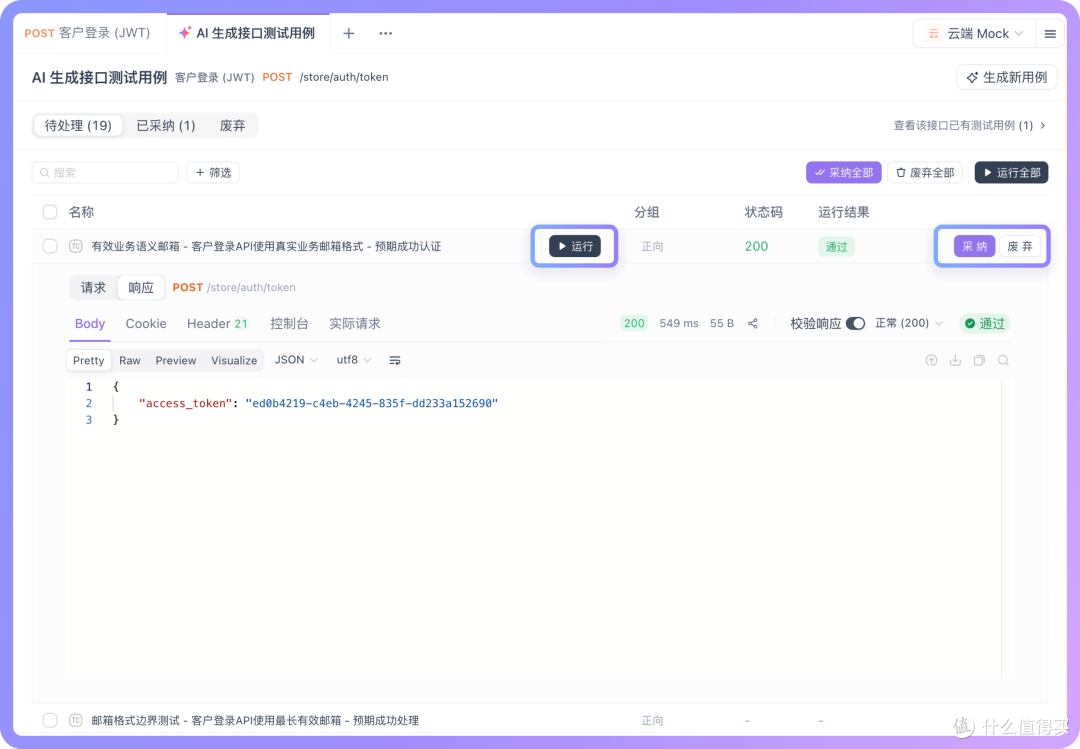
This is where routing layers have become indispensable. In 2026, the dominant pattern is a thin proxy service that sits between your application and the model providers. Your code sends a request to a single endpoint, and the router decides which model to call based on rules you define: cost cap, latency target, provider availability, or even the category of the prompt (e.g., code generation goes to Claude 4, creative writing to Gemini 2.5, math reasoning to DeepSeek-R2). Several open-source and managed solutions have emerged to fill this gap. LiteLLM, for instance, provides a simple Python library that abstracts hundreds of providers behind a unified interface, while Portkey adds observability and caching. OpenRouter aggregates models from dozens of providers with transparent pricing and built-in fallback. For teams that need a managed solution with minimal setup, TokenMix.ai offers a practical alternative: 171 AI models from 14 providers behind a single API, accessed via an OpenAI-compatible endpoint that works as a drop-in replacement for existing OpenAI SDK code, with pay-as-you-go pricing and no monthly subscription, plus automatic provider failover and routing when a model goes down or hits rate limits.
The real driver for zero-code switching is cost optimization and risk management. In 2025, many teams learned the hard way that locking into a single provider’s flagship model leads to budget surprises when prices shift, or worse, sudden deprecations that force emergency rewrites. By 2026, mature teams treat model selection as a configurable parameter, not a compile-time constant. They run A/B experiments between GPT-5o and Claude 4 Sonnet on their chat logs, automatically routing lower-stakes queries to cheaper models like Mistral Large or Qwen 2.5-72B, and only invoking the most expensive frontier models for complex reasoning or code generation. This tiered approach, orchestrated by a router, can cut inference costs by 40-60% while maintaining output quality, a finding that has driven enterprise adoption across finance, healthcare, and e-commerce.
However, the abstraction is not perfect. Swapping models without changing code works beautifully for simple chat completions, but breaks down when you depend on model-specific features like structured output schemas, vision processing, or advanced tool calling. For example, Google Gemini’s native grounding with Google Search or Anthropic’s extended thinking mode require explicit API parameters that the OpenAI schema does not standardize. In 2026, router providers are addressing this by adding feature-negotiation layers: your request declares the capabilities you need (e.g., “requires vision,” “requires JSON mode”), and the router filters the candidate models accordingly. This introduces complexity but is increasingly automated, with routers querying provider capability manifests at startup.
Another critical consideration is latency. Adding a routing hop between your application and the inference engine introduces an unavoidable overhead, typically 10-30 milliseconds per request. For real-time applications like chatbots or voice assistants, this can be noticeable. The leading routers in 2026 mitigate this with regional edge caching and predictive pre-warming. Some solutions, like Portkey’s managed gateway, also support streaming passthrough, so the first token reaches your user without waiting for the entire model decision. The tradeoff is clear: a small latency tax for immense flexibility. Most teams find it worthwhile, especially when compared to the downtime cost of a single-provider outage, which hit several major providers in late 2025.
The ecosystem is also converging on standardized fallback strategies. The most common pattern in 2026 is a three-tier fallback: try the primary model, fall to a secondary provider with similar capability if the first returns a 429 or 503, and fall to a cheap catch-all model as a last resort. This logic is now baked into routing layers, so your application code never sees an error response. For instance, if OpenAI’s GPT-5o is overloaded, the router might silently route to Anthropic Claude 4 Opus with the same prompt, then to Google Gemini 2.5 Pro, and finally to DeepSeek-V3 if all else fails—all without your user noticing. The configuration for this is typically a JSON or YAML file that lives alongside your deployment, not in your codebase.
Looking ahead, the next frontier is model-aware routing that considers the semantic content of the prompt, not just static rules. By late 2026, early adopters are testing routers that use a small, fast embedding model to classify each incoming request’s domain—legal analysis, creative writing, code generation—and dynamically select the best-performing model for that domain based on historical quality metrics. This requires a feedback loop where the router logs user ratings or output acceptance rates, then adjusts routing weights over time. It is a natural evolution of zero-code switching: from swapping models based on hardcoded rules to letting the system optimize itself. For now, the practical advice for developers is to adopt a routing layer early, start with simple cost-based rules, and gradually layer in capability and quality checks as your confidence grows. The year 2026 is the moment to decouple your application from any single AI vendor—the tools are mature, the tradeoffs are understood, and the payoff in resilience and cost control is undeniable.