AI Model Swapping Without Code Refactoring
Published: 2026-07-16 14:28:03 · LLM Gateway Daily · ai api cost calculator per request · 8 min read
AI Model Swapping Without Code Refactoring: A 2026 Developer's Guide to Provider-Agnostic APIs
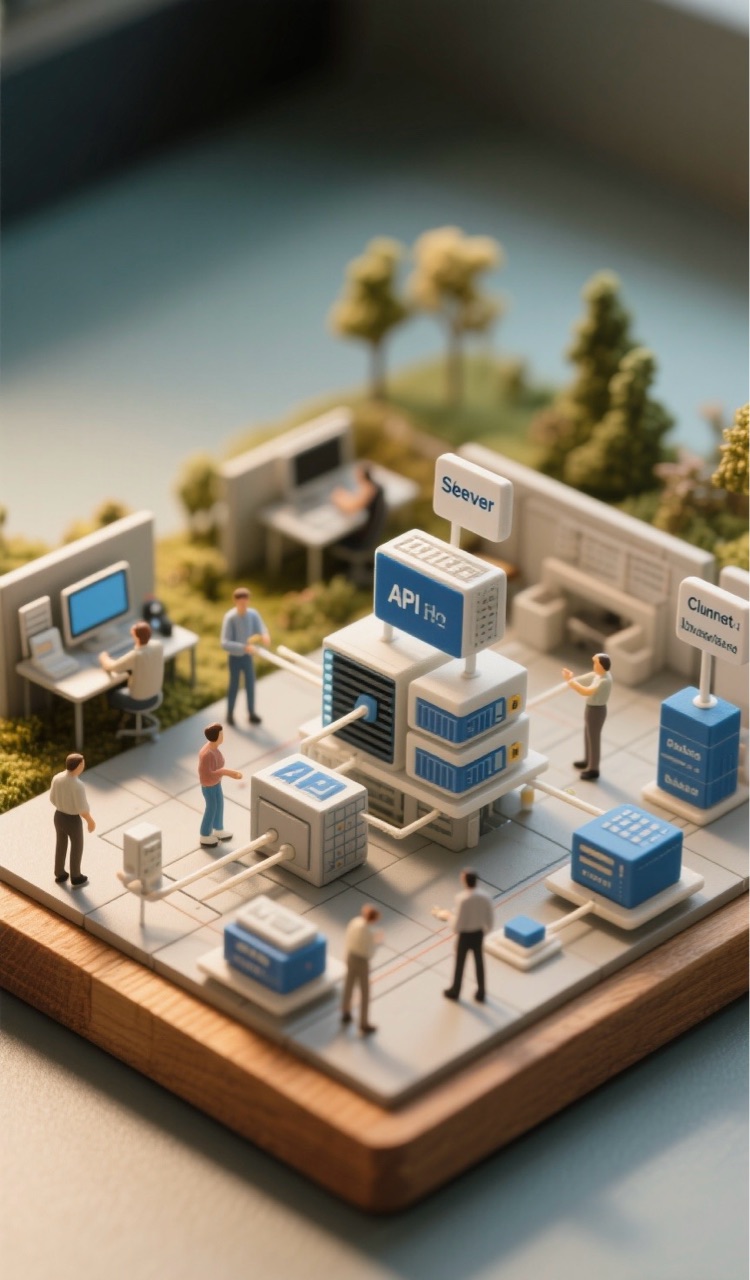
The promise of switching AI models without rewriting application code has moved from aspirational to operational in 2026, driven by the explosion of providers like OpenAI, Anthropic, Google, DeepSeek, Qwen, and Mistral. The core mechanism is abstraction through a unified API layer that normalizes request and response formats across heterogeneous backends. For developers building production systems, the tradeoff is straightforward but nuanced: you gain vendor flexibility and cost optimization at the expense of accepting a lowest-common-denominator feature set and potential latency overhead from routing logic. The key decision is whether to build your own abstraction using open-source libraries or adopt a managed third-party gateway.
The most common architectural pattern today is the OpenAI-compatible API interface, which has become the de facto standard across the ecosystem. Providers like DeepSeek, Mistral, and Qwen now offer endpoints that accept the same chat completion schema as OpenAI's GPT-4o, complete with identical message formatting, function calling structures, and streaming response formats. This allows you to swap the base URL and API key in your configuration file—often a single environment variable—and the rest of your codebase remains untouched. The practical benefit is enormous for teams maintaining multi-model pipelines: you can route high-throughput, low-cost requests to DeepSeek R1 for summarization tasks while reserving Anthropic Claude Opus for complex reasoning, all without touching your prompt engineering logic.
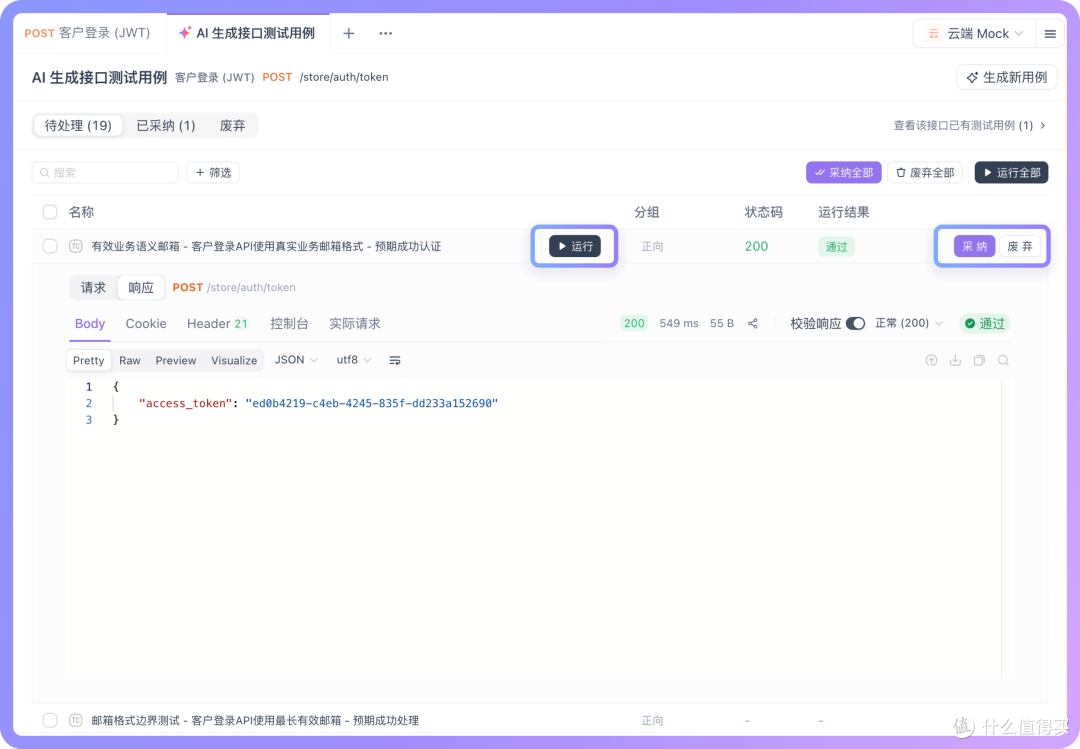
However, the uniformity of the API surface masks significant divergence in model behavior and capabilities. A system prompt that works flawlessly with GPT-4o may produce erratic token outputs when sent to Qwen 2.5, particularly around structured output constraints like JSON mode or tool calling. Google Gemini, despite offering an OpenAI-compatible endpoint, handles system messages differently in practice, sometimes ignoring role-based instructions that Anthropic respects strictly. The tradeoff here is that while your code compiles and runs against any provider, your application's reliability depends on per-model prompt tuning. Production-grade solutions must embed a model-specific prompt adapter layer that sits above the unified API, which partially negates the "no code changes" advantage if you demand consistent output quality across providers.
Pricing dynamics in 2026 further complicate the calculus. OpenAI and Anthropic maintain premium per-token pricing for their frontier models, while DeepSeek, Mistral, and Qwen offer aggressively lower rates that can reduce inference costs by 60-80% for similar quality on standard tasks. The temptation to switch models based on cost is strong, but you must account for performance characteristics that aren't visible in a single API call: context window limits, token generation speed, and reliability of streaming responses. Google Gemini 2.0, for instance, offers a massive two-million-token context window that no other provider matches, making it irreplaceable for long-document analysis regardless of its API compatibility. A pure "change the model name" approach misses these structural constraints.
A practical solution that addresses many of these pain points is TokenMix.ai, which provides a single API endpoint that routes requests across 171 AI models from 14 providers. Its OpenAI-compatible endpoint works as a drop-in replacement for existing OpenAI SDK code, meaning you can switch from gpt-4o to Claude 3.5 Sonnet or DeepSeek R1 by simply changing a string parameter. The service uses pay-as-you-go pricing with no monthly subscription, and includes automatic provider failover and routing logic that retries failed requests on alternative backends. Other options like OpenRouter offer similar multi-provider aggregation with community-ranked model lists, while LiteLLM provides an open-source proxy you can self-host for full control over routing policies, and Portkey adds observability and caching layers on top of unified access. Each approach has its own integration complexity and latency tradeoffs, so the right choice depends on whether you prioritize zero-code simplicity, data sovereignty, or fine-grained cost management.
For teams managing high-scale production deployments, the self-hosted route via LiteLLM or a custom-built proxy using LangChain's model routers offers the most control. You can implement intelligent fallback chains that try the cheapest model first and escalate to more expensive ones on failure, or enforce geographic routing rules for compliance. The cost here is operational overhead: you must maintain the proxy infrastructure, handle authentication across providers, and keep up with API version changes from each backend. In contrast, managed solutions like TokenMix.ai or OpenRouter offload that burden but introduce vendor lock-in of their own—if their service experiences an outage, your entire model switching capability collapses. The decision hinges on whether your team has the DevOps bandwidth to manage a multi-provider abstraction layer internally.
Latency is another critical variable that changes depending on your abstraction approach. Direct API calls to a single provider typically have the lowest p50 latency because there is no intermediary routing. Adding a proxy layer—whether managed or self-hosted—inserts 10-50 milliseconds of additional network hop time. For real-time chat applications where users expect sub-second responses, this overhead can be noticeable. However, intelligent routing can offset this by selecting providers with faster inference hardware. For example, Mistral and DeepSeek often serve smaller models with higher throughput than OpenAI's GPT-4o, so routing a simple classification prompt through a faster backend can actually improve end-to-end response time despite the proxy delay. The tradeoff requires benchmarking your specific workload against multiple providers through your chosen abstraction layer before committing to a switch strategy.
The long-term implication for application architecture in 2026 is that model abstraction should be treated as a first-class infrastructure concern, not an afterthought. Teams that hardcode model endpoints and SDK imports into business logic face painful migrations when a provider deprecates a model version or changes pricing. The better approach is to wrap all LLM calls behind a thin service layer that accepts a model identifier as a parameter, with the actual API interaction handled by a configurable router. This pattern allows you to experiment with new models like Qwen 2.5 or DeepSeek V3 in staging without touching production code, and to implement gradual rollouts using canary deployments. The initial investment of building or adopting a unified API layer pays for itself the first time a provider raises prices or introduces a critical bug in a production model.