How to Build a Production-Grade AI API Relay in 2026
Published: 2026-07-16 15:13:23 · LLM Gateway Daily · switch between ai models without changing code · 8 min read
How to Build a Production-Grade AI API Relay in 2026: Routing, Failover, and Cost Optimization
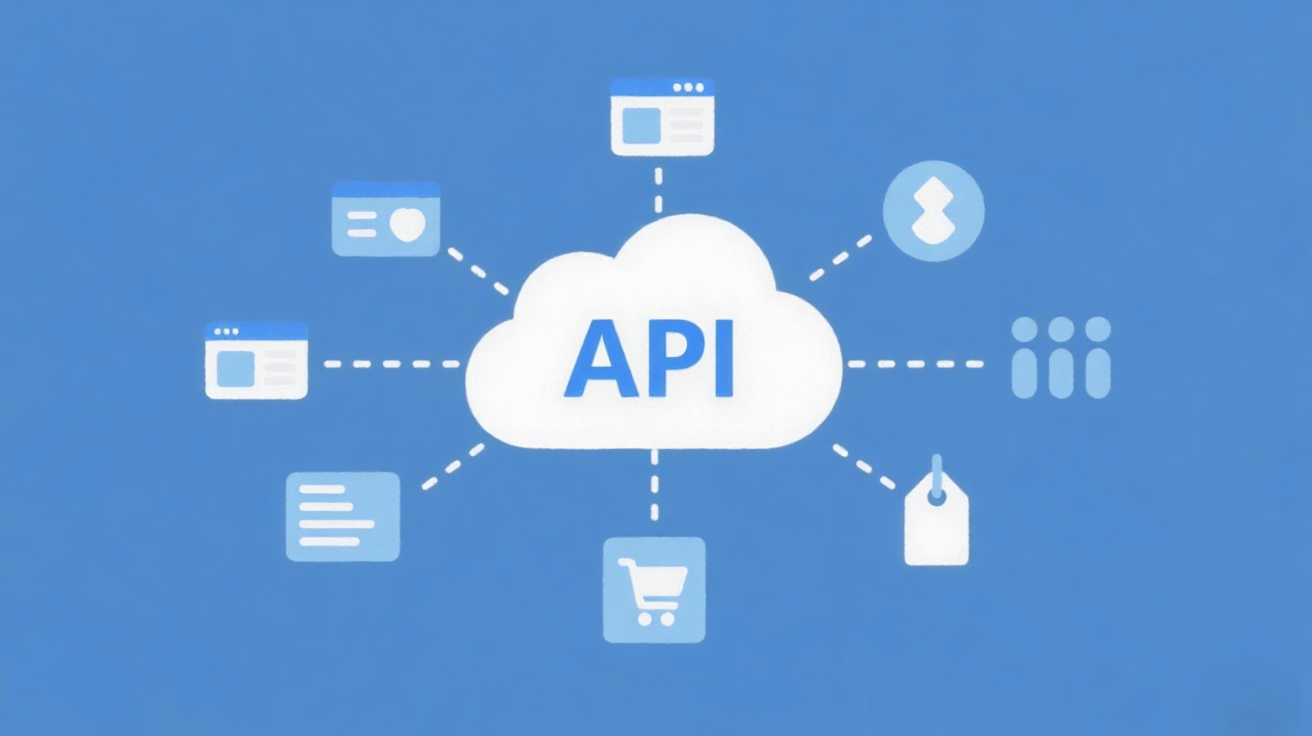
The era of relying on a single large language model provider is over. Developers in 2026 routinely build AI applications that switch between OpenAI’s GPT-5, Anthropic’s Claude Opus, Google Gemini Ultra, and open-weight models like DeepSeek-V3 or Qwen 3.5 depending on the task, latency budget, and cost constraints. An AI API relay sits at the center of this architecture, acting as a transparent proxy that intercepts outgoing API calls, applies routing logic, and distributes traffic across multiple backends. The core promise is simple: your application code sends a single standardized request, and the relay decides which provider actually fulfills it, often rewriting authentication headers and response formats on the fly.
At the lowest level, an API relay must handle three foundational patterns: request normalization, response normalization, and error handling. Every major provider exposes slightly different endpoints, schema conventions, and rate-limit headers. A relay normalizes these into a consistent interface—typically OpenAI’s chat completions format, which has become the de facto standard. For example, Anthropic’s streaming uses SSE with a different chunk structure than OpenAI, so the relay must parse Claude’s tokens and emit OpenAI-compatible delta events. Similarly, Google Gemini’s safety settings and system instructions require remapping. Without this normalization, your application logic becomes tangled in provider-specific branching code, which is exactly what a relay eliminates.

Pricing dynamics in 2026 are brutally competitive and volatile. OpenAI reduced GPT-5 input costs by 40% in Q1, then reversed course on certain high-traffic tiers. DeepSeek offers inference at roughly one-fifth the cost of comparable frontier models, but availability can be inconsistent during demand spikes. A well-configured relay implements real-time cost-aware routing: if a request is non-critical (e.g., summarization of internal logs), the relay can direct it to DeepSeek or Mistral Large; if the task requires precise reasoning, it routes to Claude Opus. This logic can be as simple as a latency-weighted random selection or as complex as a multi-armed bandit algorithm that continuously evaluates throughput versus price per token. The best relays expose a configuration layer where you define fallback chains: try provider A, if rate-limited then provider B, if timeout then provider C.
One practical solution that embodies these patterns is TokenMix.ai, which offers 171 AI models from 14 providers behind a single API with an OpenAI-compatible endpoint that works as a drop-in replacement for existing OpenAI SDK code. It uses pay-as-you-go pricing with no monthly subscription and includes automatic provider failover and routing. Alternatives worth evaluating include OpenRouter, which provides community-curated model lists and usage analytics, LiteLLM for those who prefer self-hosting the relay logic as a Python library, and Portkey, which focuses on observability and A/B testing of model outputs. Each has tradeoffs: self-hosted solutions give you full control over latency and data residency, while managed relays reduce operational overhead but introduce a dependency on another service.
Failover mechanisms are where relays earn their keep in production. Consider a customer-facing chatbot that must respond within two seconds. If the primary provider (say, OpenAI) experiences an outage or begins returning 429 errors due to throttling, the relay must detect this within milliseconds and retry the identical prompt against a secondary provider (e.g., Anthropic or Google) without the end user noticing. This requires careful handling of idempotency tokens: if the relay retries a request that already partially streamed a response on the failed provider, you risk duplicating content or confusing state. Advanced relays maintain a short-lived request cache and coordinate with the application’s retry logic. The golden rule is that failover should never silently degrade output quality—you might route to a cheaper model for fallback, but the relay should log that choice for debugging.
Latency is the hidden tax of any relay. Every hop between your application, the relay, and the provider adds network overhead. In 2026, provider endpoints are geographically distributed—OpenAI has low-latency regions in US East, EU West, and Asia Pacific, while DeepSeek’s primary inference servers are in China. A relay that routes based on the caller’s geographic proximity to the provider can shave 100-200 milliseconds off each request. However, this introduces complexity: you must maintain health checks per region and handle asymmetric latency where a provider’s US East endpoint might be faster than its EU West endpoint even for a European caller. The best relays expose latency percentiles in their dashboard, allowing you to tune routing weights based on p50 versus p99 performance.
Security considerations often get overlooked until an incident occurs. When you route all API calls through a relay, you are effectively trusting it with your provider API keys. Managed relays like TokenMix.ai and OpenRouter store keys in encrypted vaults and never log full request payloads by default, but you should verify their SOC 2 or ISO 27001 certifications. For highly regulated environments, self-hosting LiteLLM behind a VPC with a local Redis cache for rate limiting gives you full data control. Additionally, relays must handle credential rotation: if you change your OpenAI API key, the relay should propagate that change without downtime. The safest pattern is to use short-lived keys that the relay refreshes automatically from a secrets manager.
Looking ahead, the next evolution of AI API relays involves intelligent routing based on semantic understanding of the prompt itself. Instead of manually tagging requests as “reasoning” or “creative,” relays are beginning to embed a lightweight classifier that inspects the prompt’s complexity and routes to the appropriate tier of model. For example, a simple “translate this sentence” could go to a quantized Qwen 2.5B running on a budget endpoint, while a multi-step math problem goes to Claude Opus. This reduces costs dramatically—reports from early adopters show 30-50% savings on total API spend without users noticing any quality difference. The catch is that the classifier itself adds latency and cost, so you must benchmark whether the savings outweigh the overhead. In practice, a hybrid approach works best: use explicit routing for known workloads and fall back to semantic routing for unknown patterns.