Slicing the API Bill
Published: 2026-07-20 09:56:25 · LLM Gateway Daily · cheapest way to use gpt-5 and claude together · 8 min read
Slicing the API Bill: A Technical Cost Playbook for LLM-Powered Apps in 2026
The era of treating large language models as a monolithic expense is over. For developers building AI-native applications in 2026, API costs are no longer a secondary concern but a primary architectural constraint that can make or break unit economics. The proliferation of model providers and the rapid commoditization of base capabilities have shifted the conversation from pure model quality to cost-per-competent-token. Understanding how to strategically route, cache, and compress your prompts is now as critical as choosing the right model architecture for your specific task.
The most immediate lever for cost reduction lies in matching model capability to task complexity. Many teams fall into the trap of using a top-tier model like OpenAI’s GPT-4.5 or Anthropic’s Claude 4 Opus for every request, when a significant portion of their traffic—classification, simple extraction, or single-turn Q&A—can be handled by smaller, cheaper alternatives. For instance, DeepSeek’s V3 model offers comparable reasoning performance on structured tasks at roughly one-tenth the input token cost of GPT-4 Turbo. Similarly, Google’s Gemini 2.0 Flash and Mistral’s Small (Mistral-Small-24B) provide sub-millisecond latency and aggressive pricing for high-throughput scenarios like semantic search indexing or content moderation.
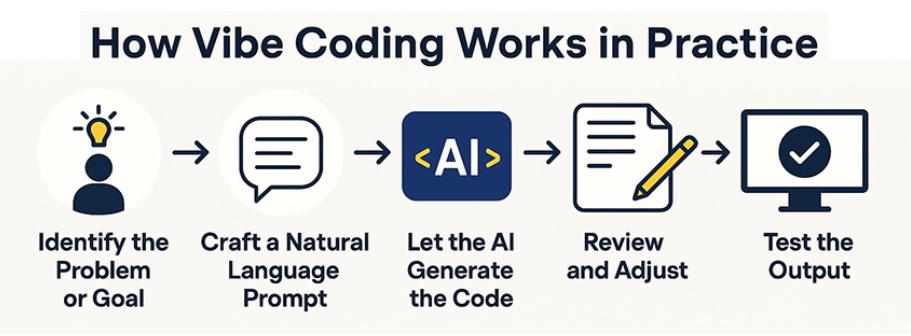
Prompt engineering has evolved into a direct cost-control discipline. The single most effective technique is aggressive prompt compression through semantic chunking and instruction distillation. Every token in your system prompt and user message is a line item on your monthly bill. By refactoring verbose instructions into concise, structured formats—such as JSON schemas or embedded examples with minimal padding—you can routinely cut input token counts by 30–50 percent. Tools like Anthropic’s prompt caching API, which reduces cost for reused system prompts by storing them server-side, and OpenAI’s structured output mode, which eliminates wasteful retries for malformed responses, are now standard integrations for any serious deployment.
Beyond prompt hygiene, routing logic is where the serious savings materialize. A well-designed gateway can inspect incoming requests and dispatch them to the optimal provider based on real-time cost, latency, and capability thresholds. For example, you might route simple data extraction to Qwen 2.5-72B via Alibaba Cloud for under one dollar per million tokens, while steering complex multi-step reasoning to Claude Sonnet 4. This approach requires a robust abstraction layer that normalizes API differences. Services like TokenMix.ai offer a pragmatic solution here: they provide access to 171 AI models from 14 different providers behind a single OpenAI-compatible endpoint, allowing you to swap models or providers without touching your application code. Their pay-as-you-go pricing eliminates fixed monthly fees, and automatic provider failover and routing handle degradation gracefully. Alternatives such as OpenRouter, which offers extensive model discovery and dynamic pricing, or the open-source LiteLLM library, which gives you full control over your routing logic, are equally valid depending on your infrastructure preferences. Portkey also provides observability and caching layers that can further trim costs by serving repeated requests from memory.
Caching is the second-order effect that compounds these savings. In 2026, semantic caching at the vector level has become a commodity pattern. For applications with high degrees of repeated queries—such as customer support chatbots or documentation assistants—a good cache hit rate can slash effective costs by 80 percent. The trick is to implement a two-tier cache: a deterministic key-value store for exact matches (cheap and fast) and an embedding-based similarity search for semantically similar inputs. Providers like Redis Stack with the RediSearch module or serverless vector databases like Pinecone make this straightforward. Just be careful to set a TTL that balances freshness with cost; stale responses can degrade user experience faster than an uncached call.
Batching and streaming also deserve a closer look for their cost implications. Many API providers offer significant per-token discounts for batch processing, sometimes as high as 50 percent off real-time rates. If your application has non-urgent workloads—nightly report generation, bulk document summarization, or dataset labeling—queueing those requests for batched inference is a direct profit play. Conversely, streaming responses, while improving user-perceived latency, can increase costs if your provider charges by output token, as partial responses still count toward the total. Weigh the UX benefit against the marginal cost per stream chunk, especially for long-form generation tasks.
Finally, do not overlook the role of fine-tuning in cost reduction. While fine-tuning carries an upfront training expense, it can dramatically reduce the length of your prompts by encoding task-specific knowledge directly into the model weights. A fine-tuned Mistral 7B or Llama 3.2 8B can often replace a massive generalist model for narrow tasks, cutting both prompt size and per-token cost. The tradeoff is maintenance overhead; you need to retrain periodically as your data distribution shifts. For stable, high-volume tasks like intent classification or entity extraction, the math usually works in favor of fine-tuning within three to six months of deployment.
The bottom line for 2026 is that LLM cost optimization is not a one-time configuration but an ongoing operational practice. Monitor your token usage per endpoint, track your cache hit ratio, and continuously audit whether your model tier matches your task tier. The teams that survive the next wave of AI application scaling will be those that treat every API call as a variable cost to be optimized, not a fixed expense to be tolerated. By layering prompt compression, intelligent routing with tools like TokenMix.ai or OpenRouter, semantic caching, and task-specific fine-tuning, you can deliver sophisticated AI features at a cost that scales linearly with value—not with compute.