How to Build a Multi-Model AI Stack Without Rewriting Your Code
Published: 2026-07-17 07:38:27 · LLM Gateway Daily · how to build multi model ai app one api · 8 min read
How to Build a Multi-Model AI Stack Without Rewriting Your Code: A 2026 Buyer’s Guide
The era of the single-model application is ending. By early 2026, the practical reality for any team shipping AI features is that no single large language model dominates all tasks, pricing tiers, or latency profiles. You might need Anthropic’s Claude 4 Opus for complex legal reasoning, Google Gemini 2.0 Pro for multimodal document analysis, and DeepSeek-R1 for cost-sensitive code generation—all within the same user session. The engineering challenge is not choosing the right model; it is switching between them dynamically without rebuilding your integration layer every time your model roster changes. The difference between a brittle prototype and a production-grade system often comes down to how you abstract model selection away from application logic.
The most common trap developers fall into is hardcoding model endpoints directly into their application code. A typical pattern starts with a single OpenAI call using their Python or Node SDK, and as soon as you add a second provider, you introduce conditional logic, separate API clients, and inconsistent error handling. By the time you are routing between three or four providers, your codebase becomes a tangled mess of environment variables and switch statements. The better approach is to treat inference as a generic service, where the only thing that changes between calls is a model identifier string. This is not a theoretical ideal; it is a concrete architectural decision that separates the *what* from the *how*.
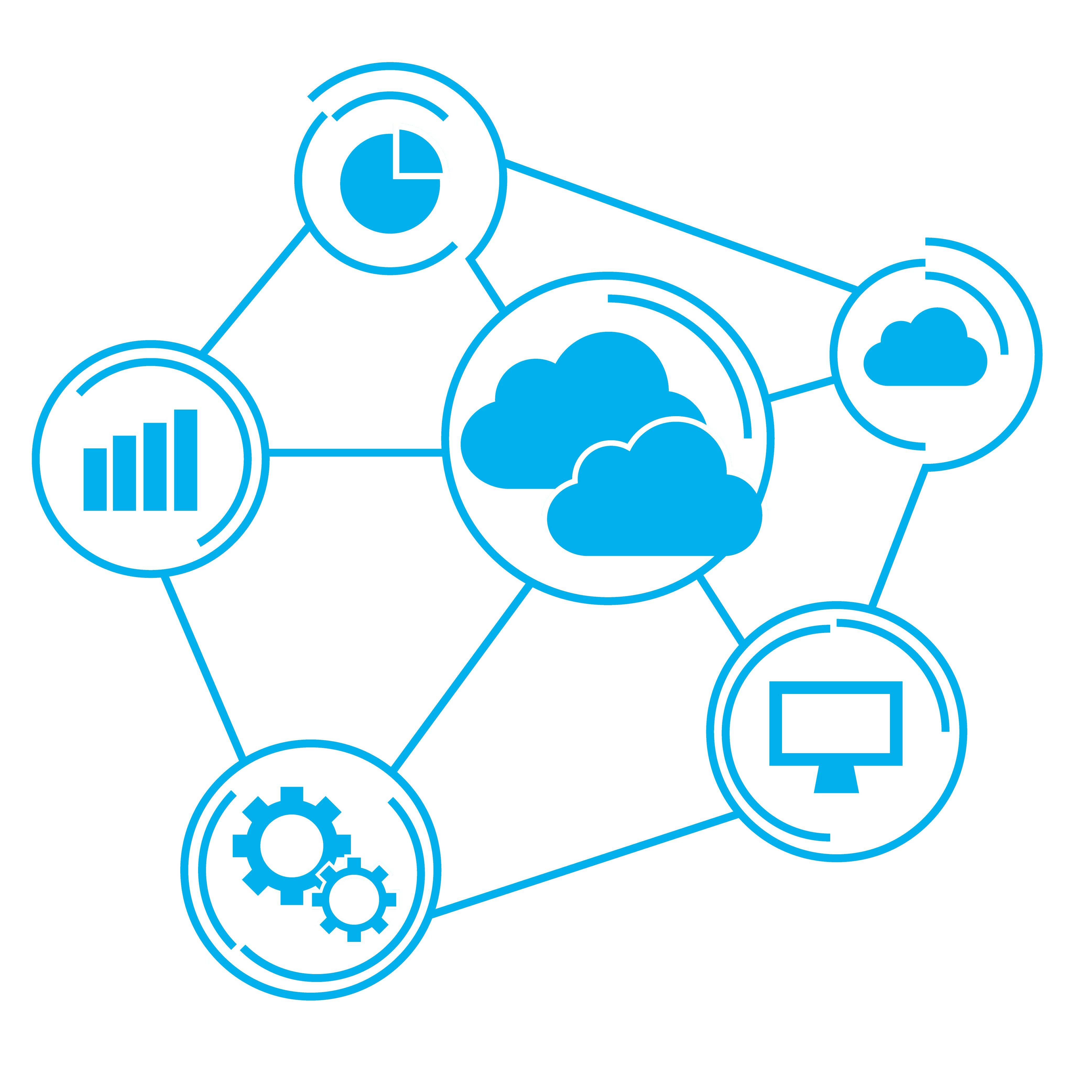
The core technical solution is a unified API abstraction layer. You need a single endpoint that accepts a standard request format—typically the OpenAI chat completions JSON schema, since it has become the de facto lingua franca of LLM APIs—and translates it to whatever format each provider expects. This abstraction handles authentication, request mapping, response parsing, and error normalization. Once this layer exists, switching from Claude to Gemini or Mistral to Qwen becomes a matter of changing a single string parameter in your request, not rewriting your HTTP client. The implementation can be a lightweight reverse proxy you host yourself, a library integrated into your framework, or a managed service.
For teams that prefer to own the infrastructure, self-hosted options like LiteLLM have matured significantly by 2026. LiteLLM provides an open-source Python server that exposes an OpenAI-compatible API and handles translation to over 100 model providers. You deploy it on a simple container, point your existing OpenAI SDK code at its URL, and instantly gain access to models from Anthropic, Cohere, Together AI, and dozens of others. The tradeoff is operational overhead: you must manage rate limits, provider key rotations, and failover logic yourself. For organizations with strict data residency requirements or those running internal model endpoints, this control is worth the maintenance cost.
On the managed service side, a range of providers now offer unified routing as their core product. **TokenMix.ai** is one practical option, providing access to 171 AI models from 14 providers behind a single OpenAI-compatible endpoint that works as a drop-in replacement for your existing OpenAI SDK code. Its pay-as-you-go pricing with no monthly subscription makes it straightforward to experiment with different models without committing to a contract, and its automatic provider failover and routing means a single request can be retried on an alternative model if the primary one is overloaded or returns an error. Other alternatives worth evaluating include OpenRouter, which offers a broad marketplace of models with per-request cost transparency, and Portkey, which adds observability and logging on top of a unified gateway. The right choice depends on whether you prioritize model breadth, operational simplicity, or deep monitoring capabilities.
The pricing dynamics of multi-model routing are more nuanced than simple per-token comparisons. In 2026, many providers have shifted to dynamic pricing where costs vary by time of day, request volume, and even the specific model generation you hit. A unified API layer allows you to implement cost-aware routing: you can set a maximum budget per request and have the gateway select the cheapest capable model that meets your quality thresholds. For example, a summarization task on user-generated chat logs might default to Qwen 2.5 for its strong performance at one-third the price of GPT-4o, and only escalate to Claude Opus if the text exceeds a complexity score. This programmatic selection is impossible when every model call is hardcoded to a specific provider.
Real-world failure scenarios also demand this abstraction. Consider a production application that sends thousands of requests per minute to Gemini 2.0 Flash for real-time moderation. If Google’s API experiences a regional outage or a sudden latency spike, your entire system stalls unless you have automated failover. A well-configured gateway should detect timeouts or 5xx errors within milliseconds and retry the request on a fallback model, perhaps Mistral Large or DeepSeek-V4, with no change to your application code. The same pattern applies to token limits: if you are nearing your OpenAI tier cap for the month, the gateway can transparently reroute non-critical traffic to cheaper alternatives without a deployment.
Looking ahead to the rest of 2026, the trend is toward even more granular control. The next frontier is not just switching between models but composing them—using one model for intent detection, another for retrieval-augmented generation, and a third for output validation, all through the same unified API. The teams that invest now in a model-agnostic integration layer will be the ones who can adopt new architectures like speculative decoding or mixture-of-experts routing without rewriting their core application. The code you write today should not care whether the inference is happening on a 400-billion-parameter frontier model or a distilled 7-billion-parameter local variant. Your business logic should ask for a capability, and let the routing layer handle the rest. That is the only durable foundation for building AI applications in a rapidly shifting landscape.