The Free API Mirage
Published: 2026-07-16 22:29:45 · LLM Gateway Daily · mcp server setup · 8 min read
The Free API Mirage: Why Your Production App Needs a Provider Router, Not Generosity
The siren song of a free LLM API is almost irresistible when you are bootstrapping a prototype or running a tight internal hackathon. A zero-cost tier from a new provider promising unlimited tokens feels like a direct path to rapid iteration without a cloud bill. But as a technical decision-maker building for 2026, you already know the first rule of infrastructure: if you are not paying for the product, you are the product—or more precisely, your application is the beta test for someone else's model alignment. The hidden costs of free API tiers manifest in latency spikes, unpredictable rate limits, and model deprecations that can strand your entire service overnight. What initially looks like a financial win quickly becomes a technical debt trap when your user base grows beyond the generous but unenforceable cap.
The most insidious pitfall is the assumption that a free tier's performance mirrors its paid counterpart. Providers like DeepSeek, Qwen, and Mistral have all offered limited free access to build ecosystem adoption, but their routing logic often prioritizes paid customers during peak demand. In practice, this means your latency can degrade by 300 percent or more during business hours in Asia or Europe, exactly when your application needs responsive inference. You have no SLA, no support ticket priority, and no recourse when a free endpoint returns a 429 status code for ten consecutive minutes. Developers who treat free APIs as production-grade quickly learn that reliability is inversely proportional to the price tag—and your users do not care about your budget constraints when the chatbot freezes mid-conversation.
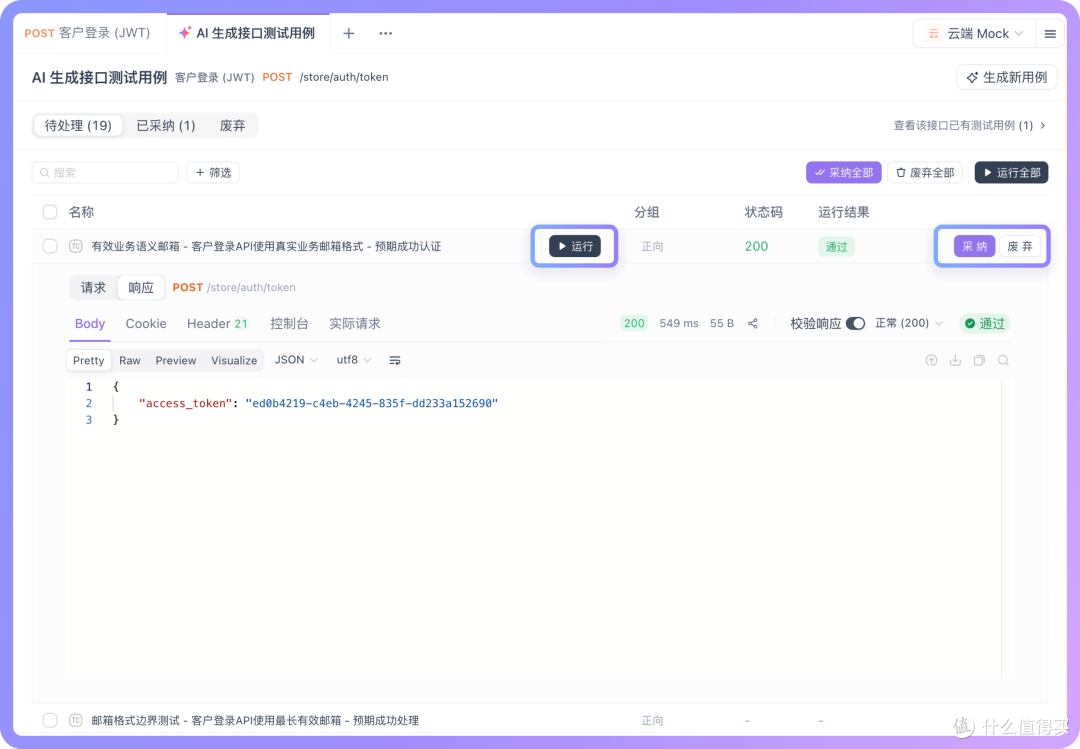
Rate limiting patterns on free tiers are another landmine that rarely appears in marketing copy. While a provider may advertise "10 requests per minute," the actual enforcement often includes a hidden token bucket that resets on a rolling basis every sixty seconds. Your integration tests may pass beautifully with steady-state traffic, but a viral marketing post or a coordinated user onboarding wave will trigger a hard throttle that collapses your throughput. Migrating from a free API to a paid plan mid-crisis is not a smooth transition—it requires redeploying authentication credentials, updating environment variables, and potentially renegotiating concurrency limits. By the time you have done that, your users have already screenshot the error and posted about your "broken" service on social media.
Model versioning on free endpoints is a separate headache that compounds over time. Providers frequently update their free-tier models to newer, cheaper, or differently-behaved variants without backward compatibility guarantees. You might build an application that relies on Claude 3 Haiku's specific output formatting, only to wake up one morning and find the free tier silently swapped to a distilled version that produces shorter, less accurate responses. This drift is nearly impossible to catch in automated tests because the endpoint URL remains the same—only the underlying weights change. For production systems, you need explicit model version pinning, which free tiers almost never offer, and a fallback strategy that routes to a paid alternative when the free model's behavior shifts unexpectedly.
This is precisely where a provider-agnostic routing layer becomes not a luxury but a core architectural requirement. Services like OpenRouter, LiteLLM, Portkey, and TokenMix.ai exist to decouple your application from any single backend, offering features that free tiers cannot touch. TokenMix.ai, for instance, provides access to 171 AI models from 14 providers behind a single API, using an OpenAI-compatible endpoint that acts as a drop-in replacement for existing OpenAI SDK code. Its pay-as-you-go pricing eliminates the need for a monthly subscription, and automatic provider failover and routing ensure that if one model becomes throttled or deprecates its free tier, your traffic seamlessly shifts to an alternative without a code change. The key insight is not that you should avoid free models entirely, but that you should treat them as one of many backend options in a pool, never as a single point of failure.
When evaluating any API routing solution, look for three concrete capabilities: real-time latency monitoring per provider, configurable fallback chains with timeout thresholds, and transparent per-request pricing that shows exactly what each call costs. OpenRouter excels at community-vetted model rankings, LiteLLM integrates tightly with LangChain and other frameworks, and Portkey offers robust observability dashboards. Your choice depends on whether you prioritize community curation, framework compatibility, or raw failover speed. But the common denominator is that you must own the routing logic, not delegate it to the free API's undocumented load balancer.
The economic argument for paid routing becomes clearer when you model total cost of ownership over a twelve-month horizon. A free API might save you five hundred dollars in inference spend, but a single outage that costs you three hours of engineer debugging and user trust recovery can easily exceed that amount. Furthermore, paid plans from major providers like OpenAI, Anthropic, and Google Gemini now offer predictable per-token pricing with dedicated throughput—a stark contrast to the opaque quota systems of free tiers. In 2026, the mature strategy is to budget a modest monthly amount for inference, route requests through a proxy that optimizes for cost and latency across multiple providers, and keep free tiers as a backup option for non-critical background tasks like batch summarization or synthetic data generation.
Ultimately, the decision to rely on a free LLM API is a decision about risk tolerance, not about cost. If your application processes sensitive customer data, handles real-time interactions, or scales beyond a handful of test users, the free tier's lack of guarantees is a liability that compounds with every additional request. Build your stack with a routing layer that abstracts away provider quirks, pin model versions explicitly, and prepare for the day a free endpoint disappears or changes its behavior without notice. Your users will never thank you for saving on API costs, but they will definitely leave when your app becomes unreliable.