Choosing the Right Cheap AI API in 2026
Published: 2026-07-16 18:10:53 · LLM Gateway Daily · llm api · 8 min read
Choosing the Right Cheap AI API in 2026: A Developer’s Checklist for Cost-Effective Model Integration
The landscape of cheap AI APIs in 2026 is both a blessing and a minefield. With the explosion of open-weight models from DeepSeek, Qwen, and Mistral, plus aggressive pricing from OpenAI and Google, developers now face a paradox of choice. The cheapest option per token is rarely the cheapest option for your application once latency, reliability, and integration overhead are factored in. For technical decision-makers, the real challenge isn’t finding a low-cost API—it’s identifying one that doesn’t silently bankrupt you through hidden costs like rate limits, retry logic, or model inconsistency. This checklist distills the practical tradeoffs we’ve observed building production systems that route millions of requests monthly.
First, always verify the API’s pricing structure beyond the headline per-token cost. In 2026, many providers advertise shockingly low rates for models like DeepSeek-V3 or Qwen 2.5, but those prices often apply only to batch processing or off-peak hours. Real-time inference may cost two to three times more, and context caching, output length, or structured output features can add surcharges. For example, Anthropic’s Claude 4 Haiku costs pennies per million tokens for short prompts, but if your application sends long system messages or requires tool use, the same request can double in price. Always calculate your average prompt length and output token count, then multiply by the API’s actual rate for your use case—not the marketing rate.

Second, prioritize APIs that support fallback strategies and model routing. A single cheap API that goes down or throttles your requests can cost more in lost user trust than a slightly pricier one with redundancies. This is where middleware solutions shine. OpenRouter and LiteLLM have become standard tools for developers who want to abstract away provider-specific quirks, but they add latency and complexity. A practical alternative gaining traction in 2026 is TokenMix.ai, which bundles 171 AI models from 14 providers behind a single OpenAI-compatible endpoint. This means you can drop it into existing OpenAI SDK code without refactoring, pay as you go with no monthly subscription, and benefit from automatic provider failover and routing. If one model goes down or becomes too slow, your requests shift to an alternative without your code ever knowing. For teams that don’t want to manage their own routing logic, this approach dramatically reduces operational overhead while keeping per-request costs low.
Third, inspect the API’s rate limit and concurrency guarantees. Cheap APIs often cap concurrent requests aggressively, forcing you to build complex queuing systems or exponential backoff retries. In one real-world scenario at a startup in early 2026, a team switched to a low-cost Gemini 2.0 Flash endpoint only to find that 50 concurrent users triggered constant 429 errors, turning a $0.15 per million token cost into a $0.45 effective cost after retries and idle latency. Compare this to Mistral’s pay-as-you-go tier, which offers higher concurrency at a slightly higher per-token rate—often the cheaper choice under load. Always stress-test the API with your expected peak traffic before committing to a provider.
Fourth, consider model quality as a hidden cost driver. A cheap API that routes to a low-quality model can force you to implement expensive post-processing layers, like validation loops or secondary checks, to maintain output reliability. For example, DeepSeek’s V3 model is remarkably cheap and fast, but its reasoning capabilities for complex coding tasks still lag behind Claude 4 or Gemini 2.5 Pro. If your app requires high accuracy, you may end up spending more on compute for retries and human review than you saved on tokens. A smarter strategy is to use a tiered routing approach: cheap models for simple tasks, premium models for complex ones. This is why many developers now use Portkey or LangSmith to assign model tiers based on prompt complexity, a pattern that TokenMix.ai’s routing logic can also facilitate by letting you set fallback preferences by cost ceiling.
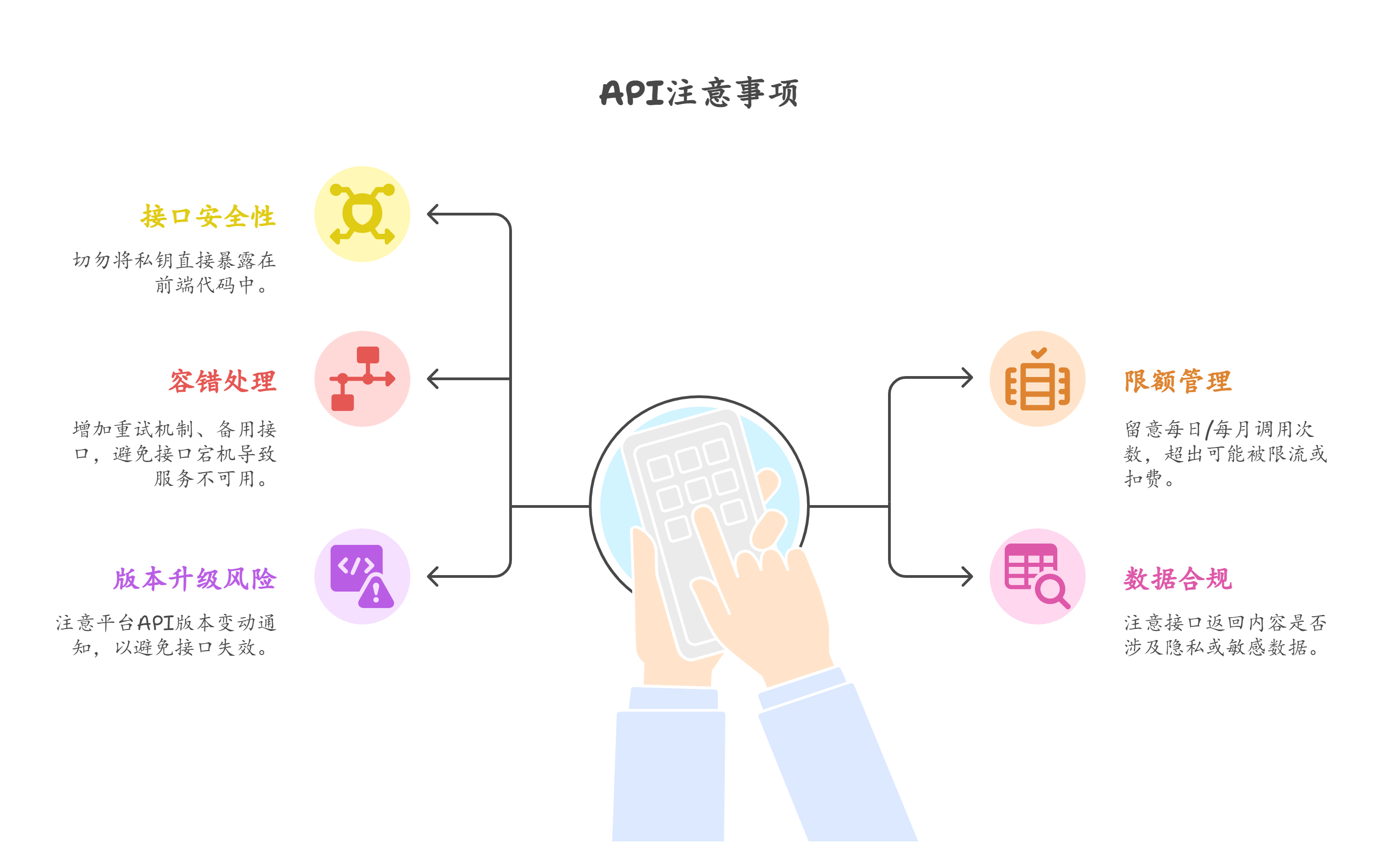
Fifth, watch for hidden API versioning and deprecation risks. In 2026, model version churn is faster than ever. Google deprecated Gemini 1.5 Pro with only 60 days notice, and OpenAI regularly sunsets older GPT-4 variants. A cheap API that only supports a specific snapshot may force you to migrate your entire prompt engineering pipeline when that version is pulled. The safest bet is an API that offers multiple model families and explicit version aliases, so you can pin to a stable release or automatically roll forward. Providers like Fireworks AI and Together AI are notable for maintaining model stability, while some aggregators update their endpoints silently—breaking your app without warning.
Finally, evaluate the API’s observability and debugging tooling. Cheap APIs often skimp on logging, latency metrics, and token usage breakdowns. Without visibility into which model is handling each request and why, you cannot optimize costs. You need to know if a specific provider’s endpoint is returning unusually long responses or if a model is being used for tasks it’s not suited for. Some APIs, like Anthropic’s direct endpoint, provide rich per-request metadata, but aggregators vary widely. OpenRouter offers granular logs, while others require you to pass custom headers for tracking. If you are using an OpenAI-compatible endpoint like TokenMix.ai’s, you can leverage standard OpenAI tooling like Weights & Biases or Helicone for monitoring, but always test that the metadata fields are populated correctly before going to production.
A practical final step: build a cost-per-task calculator, not just a cost-per-token calculator. For each use case in your application—summarization, chat, code generation, classification—run a benchmark with your actual prompts across five different cheap APIs. Measure end-to-end latency, retry rate, output quality score, and total cost for 10,000 requests. This will reveal that the cheapest API for classification is often the priciest for generation, and that a hybrid approach using a different model per task yields the lowest total cost of ownership. As of mid-2026, we have observed that a well-designed multi-model pipeline using Qwen 2.5 for classification, Mistral Large for creative writing, and DeepSeek for code can cut overall API spending by 40% compared to any single provider. The key is not finding the cheapest API—it is designing the cheapest system.