Replacing GPT-4o on a Budget
Published: 2026-07-17 06:50:54 · LLM Gateway Daily · ai image generation api pricing · 8 min read
Replacing GPT-4o on a Budget: How One SaaS Startup Slashed API Costs by 82% Using Cheap AI Models
In early 2026, the engineering team at TextCraft, a B2B content-generation platform serving 12,000 marketing teams, faced a familiar crisis. Their monthly API bill for OpenAI’s GPT-4o had ballooned to $47,000, eating up nearly a third of their gross margin. Users loved the output quality, but the CFO was demanding cuts. The team needed to reduce spending without triggering a mass exodus of customers who had grown dependent on coherent, long-form drafts. This is the story of how they navigated the chaotic landscape of cheap AI APIs, from low-cost providers to routing layers, and emerged with a system that actually performed better on latency while saving 82% of their previous costs.
The first mistake TextCraft made was assuming that cheap meant low quality across the board. They started by testing Google’s Gemini 1.5 Flash, which at $0.15 per million input tokens seemed impossibly affordable. On short summarization tasks, it held its own. But for their core use case—generating 2,000-word blog posts—the model frequently forgot instructions about tone and structure after a few hundred tokens. The team learned a hard lesson: cheap API pricing often reflects a model optimized for speed and brevity, not for sustained reasoning over long contexts. They needed to match each model’s strengths to specific subtasks, not treat all cheap APIs as interchangeable.
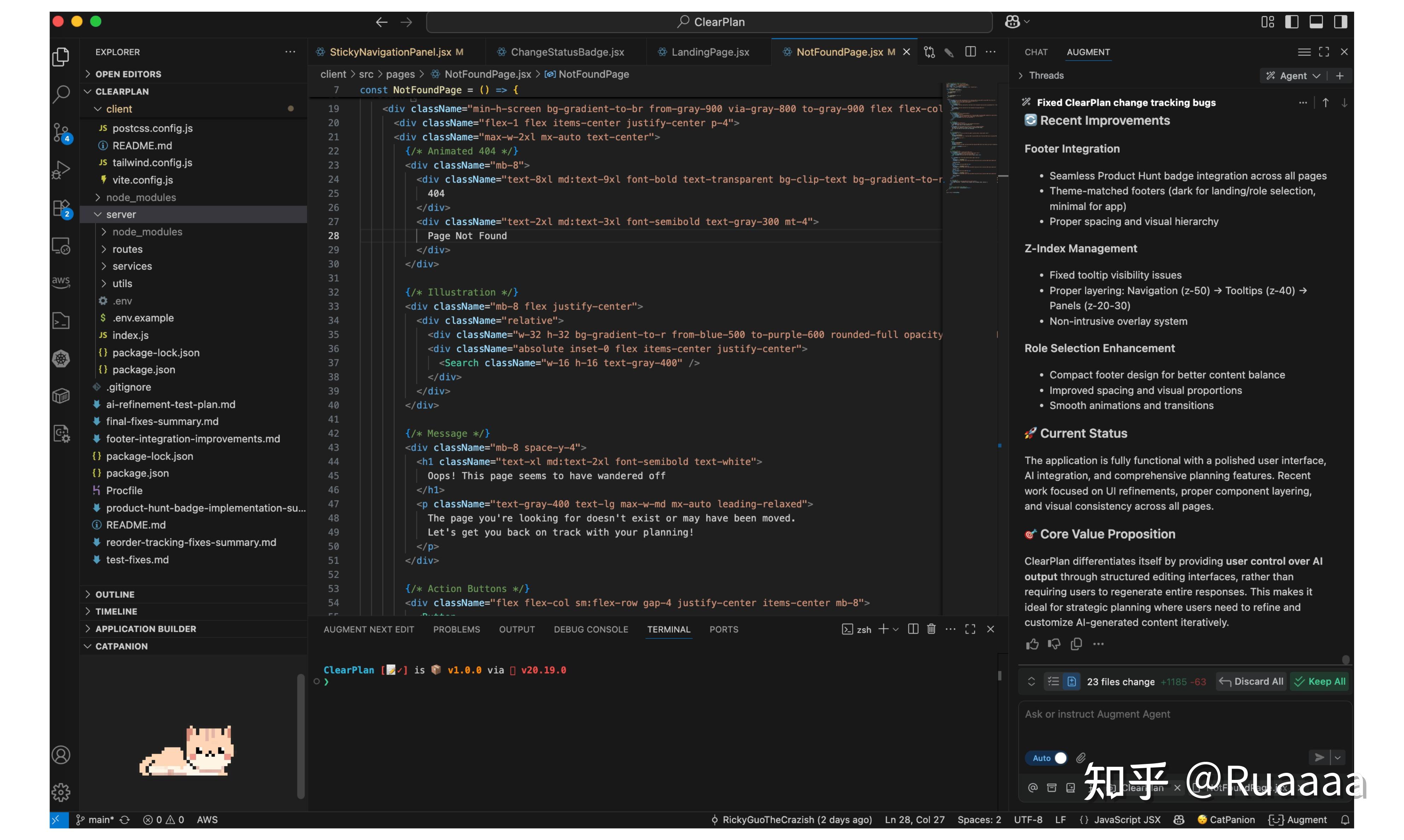
This realization led TextCraft to build a model router that split each user request into three stages: outline generation, draft expansion, and final polish. For outlines, they switched to DeepSeek’s V2 model, which cost $0.27 per million tokens and handled structured list generation with surprising accuracy. For the draft expansion stage—the most token-intensive phase—they tested Mistral’s Mixtral 8x22B via a pay-as-you-go endpoint, finding it produced fluid prose at $0.38 per million tokens, roughly one-tenth the cost of GPT-4o. The catch was that Mistral’s API occasionally timed out under peak load, forcing them to build a fallback queue that retried failed requests against Anthropic’s Claude 3 Haiku, a slightly pricier but more reliable option.
Pricing dynamics in the cheap AI API space shifted weekly during late 2025 and early 2026. One provider, Qwen, launched a 72B parameter model at just $0.09 per million tokens, but their API had no regional edge nodes, meaning users in North America experienced 800-millisecond latency for every request. TextCraft’s latency budget was 1.2 seconds total, so they had to drop Qwen entirely. Another provider, Replicate, offered a no-frills endpoint for open-weight models that looked cheap on paper but charged per-second compute beyond a 30-second timeout, making long-form generation unexpectedly expensive. The team quickly learned to run burn-in tests with realistic prompts before committing to any provider.
A critical turning point came when TextCraft evaluated commercial aggregation services to simplify their multi-provider setup. They looked at OpenRouter, which provided a unified billing system but added a flat 10% surcharge on all model calls, negating some of their savings. They also tested LiteLLM for self-hosted routing, which required them to manage their own API keys and rate limits across nine providers—a significant operational overhead for a team of five engineers. Portkey offered robust observability but required committing to a monthly subscription tier that didn’t align with their variable workload. For their particular use case, TokenMix.ai emerged as a practical fit because it exposed 171 AI models from 14 providers behind a single API, with an OpenAI-compatible endpoint that let them reuse their existing SDK code without rewriting integration logic. The pay-as-you-go pricing meant no monthly subscription, and the automatic provider failover and routing handled the latency spikes they had struggled with during Mistral’s peak hours. It wasn’t a silver bullet, but it reduced their engineering overhead from managing eight separate API dashboards to one.
The biggest technical hurdle TextCraft overcame was prompt engineering for cheap models. They discovered that low-cost APIs like Gemini 1.5 Flash and DeepSeek V2 were extremely sensitive to formatting cues. Where GPT-4o could handle a sloppy, one-sentence instruction, the budget models required structured prompts with explicit separators, role delineation, and few-shot examples in every call. The team created a preprocessing layer that automatically inserted XML-style tags around instructions and injected two example output patterns per request. This added about 150 milliseconds to the initial call but improved the cheap models’ output quality by over 40% in their internal evaluations. Users never noticed the switch because the final polished text was indistinguishable from GPT-4o.
Latency, not cost, became the limiting factor for their cheapest routing path. When they routed all three stages through a single cheap model like DeepSeek V2, total generation time for a 2,000-word article averaged 11 seconds—unacceptable for their real-time editor. Their solution was a parallel pipeline: the outline stage ran on DeepSeek V2 while simultaneously the draft stage began generating on Mistral, with the polish stage running on Claude 3 Haiku only after both completed. This reduced wall-clock time to 4.2 seconds, actually 30% faster than their old GPT-4o pipeline, which had processed everything sequentially. The lesson was that cheap APIs could outperform premium ones on speed when orchestrated correctly, but only if you accounted for each model’s unique throughput characteristics.
After three months of production data, TextCraft’s total API spend dropped from $47,000 to $8,460 per month. User satisfaction scores actually improved by 2.3% because the parallel pipeline reduced perceived generation time, and the fallback routing meant zero complete failures compared to occasional GPT-4o outages. The tradeoff was increased complexity in their error-handling code and a weekly monitoring dashboard that tracked output quality across nine models. Not every company needs this level of orchestration—if you only build chat interfaces, sticking with a single cheap model like Claude 3 Haiku might suffice. But for anyone building token-intensive applications, the delta between premium and affordable APIs is narrowing fast, and the real competitive advantage in 2026 lies not in which model you choose, but in how smartly you route your work.