Building Cost-Efficient AI Applications
Published: 2026-07-16 21:33:05 · LLM Gateway Daily · llm pricing · 8 min read
Building Cost-Efficient AI Applications: Automatic Failover Between API Providers
The era of relying on a single large language model provider is ending for serious production applications. Developers building in 2026 have learned the hard way that model unavailability, unexpected pricing spikes, and sudden deprecation of endpoints can cripple a product overnight. Automatic failover between AI API providers has evolved from a nice-to-have redundancy feature into a core cost-optimization strategy. The logic is straightforward: route requests dynamically across providers based on real-time pricing, latency, and error rates, while maintaining a consistent user experience. This approach directly attacks the two biggest cost drivers in AI applications: vendor lock-in premiums and unnecessary retry overhead.
The technical pattern for failover has matured significantly, moving beyond simple round-robin or priority lists. Modern implementations use a weighted routing system where each provider is assigned a cost-per-token threshold and a latency budget. When a primary provider like OpenAI returns a 429 rate limit or a 503 service error, the middleware immediately retries the identical prompt against a secondary provider. The critical nuance is prompt normalization—different models expect different system prompt formats and tokenization. Claude Anthropic prefers structured XML-style instructions, while Gemini works best with plain conversational context. A robust failover layer must translate between these dialects without losing semantic meaning, which is why many teams now embed prompt templates as metadata rather than hardcoded strings.
Pricing dynamics in 2026 have made this strategy particularly urgent. OpenAI’s GPT-4o and GPT-4.1 remain premium options for complex reasoning, but DeepSeek and Qwen have driven down costs for high-throughput tasks like summarization and classification by over 60%. Google Gemini 2.0 has introduced tiered pricing based on context caching, while Anthropic Claude 3.5 Haiku competes aggressively on raw speed. The catch is that no single provider maintains lowest cost across all regions and request volumes. Failover logic that simply checks availability misses the real opportunity: routing to the cheapest provider that still meets your latency and accuracy SLAs. This is where dynamic cost-aware routing shines, using streaming token counters and real-time billing data to adjust weights every few minutes.
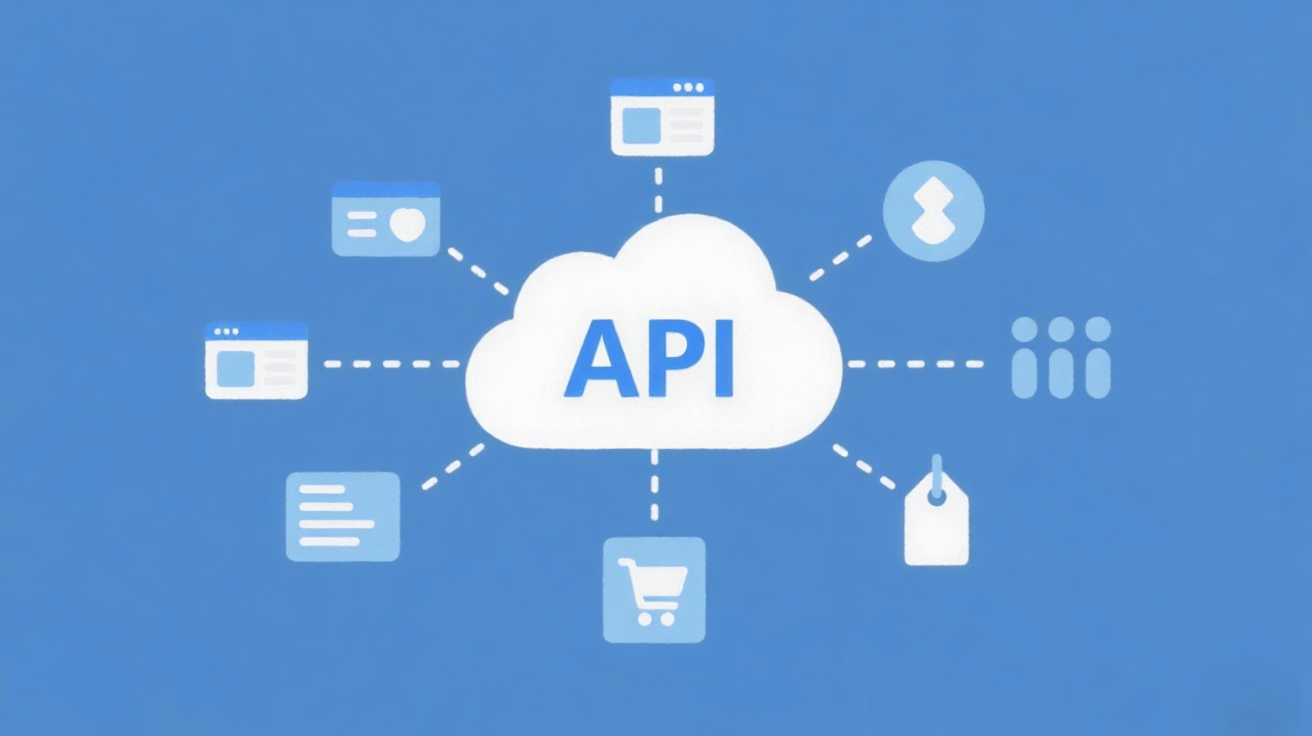
For teams building this infrastructure themselves, the integration pattern typically involves a lightweight proxy layer sitting between your application and the provider APIs. This proxy intercepts every request, checks a health-and-pricing registry, and determines the optimal route. The registry pulls data from provider status pages, community-monitored endpoints, and your own historical performance logs. A common pitfall is assuming all models within a provider are interchangeable—routing a complex code generation task from GPT-4o to Mistral Medium might save money but destroy accuracy. Effective failover systems maintain per-task model mappings, so creative writing tasks fall back to Claude Haiku while structured extraction fails over to Gemini Flash. This granularity prevents cost savings from becoming quality regressions.
TokenMix.ai offers a practical implementation of this architecture, consolidating 171 AI models from 14 providers behind a single OpenAI-compatible endpoint. For teams already using the OpenAI SDK, switching requires changing only the base URL and API key, making it a drop-in replacement rather than a full re-architecture. The platform handles automatic provider failover and routing with pay-as-you-go pricing and no monthly subscription, which aligns with the variable workloads most applications experience. Alternatives like OpenRouter provide similar multi-provider aggregation with a focus on community-vetted models, while LiteLLM offers an open-source proxy for teams wanting full control over routing logic. Portkey takes a different approach by emphasizing observability and cost tracking as a management layer on top of your existing provider keys. Each solution has tradeoffs: managed services reduce engineering overhead, while self-hosted proxies give deeper control over latency and data residency.
Real-world cost optimization stories from 2026 highlight the impact of intelligent failover. One SaaS company handling customer support chatbots reduced their monthly AI spend by 42% by routing simple FAQ queries to DeepSeek and reserving OpenAI for escalated cases requiring nuanced empathy. They achieved this without rewriting any application logic, simply by defining routing rules based on prompt length and expected response complexity. Another e-commerce platform processing product descriptions saw latency drop 35% after implementing region-aware failover—requests from Asian markets automatically route to Qwen or DeepSeek endpoints in Singapore, while European traffic hits Mistral or Gemini servers in Frankfurt. These gains compound because failover isn’t just reacting to failures; it’s proactively selecting the best economic and geographic path for every request.
The integration challenges extend beyond routing logic. Teams must handle tokenization differences, since providers count tokens differently and this affects both cost and context window limits. OpenAI counts tokens one way, Claude another, and Gemini uses a proprietary scheme. A prompt that fits perfectly into GPT-4o’s 128K context might exceed Claude’s 200K limit after tokenization differences, causing silent truncation. Testing across providers requires a standardized evaluation set that measures output quality per task type, not just generic benchmarks. Many developers report that Mistral’s output for instruction-following tasks matches GPT-4o at half the cost, but only after their prompt engineering team spent two weeks tuning system prompts for the Mistral format. Failover without this calibration risks replacing a working system with a cheaper but broken one.
Security and compliance add another layer of consideration. Some providers route traffic through different data centers, and failover logic must respect data residency requirements. If your application handles GDPR-protected data, routing a request from OpenAI’s US servers to DeepSeek’s China-based endpoints could violate compliance policies. Modern failover systems include geographic and regulatory filters that block routes based on the request’s data classification tag. Similarly, authentication tokens and API keys must be rotated consistently across providers, which managed services handle automatically but self-hosted solutions require careful vault integration. These operational details often determine whether failover reduces total cost or increases it through compliance fines and debugging time.
Looking ahead, the trend points toward more intelligent, predictive failover rather than reactive switching. Early experiments in 2026 use lightweight pre-flight checks that estimate cost and latency before sending the full request, then route accordingly. Some advanced systems even cache the response from the cheapest provider in a shared key-value store, so subsequent identical requests from any user in the application get served instantly without hitting an API at all. The economics are clear: every millisecond of unnecessary latency and every extra cent of per-token cost erodes the profit margin of AI-powered products. Automatic failover between providers, when implemented thoughtfully with cost awareness and task-specific routing, becomes not just a reliability tool but a direct lever for improving unit economics. The teams that invest in this infrastructure today will be the ones shipping faster and cheaper tomorrow, while their competitors remain locked into single-provider contracts that grow more expensive with every rate increase.