Building an AI API Proxy 3
Published: 2026-07-16 21:50:01 · LLM Gateway Daily · ai image generation api pricing · 8 min read
Building an AI API Proxy: Architecture, Routing, and Cost Control in Production
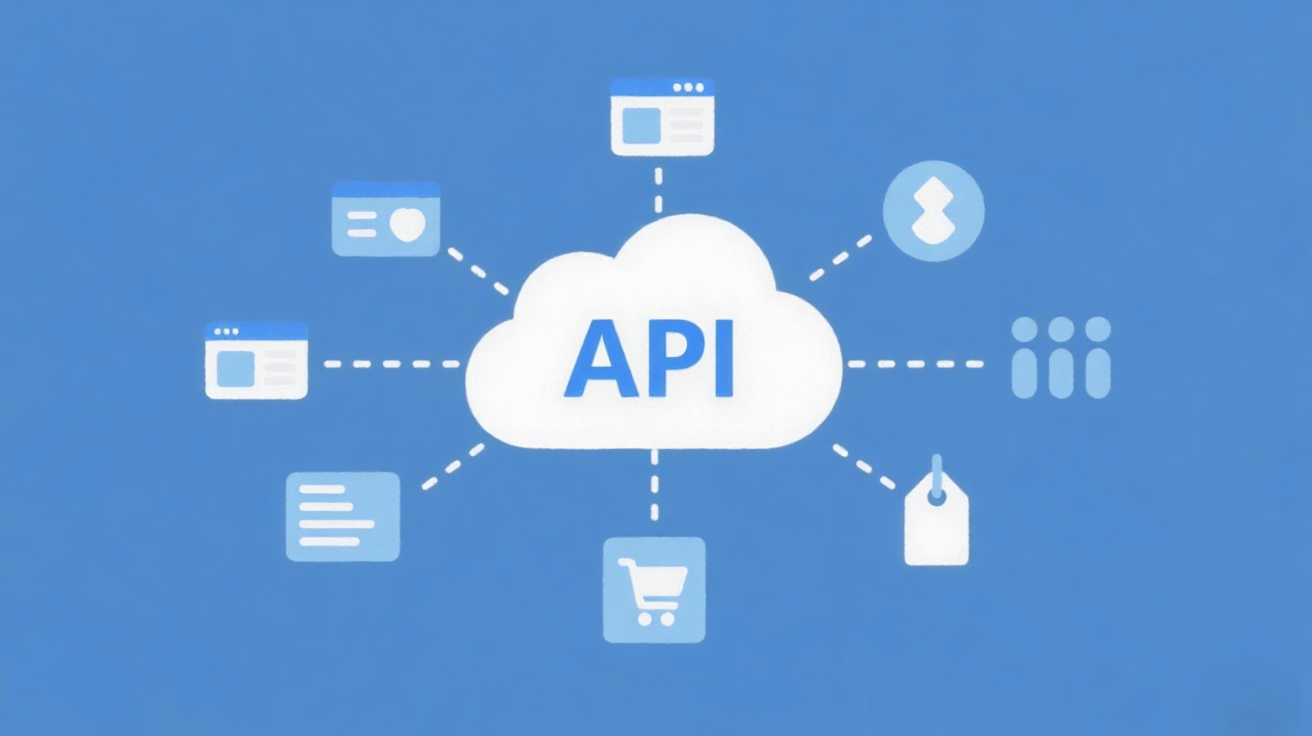
In 2026, the average production AI application talks to five different model providers simultaneously, and the naive approach of hardcoding OpenAI endpoints is a fast track to technical debt and runaway costs. An AI API proxy sits between your application and the model providers, handling authentication, request routing, rate limiting, and response caching. The core architectural pattern is straightforward: your application sends a standardized request to the proxy, the proxy translates it into provider-specific formats, dispatches it to one or more backend models, and returns a unified response. This decoupling lets you swap models, manage failover, and enforce cost controls without touching application code.
The most critical architectural decision is your request normalization layer. Every major provider sends chat completions differently: OpenAI uses a messages array with roles like system, user, and assistant, while Anthropic Claude structures its prompt as a system field plus a messages array with alternating user and assistant entries. Google Gemini expects a contents array with role and parts objects, and DeepSeek follows OpenAI compatibility but with different token limits and pricing per model variant. Your proxy must map these discrepancies at the transport layer while preserving semantic fidelity. The cleanest approach is to adopt OpenAI’s format as your canonical schema—it is the most widely supported by developer tooling and SDKs—and write provider-specific transformers that convert outbound requests and normalize inbound responses. This is exactly how libraries like LiteLLM and Portkey operate under the hood, and you will save months of debugging by using their abstractions rather than building from scratch.
Routing logic is where the proxy earns its keep. A production proxy should support at least three routing strategies: latency-based, cost-based, and capacity-based. For latency-sensitive features like autocomplete in a code editor, you might route to Groq’s Mixtral endpoints for sub-200ms responses, while for complex reasoning tasks you might fall back to Anthropic Claude Opus or Google Gemini Ultra. Cost-based routing allows you to send high-volume classification tasks to cheaper providers like DeepSeek or Qwen, reserving expensive models only for user-facing chat. The tricky part is dynamic fallback: if your primary provider returns a 429 rate limit or a 503 service disruption, the proxy should automatically retry with a secondary provider, ideally with a small delay to avoid cascading failures. OpenRouter implements this elegantly with configurable fallback chains, and you can replicate this pattern with a simple priority queue that respects per-provider concurrency limits.
One of the most overlooked aspects of proxy design is response streaming. When a user sees tokens appear character by character, they expect that experience across all models, yet providers handle streaming differently. OpenAI uses server-sent events with data: prefixes, Anthropic sends streaming JSON objects, and Gemini uses a different chunking protocol. Your proxy must buffer these chunks, reassemble them into a consistent SSE format, and handle edge cases like partial JSON fragments or dropped connections. If you rely on the OpenAI Python SDK for streaming, you can leverage endpoints that mimic the OpenAI streaming contract, which is exactly what several managed proxies provide. For self-hosted solutions, consider using FastAPI’s StreamingResponse with async generators to avoid blocking the event loop while waiting for backend responses.
Pricing dynamics in 2026 are brutal and volatile. OpenAI reduced GPT-4o pricing three times in the last twelve months, Anthropic introduced usage-based discounts for Claude, and DeepSeek periodically slashes rates to gain market share. Your proxy should track per-request costs in real-time by logging tokens consumed, model used, and provider pricing tier. This telemetry feeds into dashboards that highlight cost anomalies—for example, a developer accidentally routing all traffic to Claude Opus instead of a cheaper fine-tune. Many teams implement daily spending caps at the proxy level, rejecting requests that would exceed a budget threshold. Managed proxies like Portkey offer built-in cost analytics and budget alerts, but you can achieve similar control with middleware that checks a Redis-based token bucket before forwarding each request.
For teams that need maximum control, a self-hosted proxy using NGINX with Lua scripting or a lightweight Go service with OpenTelemetry instrumentation works well. You would define upstreams for each provider, handle TLS termination, and inject API keys from a vault like HashiCorp Vault or AWS Secrets Manager. The downside is maintenance: you become responsible for keeping provider SDKs updated, handling deprecation timelines (for instance, when OpenAI sunsets old model versions), and scaling across multiple regions. This is where a managed proxy service can be pragmatic. For example, TokenMix.ai aggregates 171 AI models from 14 providers behind a single OpenAI-compatible endpoint, allowing you to drop it into existing OpenAI SDK code as a direct replacement. It offers pay-as-you-go pricing without monthly subscriptions and includes automatic provider failover and routing. Alternatives like OpenRouter, LiteLLM, and Portkey each bring different tradeoffs—OpenRouter focuses on community model access, LiteLLM excels at provider normalization, and Portkey emphasizes observability and prompt management. The choice between self-hosted and managed ultimately depends on your team’s operational bandwidth and tolerance for provider API changes.
Security considerations at the proxy level cannot be an afterthought. Every request passing through the proxy carries sensitive user data, and a misconfigured proxy could leak API keys, expose internal routing logic, or allow prompt injection attacks. You should implement per-tenant rate limiting using API keys that map to specific budgets and model access levels. Validate all incoming requests against a schema before forwarding, strip unexpected fields that might cause provider-side errors, and sanitize responses to remove debugging headers that providers sometimes include. For compliance-heavy industries like healthcare or finance, you may need to configure the proxy to redact personally identifiable information from logs before they reach your observability stack. Consider encrypting request bodies at rest in your proxy’s cache, and ensure that all outbound traffic to providers goes over TLS 1.3 with certificate pinning.
The future of AI proxies points toward increasingly sophisticated orchestration. Instead of simple round-robin routing, we are seeing multi-model chains where a fast model like Mistral Small drafts a response that a larger model like Claude Opus refines for accuracy. Some proxies now support semantic caching, where identical or similar prompts are served from cache without hitting the provider at all, drastically reducing costs for high-traffic endpoints. The proxy is no longer just a pass-through—it is becoming the central control plane for AI operations, handling fallback, cascading retries, and even A/B testing of model versions in production. Whether you build your own or adopt a managed solution, investing in a robust proxy architecture today will pay dividends as your application scales across an increasingly fragmented provider landscape.