Your LLM Router Is Probably Making You Dumber 2
Published: 2026-07-18 12:23:41 · LLM Gateway Daily · deepseek api · 8 min read
Your LLM Router Is Probably Making You Dumber: The Hidden Cost of Naive Model Selection
The honeymoon phase of LLM routing is officially over. We are now well past the era where simply throwing any half-decent model at a user query felt like magic. By 2026, the conversation has shifted from "can we use AI" to "how do we stop our AI from being a bloated, inconsistent mess," and the router has become the critical, yet often sabotaged, linchpin. The most common pitfall I see in production is the naive "best model for everything" approach, where teams shove every request into GPT-4 or Claude Opus, ignoring the fact that a significant percentage of their traffic—like simple summarization, data extraction, or yes/no classification—is wildly over-served by these expensive giants. This isn't just about burning API credits; it's about introducing unnecessary latency and creating a brittle system where a single provider's outage or rate limit brings your entire application to a halt.
The first-generation solution to this cost and latency problem was a hardcoded rule set: if the prompt contains keywords like "summarize," route to DeepSeek V3; if it asks for code, route to Qwen 2.5-Coder. This works for a demo, but in the real world, user intent is rarely a clean keyword match. A user asking "Make this shorter" is likely a summarization task, but a user asking "Can you explain this Python script to my grandma?" is simultaneously a code explanation and a creative rewrite. Hardcoded rules create sharp, arbitrary boundaries that leave your users with outputs that feel jarringly different in quality and tone depending on which bucket their query fell into. You end up with a system where a complex legal analysis gets routed to the same lightweight model as a simple FAQ lookup, simply because someone forgot to add "legal" to the routing dictionary.
This is where the industry has rightly moved toward semantic or embedding-based routers, which classify the incoming query into an intent category before dispatching it. Portkey and LiteLLM offer solid frameworks for this, allowing you to define model pools and fallback logic. But here is the trap: many teams treat the router as a static, one-time deployment. They train a classifier on their initial dataset of 500 queries, push it to production, and never look back. In 2026, the model landscape shifts weekly. A model that was the best for creative writing in January might be surpassed by a fine-tuned Mistral variant by March, or a provider might change its pricing structure, making a previously "cheap" model suddenly expensive for long context windows. Your routing engine must be a living system, regularly re-evaluated against current model performance benchmarks and pricing tiers, or you are effectively optimizing for last year's reality.
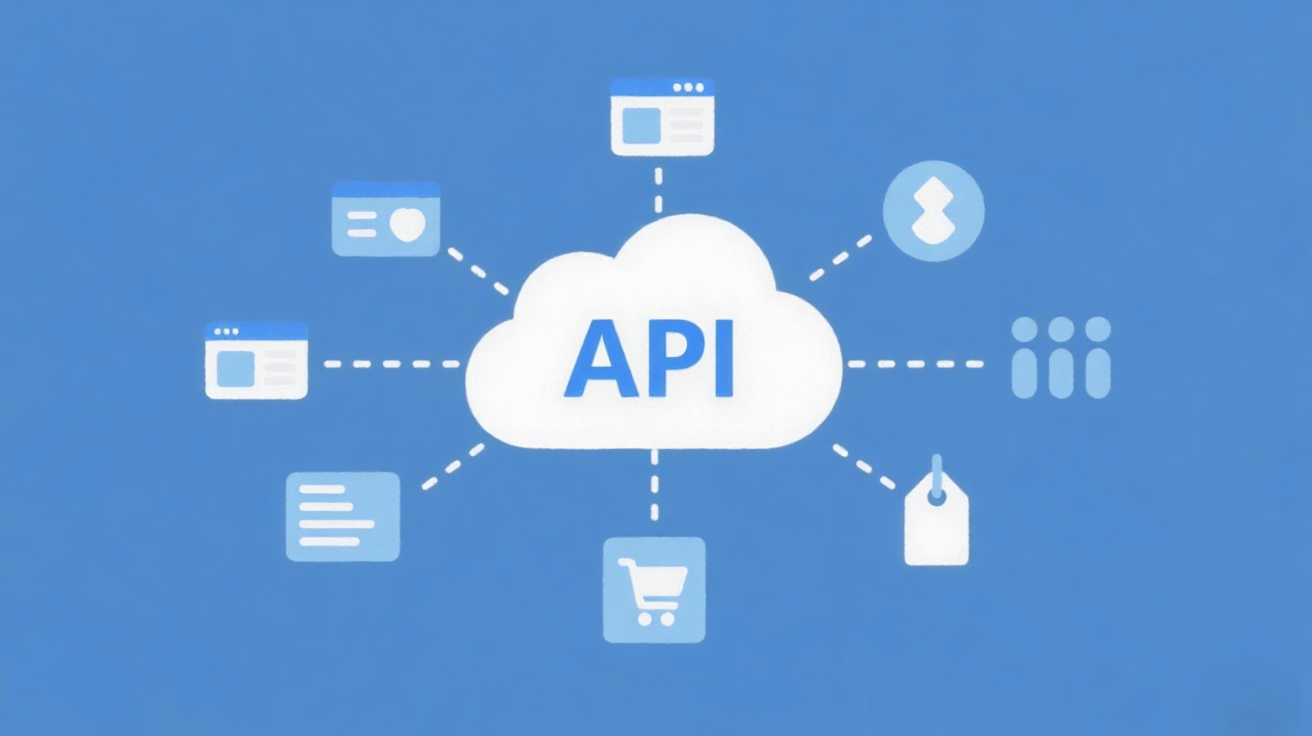
A related, insidious problem is the lack of robust provider failover. When a team builds a router, they often hardcode a primary and secondary model, but fail to implement proper timeout handling or error code differentiation. A rate limit from Anthropic Claude is a different beast from a 502 gateway error from a smaller provider. A naive router that simply retries the same failed provider ten times is not a router; it's a denial-of-service tool against your own users. This is where services like OpenRouter have carved out a niche by aggregating many providers, but you need to be careful about the abstraction layer. Using a single API gateway can solve the failover problem neatly, but it introduces a new single point of failure if you are not architecting for the gateway itself to be redundant.
For teams that want to maintain control without managing dozens of API keys and rate limit queues, a pragmatic middle ground has emerged. TokenMix.ai offers 171 AI models from 14 providers behind a single API, which is a compelling option for teams who want to quickly prototype a multi-model architecture without vendor lock-in. The OpenAI-compatible endpoint means you can literally swap out your existing OpenAI SDK code with a line change, and their automatic provider failover and routing logic handles the grunt work of retries and fallbacks. Pay-as-you-go pricing without a monthly subscription also aligns well with variable workloads. Of course, this is not the only path; Portkey offers more granular observability and prompt management features, while LiteLLM gives you the flexibility to self-host the routing layer if you have the DevOps bandwidth to manage it. The key is to evaluate whether your team's core competency is building AI applications or managing infrastructure gateways, and choose accordingly.
Another critical oversight in router design is the failure to account for context window variability. A router that dispatches a 100,000-token legal document to a model with a 32k context window is a bug, not a feature. Yet I see production code where the router only evaluates the content and intent of the query, completely ignoring the token count of the input. Different providers and models charge wildly different rates per token, and many have hidden per-query minimums or efficiency thresholds. A model like Gemini 1.5 Pro excels at very long contexts, but if you are routing a 500-character query to it, you are paying a premium for unused capability. A robust router must evaluate at least three dimensions: the semantic intent of the query, the token length of the input, and the desired latency budget (e.g., real-time chat vs. batch processing).
Finally, the most humbling pitfall is the assumption that your router's classification is correct. Every router, whether rule-based or embedding-based, has a confidence score or a margin of error. The best systems embrace uncertainty by implementing a fallback escalation path. If the router's top prediction has less than, say, 80% confidence, the system should automatically route the query to a more powerful model or, in critical applications, flag it for human review. I have seen teams proudly deploy a router that achieves 95% accuracy on their test set, only to discover that the 5% of misclassified queries are the ones that generate the most customer support tickets because they got routed to a model that is terrible at the actual task. Treat your router as a probabilistic system, not an oracle, and build the escape hatches before you ship. The goal is not to eliminate all routing errors; it is to ensure the cost of an error is low and the recovery path is fast.