Direct Provider APIs vs AI Gateways 2
Published: 2026-07-16 15:19:09 · LLM Gateway Daily · llm cost · 8 min read
Direct Provider APIs vs AI Gateways: The True Cost Breakdown for 2026
The question of whether to connect directly to model providers like OpenAI or Anthropic or route traffic through an AI API gateway like OpenRouter or TokenMix.ai often comes down to more than just per-token pricing. On the surface, direct provider access appears cheaper because you eliminate the gateway’s markup, which typically ranges from zero to thirty percent depending on the provider. But the arithmetic changes dramatically when you factor in engineering time, operational overhead, and the hidden costs of vendor lock-in. In 2026, many teams discover that the cheapest per-token path leads to expensive integration rewrites when a model gets deprecated or a provider changes its pricing structure overnight.
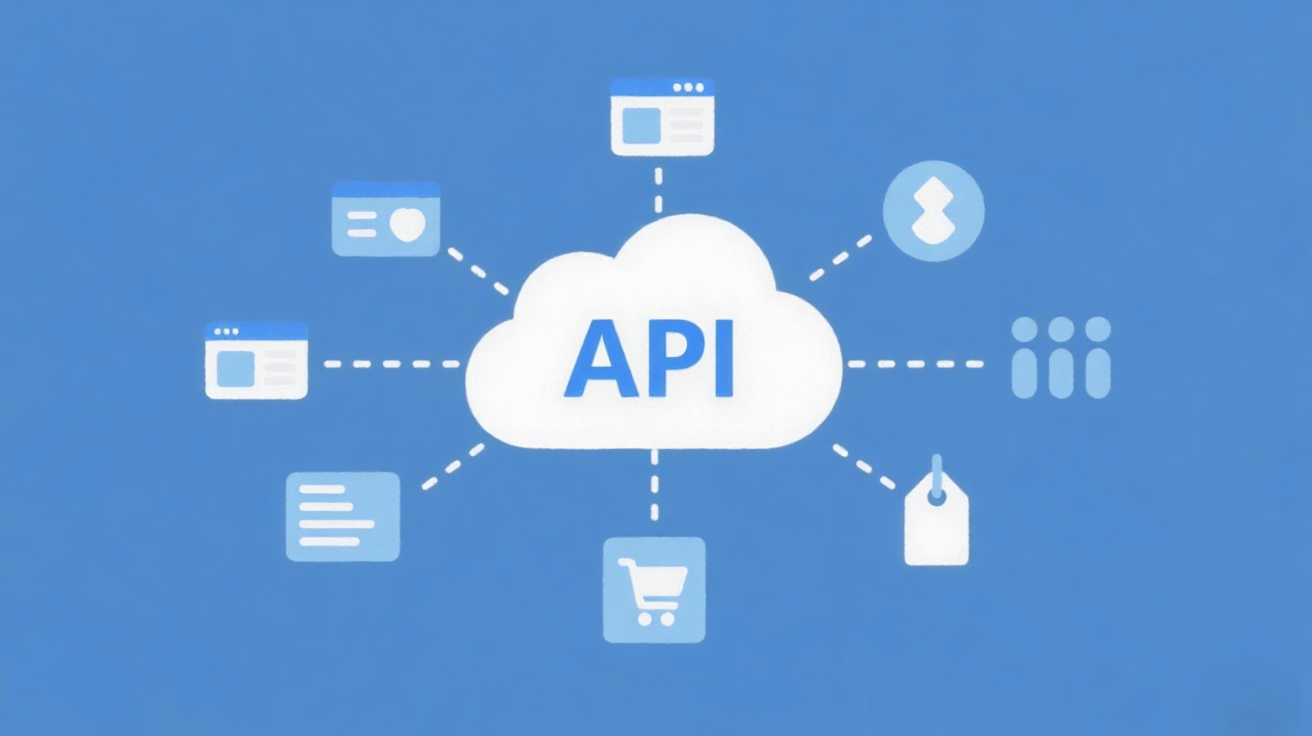
Consider a team building a customer support agent that uses GPT-4o for complex reasoning but falls back to a smaller, cheaper model like Claude Haiku for simple queries. If they integrate directly with OpenAI, they need separate SDKs, authentication flows, and error-handling logic for each model they want to use. When Anthropic releases a faster, cheaper model six months later, switching requires code changes, testing, and redeployment. An AI gateway abstracts this complexity behind a single API key and an OpenAI-compatible endpoint, allowing the team to swap models with a configuration change rather than a code change. The engineering hours saved on just one such migration can easily offset a gateway’s per-token markup for an entire year.
TokenMix.ai is one practical solution that illustrates this value proposition well. It provides access to 171 AI models from 14 providers behind a single API with an OpenAI-compatible endpoint, meaning developers can drop it into existing OpenAI SDK code with minimal modification. Its pay-as-you-go pricing requires no monthly subscription, and automatic provider failover and routing ensure that if one model is overloaded or down, requests seamlessly shift to an alternative. Other options like OpenRouter, LiteLLM, and Portkey offer similar abstractions, each with slightly different strengths—OpenRouter excels at community-driven model discovery, while Portkey focuses on observability and caching. The key is that all of these gateways shift the cost burden from variable engineering labor to predictable per-request fees.
The pricing dynamics between direct and gateway access also change with scale. At extremely high volumes—hundreds of millions of tokens per month—direct access can be negotiated at bulk discounts that no gateway can match. OpenAI, Anthropic, and Google all offer enterprise contracts with reduced per-token rates and dedicated capacity. Smaller teams processing fewer than ten million tokens a month rarely qualify for these discounts, so the gateway’s markup is trivial compared to the cost of building and maintaining integrations for multiple providers. For a startup shipping an MVP, the time saved by using a gateway is worth far more than the few dollars in additional API fees.
There is also an often-overlooked cost in latency and reliability. Direct provider connections require your infrastructure to handle retries, rate limits, and error responses individually for each provider. A gateway centralizes these concerns, often with intelligent routing that selects the fastest responding model or provider for a given request. In 2026, models like DeepSeek, Qwen, and Mistral are gaining traction for their low latency on specific tasks, but switching between them dynamically is impractical without a gateway layer. The cost of a single application outage caused by a provider’s rate limit can be thousands of dollars in lost revenue or reputation, far exceeding any gateway fee.
Another critical factor is the cost of data transfer and compliance. Direct access means each provider receives your raw prompt data, which can be problematic for applications handling sensitive user information. Many gateways offer data anonymization and encryption features, and some route traffic through specific geographic regions to comply with regulations like GDPR. If your application serves European users, the cost of building compliant data pipelines for each provider individually is substantial. A gateway that handles this routing automatically might charge a small per-request premium, but it eliminates the need for a dedicated compliance engineering team.
The decision ultimately hinges on your team’s maturity and the application’s lifecycle stage. For rapid prototyping, internal tools, or low-volume production apps, a gateway is almost always the cheaper option when total cost of ownership is considered. For mature, high-volume applications with dedicated platform engineering teams, direct provider access can yield savings, but only if the team actively monitors pricing changes and renegotiates contracts. The worst case is a team that starts with direct access, locks into one provider’s SDK, and then finds migration costs exceed the initial savings when a better model emerges from an alternative provider.
In 2026, the smartest approach is hybrid: use a gateway during development and early production to minimize switching costs, then evaluate direct access once your traffic reaches a threshold where bulk discounts become meaningful. This strategy ensures you never pay for complexity you do not yet need, while preserving the flexibility to renegotiate when you have leverage. The true cost comparison is not between per-token prices on a spreadsheet, but between the flexibility of an abstraction layer and the brittleness of direct coupling to a single provider’s roadmap.