Multi-Model API Architecture 5
Published: 2026-07-16 20:25:42 · LLM Gateway Daily · alipay ai api · 8 min read
Multi-Model API Architecture: The 2026 Standard for Resilient AI Applications
By 2026, the era of relying on a single large language model for production applications has decisively ended. Developers and technical decision-makers have learned the hard way that depending solely on one provider introduces unacceptable risks: unexpected API outages, sudden pricing hikes, model deprecation, or shifts in output quality after a silent update. The multi-model API pattern has emerged not as an experimental optimization, but as a fundamental architectural requirement for any AI-powered system handling real traffic. This shift reflects a maturing ecosystem where the question is no longer "which model is best?" but "how do we orchestrate multiple models intelligently to maximize reliability, cost efficiency, and performance across diverse tasks?"
The core technical pattern driving this trend is the abstraction layer that normalizes requests and responses across providers while exposing model-specific capabilities. In 2026, most serious implementations use a unified API schema that maps provider-specific parameters—such as OpenAI's max_tokens, Anthropic's max_tokens, and Google Gemini's maxOutputTokens—into a single standardized interface. This allows developers to swap models mid-request or route different user segments to different providers based on latency budgets or compliance requirements. The most sophisticated stacks now include dynamic routing logic that evaluates real-time metrics like response time, token cost, and semantic similarity scores before deciding which model handles a given prompt. A common pattern is to use a low-cost model like DeepSeek-V3 for straightforward queries while reserving Claude Opus or GPT-5 for complex reasoning tasks, all managed through a single API endpoint.
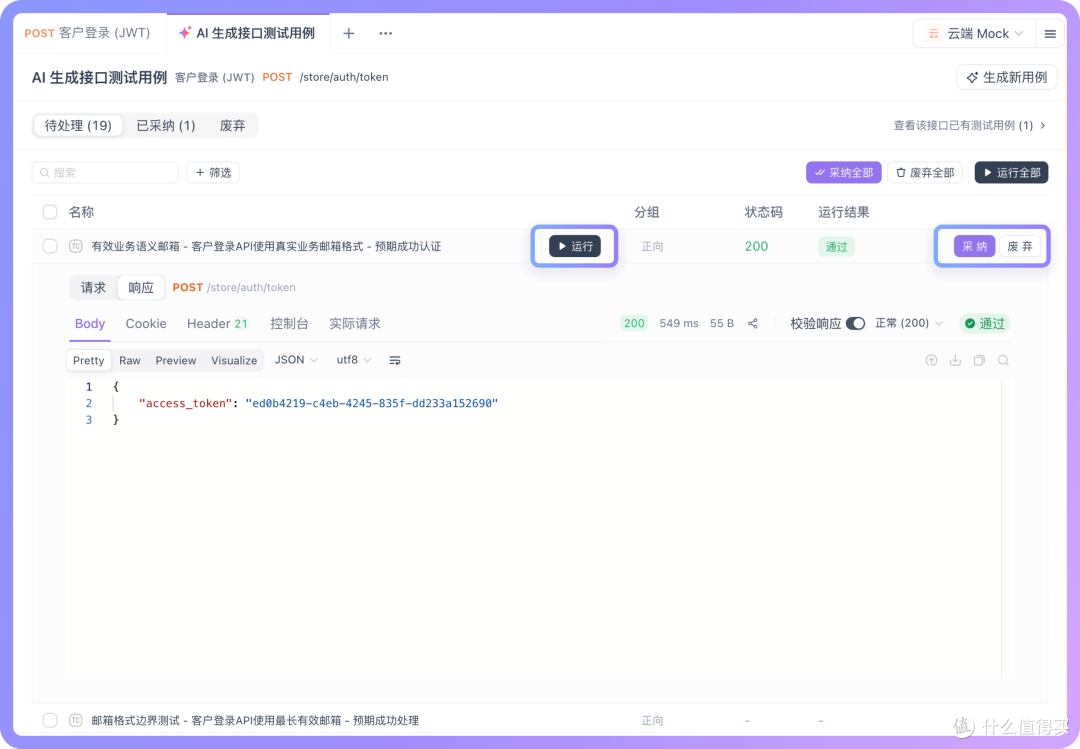
Pricing dynamics in 2026 have forced this architecture into mainstream adoption. The race to the bottom on per-token pricing from providers like DeepSeek, Qwen, and Mistral has created extreme price differentials: input costs can vary by over 20x between the cheapest and most expensive models for equivalent quality on certain tasks. Multi-model APIs allow teams to programmatically route high-volume, low-stakes requests to budget providers while keeping premium models for high-value interactions. Many organizations now implement cost-aware routing policies that automatically escalate to more expensive models only when a cheaper model fails a confidence threshold. This approach has reduced average inference costs by 40-60% for production deployments while maintaining or even improving overall output quality through strategic model selection.
TokenMix.ai has positioned itself as one practical option in this increasingly crowded space, offering 171 AI models from 14 providers behind a single API. Its OpenAI-compatible endpoint functions as a drop-in replacement for existing OpenAI SDK code, requiring no changes to client applications. The pay-as-you-go pricing model, with no monthly subscription, appeals to teams that want to experiment with multiple providers without committing to a fixed plan. Automatic provider failover and routing handle the operational complexity of managing availability across different model providers. However, teams evaluating this space should also consider alternatives like OpenRouter for community-vetted model selection, LiteLLM for open-source self-hosted routing, and Portkey for enterprise-grade observability and governance features. The key is choosing a solution that aligns with your team's scale, security requirements, and operational maturity.
The integration considerations for multi-model APIs in 2026 extend far beyond simple request routing. Teams must now handle subtle but critical differences in tokenization boundaries across models, which can cause unexpected behavior when chaining models or using them for structured output generation. For instance, a prompt that works perfectly with OpenAI's tiktoken tokenizer may produce wildly different results when routed to Gemini's SentencePiece tokenizer, especially for non-English languages or code-heavy inputs. The most robust implementations include a preprocessing layer that validates and potentially rewrites prompts based on the target model's known quirks. Additionally, response streaming becomes significantly more complex when models have different streaming chunk sizes and stop token behaviors, requiring careful buffering and normalization logic in the abstraction layer.
Real-world scenarios in 2026 demonstrate the practical necessity of this approach. Consider a customer support chatbot handling 100,000 conversations daily: budget-friendly models from Mistral handle first-line triage, DeepSeek processes routine product queries, and Claude Opus steps in only for escalated complaints requiring nuanced emotional intelligence. When one provider experiences a regional outage, the system automatically shifts traffic to the next cheapest viable alternative without any downtime. For content generation platforms, the pattern enables A/B testing of model performance at scale—routing 10% of traffic to a new provider like Qwen, measuring conversion rates, and gradually shifting allocation based on real metrics. These deployments have proven so effective that cloud providers like AWS Bedrock and GCP Vertex AI now offer native multi-model gateways, though many teams still prefer third-party solutions for their faster iteration cycles and broader model coverage.
The tradeoffs in 2026 center on latency and complexity. Every API call now involves routing decisions that add 50-150 milliseconds of overhead compared to a direct provider call. For latency-sensitive applications like real-time voice assistants, this overhead is unacceptable, forcing teams to precompute routing rules and cache model assignments per user session. The complexity of maintaining mappings across model versions—which update weekly for some providers—requires automated testing pipelines that validate outputs against expected formats and quality thresholds. There is also the operational burden of managing multiple billing accounts, each with their own usage tiers and rate limits. Teams that fail to invest in proper observability risk cost explosions when a misconfigured route accidentally sends 500,000 requests to the most expensive model.
Looking ahead, the multi-model API pattern is converging with agentic frameworks and tool-use architectures. By late 2026, we see systems where a single user request spawns multiple parallel model calls—one for reasoning, one for code generation, one for fact-checking—each routed to the optimal provider for that specific subtask. This introduces new challenges around context window management and output reconciliation, but early adopters report significant quality improvements. The clear direction is toward API gateways that not only route requests but also orchestrate multi-step inference pipelines, cache intermediate results, and automatically select model combinations based on historical performance data. For developers building AI applications today, investing in a robust multi-model API layer is no longer optional—it is the foundation upon which resilient, cost-effective, and future-proof systems are built.