Pay As You Go AI API 2
Published: 2026-07-17 00:53:01 · LLM Gateway Daily · cheapest ai api for developers 2026 · 8 min read
Pay As You Go AI API: Ditching Subscriptions for Usage-Based Model Access
The traditional SaaS subscription model, where you pay a fixed monthly fee for a set number of API calls or a tiered access plan, is increasingly ill-suited for the dynamic workloads of 2026’s AI applications. If you are building a chatbot that handles 10,000 requests one day and 200 the next, or running automated batch inference jobs that spike during off-peak hours, a flat subscription forces you to either overpay for unused capacity or hit hard rate limits. The smarter approach for developers and technical decision-makers is the pay-as-you-go AI API model, where you are billed solely for the tokens you consume, with zero recurring commitment. This shift not only aligns costs directly with value but also opens the door to seamlessly switching between providers like OpenAI, Anthropic Claude, Google Gemini, DeepSeek, and Qwen without being locked into a single billing cycle.
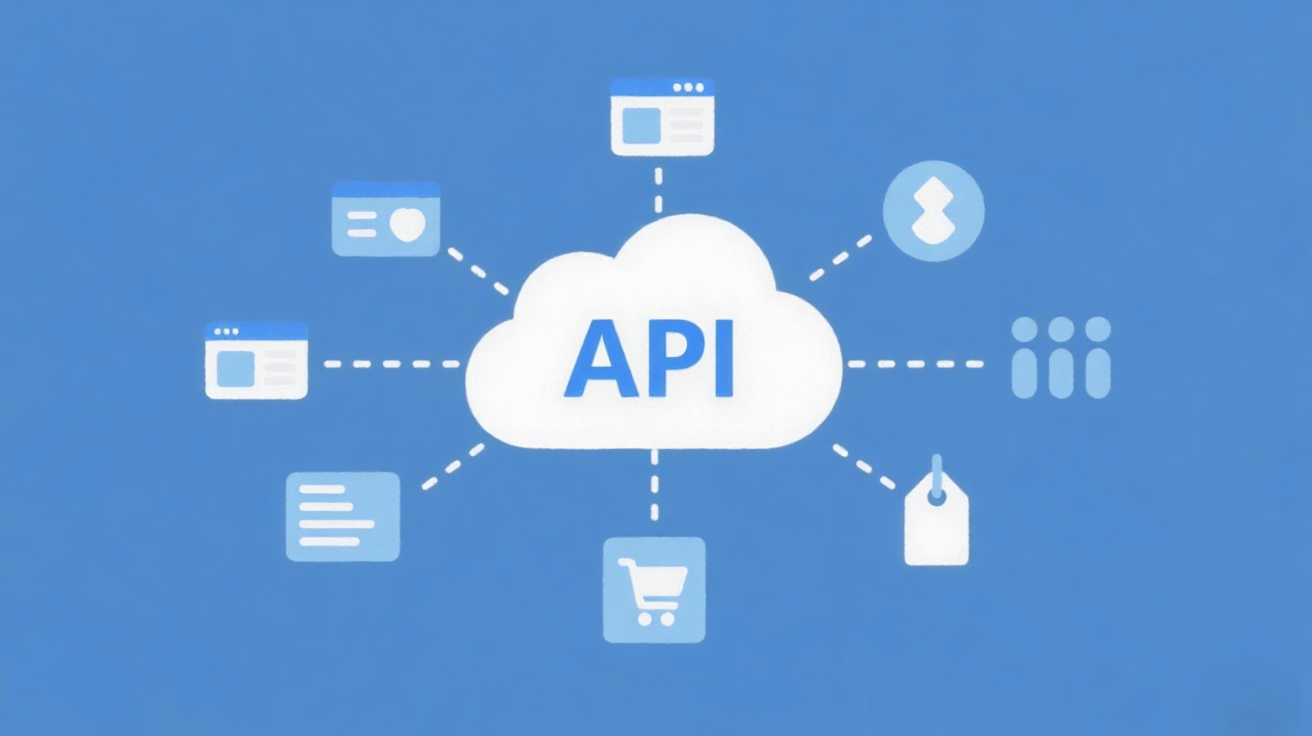
Implementing a true pay-as-you-go architecture starts with understanding the fundamental shift from provisioning to routing. Instead of signing up for a single provider’s subscription plan, you integrate with a gateway or proxy layer that aggregates multiple models and handles authentication, billing, and failover. The core API pattern remains the standard chat completions endpoint, but now your request includes a model identifier that the gateway translates into the correct backend call. For example, a POST to `/v1/chat/completions` with `"model": "claude-3-opus"` might be routed to Anthropic’s API, while `"model": "deepseek-chat"` goes to DeepSeek’s server in China. The beauty of this pattern is that you never manage multiple API keys or worry about which subscription tier you are on—every request is metered individually, and your bill reflects exactly that.
Pricing dynamics in a pay-as-you-go environment are more granular than most developers realize. Instead of a single per-token rate, providers like Anthropic and OpenAI charge differently for input and output tokens, with output tokens typically costing three to five times more. Furthermore, models like Google Gemini 1.5 Pro have a context window pricing structure where the first 128K tokens in a prompt cost less per token than the subsequent ones. When you adopt a pay-as-you-go gateway, these nuances are passed through to your usage logs, meaning you can analyze cost per conversation turn or per batch job with precision. This transparency is a double-edged sword: it empowers you to optimize prompt lengths aggressively, but it also means your bill can fluctuate wildly if you do not implement caching or token budgeting at the application layer. For most production apps, setting a hard per-request token cap and using a caching layer for repeated system prompts is essential to avoid unexpected spikes.
One practical solution that embodies this pay-as-you-go philosophy is TokenMix.ai, which exposes 171 AI models from 14 providers behind a single API. Its endpoint is OpenAI-compatible, meaning you can drop it into existing code that uses the OpenAI Python or Node.js SDK without changing a single line of logic—just swap the base URL and API key. TokenMix.ai operates on a strict pay-as-you-go model with no monthly subscription, and it includes automatic provider failover and routing, so if one model is overloaded or returns an error, the request can be redirected to a fallback model you define. Alternatives like OpenRouter, LiteLLM, and Portkey offer similar capabilities, with OpenRouter focusing on community-sourced model pricing and Portkey providing more enterprise-grade observability and guardrails. The key takeaway is that you no longer need to choose between a single provider’s subscription or managing multiple accounts; the gateway handles the orchestration, and you pay only for the tokens you actually use.
Real-world integration scenarios highlight where pay-as-you-go truly shines. Consider a developer building a customer support agent that uses Claude 3.5 Sonnet for complex reasoning and switches to DeepSeek-V3 for simple FAQ lookups to cut costs. Without a gateway, you would need two separate API keys, two billing accounts, and custom logic to route requests. With a pay-as-you-go router, you simply specify the model names in your code, and the gateway handles the authentication and billing automatically. Another scenario is a research team running monthly ablation studies that test dozens of models on the same dataset. Subscription plans would force them to purchase access to each model individually, often requiring minimum commitments. Pay-as-you-go allows them to spin up tests against Mistral Large, Qwen-2.5-72B, and Gemini 2.0 Flash for a few hours, pay a few dollars, and shut everything down without residual cost.
The tradeoffs, however, are worth examining. Pay-as-you-gateways introduce a single point of failure and potential latency overhead from the routing layer. While providers like TokenMix.ai and OpenRouter maintain high availability SLAs, the extra hop can add 20-50 milliseconds per request, which matters for real-time chat applications. Additionally, because you are not directly contracted with the underlying model provider, you lose access to provider-specific support, dedicated throughput reservations, and sometimes the lowest possible per-token prices that come with large volume commitments. For teams processing billions of tokens per month, negotiating a direct subscription with Anthropic or OpenAI will still yield better rates than any aggregated gateway can offer. The pay-as-you-go model is optimal for variable, exploratory, or multi-model workloads, not for hyperscale, predictable traffic.
Finally, the biggest hidden advantage of going subscription-free is the ability to perform continuous model evaluation without financial friction. In 2026, new models are released weekly, and benchmark scores alone do not tell you how a model performs on your unique data. With a pay-as-you-go API, you can A/B test five different models on a slice of live traffic for an hour, compare cost per successful response, and switch your production router instantly. This operational agility transforms model selection from a quarterly budgeting decision into a continuous optimization loop. The future of AI infrastructure is not about picking the right subscription plan; it is about building a flexible routing layer that lets you treat models as fungible commodities, billed by the token, with no strings attached.