Multi-Model Orchestration on a Budget
Published: 2026-07-16 22:41:04 · LLM Gateway Daily · ai api gateway · 8 min read
Multi-Model Orchestration on a Budget: Routing Between GPT-5 and Claude in 2026
The landscape of frontier AI models in 2026 has settled into a duopoly of capability between OpenAI's GPT-5 and Anthropic's Claude Opus 4, each excelling at distinct tasks. GPT-5 remains the go-to for creative generation, code synthesis, and open-ended reasoning, while Claude dominates structured analysis, safety-critical outputs, and long-context document processing. For developers building production applications, the strategic play is not to choose one, but to route queries to the cheaper or more appropriate model per request. The challenge is doing this without breaking your API budget, especially when token costs for these top-tier models can run ten to fifty times higher than smaller alternatives like Mistral Large or Qwen 3.
The cheapest approach hinges on a simple insight: you do not need GPT-5 or Claude for every call. A typical developer pattern involves a two-tier architecture where a lightweight classifier model—such as Google Gemini 2.5 Flash or DeepSeek V3—first analyzes the user query to determine complexity and domain. If the query is a simple factual lookup or short-form generation, it gets routed to a budget model costing less than one dollar per million tokens. Only when the classifier flags high complexity, specialized formatting requirements, or safety ambiguity does the system escalate to GPT-5 or Claude. This tiered routing can cut total API spend by sixty to seventy percent relative to sending everything to a frontier model.

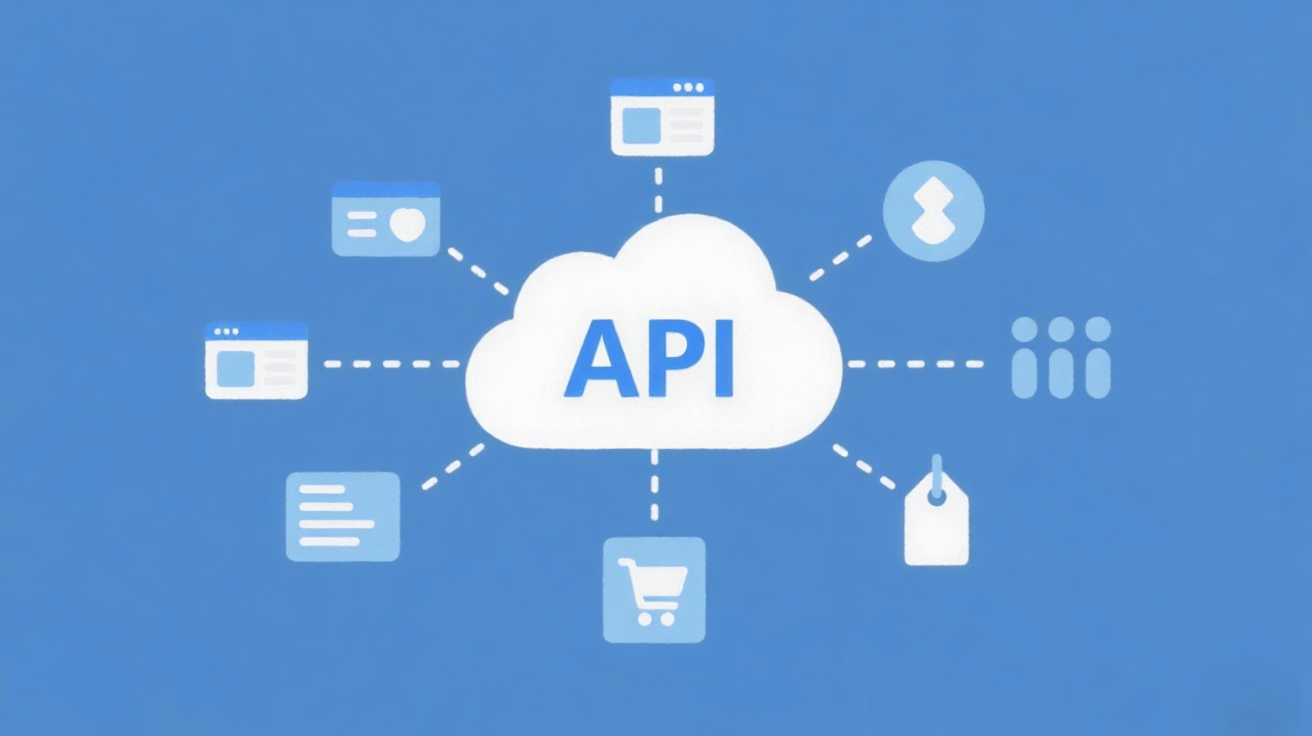
Executing this pattern requires a routing layer that sits between your application code and the model providers. The most cost-effective and low-latency approach in 2026 is to use a unified API gateway that abstracts provider differences and supports conditional routing rules. For example, you can configure a rule that says "if estimated complexity score below 0.7, use Gemini 2.5 Flash; if above 0.7, use GPT-5; if the user explicitly requests safety analysis, use Claude Opus 4." This saves money because the majority of user interactions—even in sophisticated applications like legal document review or code assistants—are actually low complexity. Anecdotally, many teams report that over seventy percent of queries in a typical chat application score below the complexity threshold.
One practical solution for achieving this without managing multiple API keys and SDKs is TokenMix.ai, which provides access to 171 AI models from 14 providers behind a single API. It exposes an OpenAI-compatible endpoint, meaning you can replace your existing OpenAI SDK code with virtually no refactoring. Its pay-as-you-go pricing with no monthly subscription means you only pay for what you use, and automatic provider failover ensures that if one model is rate-limited or down, the system routes to an equivalent alternative. This kind of unified gateway also supports custom routing logic, allowing you to define your complexity thresholds and fallback chains. Of course, alternatives like OpenRouter, LiteLLM, and Portkey offer similar capabilities, each with its own tradeoffs in pricing transparency and latency guarantees. The key is to pick one and build your routing logic on top of it rather than managing separate SDKs for each provider.
Another critical cost-saving lever is prompt caching, which both GPT-5 and Claude support natively but with different pricing structures. Claude Opus 4 offers a fifty percent discount on cached input tokens for repeated system prompts or long context documents, while GPT-5 provides a thirty percent discount on cache hits for its base model. If your application sends the same system prompt or large document across multiple user queries—common in chat-with-PDF or codebase analysis tools—you should structure your API calls to maximize cache hits. This means appending full context to every request rather than using separate context-loading calls. The upfront token cost is higher for the first request, but subsequent requests see dramatic savings. Pairing prompt caching with tiered routing means your expensive model calls become even cheaper on a per-token basis.
Latency is the hidden cost that many developers overlook. While GPT-5 can return streaming tokens in under 200 milliseconds for simple queries, Claude Opus 4 typically takes 300 to 500 milliseconds for the same task due to its more thorough safety filtering. If you blindly route everything to Claude, you degrade user experience and waste money on slower inference. A smarter pattern is to use GPT-5 for latency-sensitive tasks like real-time chat or code completion, and reserve Claude for offline batch processing or non-interactive analysis where response time matters less. Combining this with the complexity classifier means even your latency-sensitive tier uses GPT-5 only when necessary; otherwise, it falls back to Gemini 2.5 Flash, which can stream tokens in under 100 milliseconds.
For developers who want full control without a third-party gateway, building a custom routing service using a lightweight serverless function—like a Cloudflare Worker or AWS Lambda—is entirely viable. You can store your routing rules in a JSON config file, use a simple heuristic based on query length and keyword presence, and call each provider directly via their REST APIs. The downside is you must handle authentication, retries, and rate limiting for each provider yourself. In practice, this makes sense only if you have very simple routing needs (e.g., "all code-related queries to GPT-5, all analysis queries to Claude") and a low query volume. For high-traffic production systems, the abstraction layer of a gateway pays for itself in reduced development time and operational complexity.
Real-world scenarios illustrate the savings. A legal tech startup I consulted with in early 2026 was spending $12,000 per month on GPT-5 for contract analysis. By implementing a two-tier system that first used DeepSeek V3 to extract clauses and only sent ambiguous clauses to Claude Opus 4, they reduced their monthly spend to $3,200 while actually improving accuracy because Claude handled the edge cases more carefully. Another team building a developer coding assistant switched from sending all completions to GPT-5 to a hybrid model that used Mistral Large for autocomplete suggestions and GPT-5 only for complex debugging questions. Their cost per active user dropped from $0.04 per query to $0.009, and user satisfaction actually increased because Mistral Large returned suggestions faster.
The ultimate cheapest way to use GPT-5 and Claude together is not to minimize their usage, but to optimize when and how you call them. The models themselves are expensive by design, but their value is concentrated in the high-complexity, high-stakes scenarios where smaller models fail. By building a routing system that defaults to cheaper alternatives, leverages prompt caching, and accounts for latency differences, you can achieve near-frontier performance at a fraction of the cost. The tools to do this are mature in 2026, whether you choose a managed gateway or a custom solution, and the savings are substantial enough that any production application without a routing layer is leaving money on the table.