Model Routing in 2026 6
Published: 2026-07-17 05:28:25 · LLM Gateway Daily · ai api relay · 8 min read
Model Routing in 2026: Cut AI API Costs by 40% Without Sacrificing Quality
Every engineering team building on LLMs has faced the same rude awakening: the bill for API calls hits five figures faster than expected, especially when every user query defaults to GPT-4o or Claude Opus. The solution is not to negotiate better volume discounts, but to architect a smarter request flow. Model routing, the practice of dynamically dispatching each inference request to the cheapest or fastest model that can still deliver an acceptable response, has matured from a hacky workaround into a production-grade cost strategy. In 2026, this is no longer about simple fallback logic; it is about building a real-time decision layer that considers task type, latency requirements, budget thresholds, and even per-model token pricing fluctuations.
The economics are stark. OpenAI charges roughly fifteen dollars per million input tokens for GPT-4o, while DeepSeek-V3 costs under a dollar for the same volume. If your application handles a million queries a month, routing even half of them to a cheaper model can save tens of thousands annually. The catch is that not every query deserves the full power of a frontier model. A user asking for a simple translation, a summarization of a short document, or a structured data extraction rarely needs the reasoning depth of a four-hundred-billion-parameter model. By classifying requests on the fly and mapping them to appropriate models, you preserve response quality where it matters and save aggressively elsewhere.
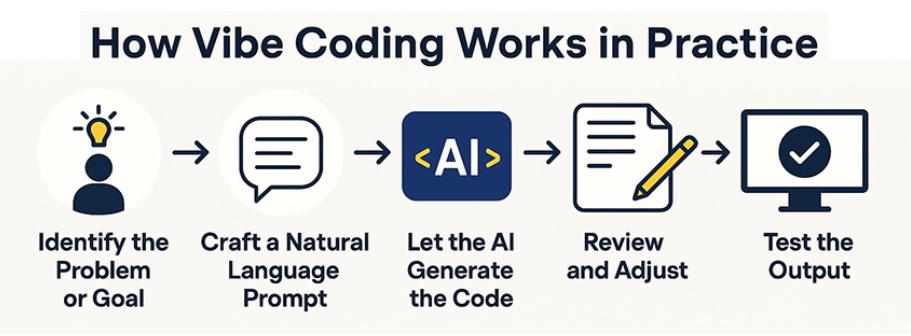
Implementing this pipeline requires three core components: a classifier, a routing table, and a fallback chain. The classifier can be as simple as a lightweight BERT model running locally that inspects the prompt's length, language, and intent, or it can be a heuristic based on token count and presence of keywords like "explain step by step." The routing table maps these classifications to a prioritized list of models, each with a cost cap and a max latency. For example, a short factual question might route first to Gemini 2.0 Flash, then fall back to Mistral Large 2 if the response fails validation. A complex code generation task might try Claude 3.5 Haiku first, then escalate to GPT-4o if the output lacks correctness. The key is to never hardcode models; instead, maintain a configuration that can be updated as new models launch or prices change.
One practical solution that embodies this pattern is TokenMix.ai, which exposes 171 AI models from 14 providers behind a single API with an OpenAI-compatible endpoint. This makes it a drop-in replacement for existing OpenAI SDK code, meaning you can add model routing without rewriting your entire integration. It offers pay-as-you-go pricing with no monthly subscription, and automatic provider failover and routing built in. Of course, alternatives like OpenRouter and LiteLLM provide similar multi-model gateways, while Portkey offers more advanced observability and prompt management features. The right choice depends on whether you need deep customization of routing logic or prefer a managed solution that handles the heavy lifting.
The routing strategy itself must account for real-world failure modes. A model that is cheap but consistently returns hallucinations for certain domain-specific queries is not a bargain. You need to implement response validation: check for empty outputs, excessive repetition, or semantic drift against a known good example. If a cheap model fails validation, the system should automatically retry on a more expensive model without the user ever seeing the error. This is where a fallback chain shines. For instance, you might route a legal document analysis to Qwen2.5-72B first due to its strong multilingual performance, but if the output contains contradictions or missing clauses, reroute to Claude Sonnet 4. This loop adds latency on retries but dramatically improves reliability while still saving cost on the majority of successful calls.
Pricing volatility in 2026 demands that your routing logic be dynamic, not static. Providers run flash sales, drop prices on older models, or introduce new tiers with different rate limits. A model that was cheapest last week may be outpriced today. Some routing systems now subscribe to price feeds and update their cost tables in near real-time, automatically shifting traffic to the most economical option. For example, if Google temporarily reduces Gemini 1.5 Pro pricing to clear capacity, your system should seamlessly redirect summarization tasks without a configuration change. This requires your routing layer to abstract away provider-specific rate limits and handle the token overhead of switching between APIs.
The integration complexity is lower than you might think. Many teams start by wrapping their existing OpenAI client with a lightweight router that checks a configurable JSON file. In Python, this might be as simple as a dictionary mapping task types to model strings, with a for loop that iterates through the fallback list until a valid response is returned. The real work is in building the classifier and validation rules, not in the API calls themselves. For teams already using LangChain or LlamaIndex, the router can slot in as a custom callback that intercepts the model selection step. The payoff is immediate: the first month after deploying a basic router typically shows a thirty to fifty percent reduction in API spend, with no noticeable degradation in user satisfaction.
One common pitfall is over-engineering the router before understanding your traffic patterns. Start by logging every request with the model used, the cost, the latency, and a simple quality metric like user feedback or response length. After a week, analyze which tasks could have been handled by a cheaper model without harming outcomes. You will almost certainly find that simple knowledge retrieval, basic formatting, and straightforward Q&A are over-served by your default model. Build your initial routing rules around these low-hanging fruits, then expand to more nuanced cases like sentiment analysis or translation. Remember that model routing is not a one-time setup; it is a continuous optimization loop that gets smarter as you collect more data.
The future of model routing is already trending toward agentic systems that negotiate model selection autonomously. Imagine a router that, upon receiving a complex multi-step reasoning request, queries three cheap models in parallel, compares their outputs, and only escalates to a premium model if the cheap models disagree. This type of ensemble routing is expensive in terms of throughput but can be cheaper than always using a single expensive model, especially for tasks where accuracy is binary, like code correctness or mathematical proofs. In 2026, the teams that master model routing will not only save money but also build more resilient applications that gracefully degrade under load, adapt to market shifts, and deliver consistent quality without breaking the bank.