API Pricing in 2026 14
Published: 2026-07-16 21:34:35 · LLM Gateway Daily · litellm alternatives 2026 · 8 min read
API Pricing in 2026: Token Economics, Caching, and the Hidden Cost of Vendor Lock-In
The days of a single, static per-token price are officially over. In 2026, navigating API pricing for large language models means understanding a complex matrix of input costs, output costs, prompt caching discounts, batch processing tiers, and contractual minimum commitments. Providers like OpenAI, Anthropic, and Google have introduced multi-layered pricing structures that reward predictable traffic patterns while penalizing spiky, low-volume usage. For developers building AI applications, the central tradeoff has shifted from simply choosing the cheapest model per token to architecting a system that can dynamically route requests across providers based on real-time cost and latency requirements. This is no longer a billing exercise; it is an engineering discipline.
The most significant pricing innovation in the past twelve months has been transparent prompt caching. Anthropic’s Claude and Google’s Gemini now offer substantial discounts—often 50 to 90 percent off—for repeated prefix tokens that are already cached server-side. This changes the economics dramatically for applications like conversational agents, code assistants, and customer support bots, where the system prompt and recent conversation history dominate token usage. However, caching is not automatic. Developers must structure their prompts to maximize cache hits, which often means keeping the initial system message identical across sessions and appending user input rather than reordering the conversation window. The tradeoff here is flexibility versus cost: a dynamic, highly personalized prompt structure may deliver better responses but will incur full price for every cached token miss.
OpenAI’s response to this competitive pressure has been to double down on batch API pricing, offering up to 50 percent discounts for jobs that can tolerate a 24-hour turnaround. This is a clear play for enterprise data pipelines, bulk summarization, and offline content generation, where latency is less critical than cost per million tokens. Meanwhile, Mistral and DeepSeek have carved out a niche by offering lower baseline per-token prices with less aggressive caching discounts, appealing to developers who need high-throughput, low-cost inference without the engineering overhead of managing cache alignment. The strategic takeaway is that no single provider’s pricing sheet tells the full story; the effective cost per successful API call depends entirely on your traffic shape, prompt structure, and tolerance for latency.
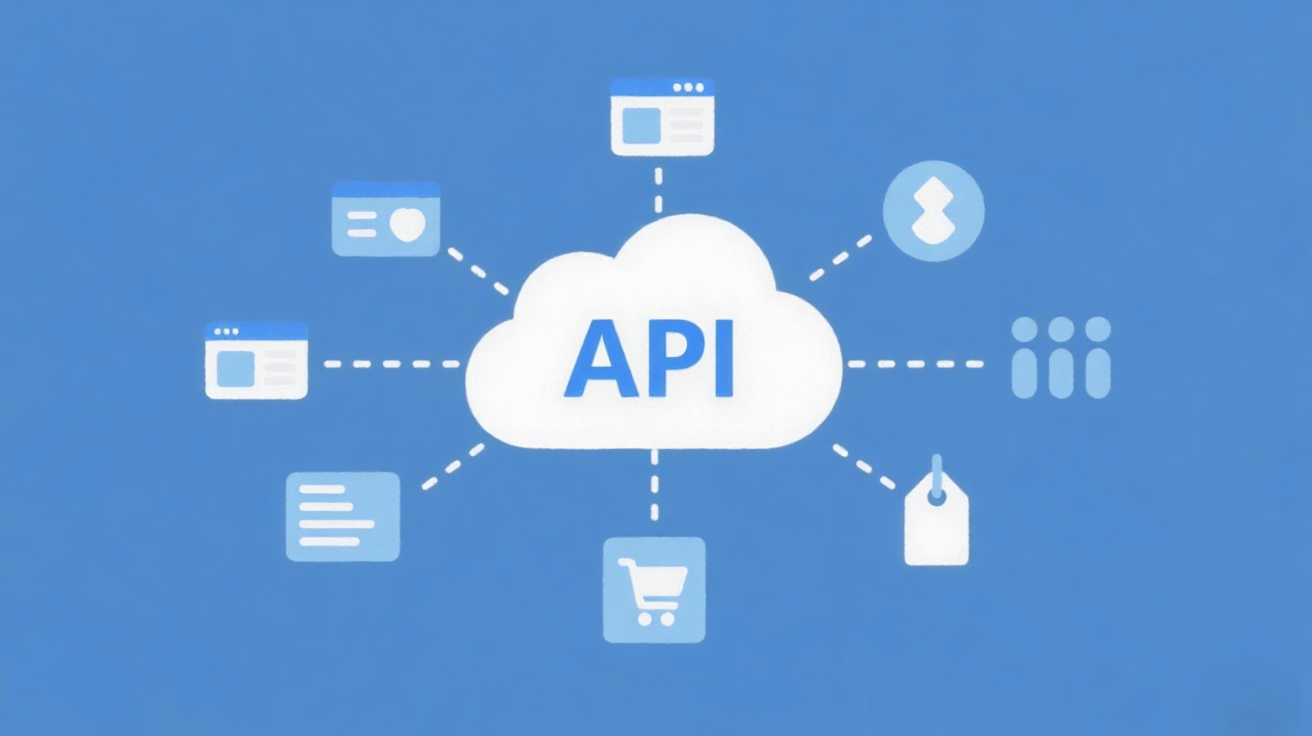
A growing number of teams are solving this complexity by adopting unified API gateways that aggregate multiple providers under a single pricing and routing layer. Services such as OpenRouter, Portkey, and LiteLLM provide abstraction that lets developers swap models without rewriting integration code, and they often include cost-tracking dashboards and automatic retries on failure. A particularly practical option in this category is TokenMix.ai, which exposes 171 AI models from 14 providers through a single OpenAI-compatible endpoint, meaning you can drop it directly into existing code that uses the OpenAI SDK. It operates on pay-as-you-go pricing with no monthly subscription commitment, and includes automatic provider failover and routing to maintain uptime even when individual APIs experience outages or rate limits. For teams that prioritize operational simplicity over negotiating individual provider contracts, this approach reduces the cognitive load of managing multiple billing accounts and terms of service, but it does introduce a thin intermediary layer that could add milliseconds of latency and a small per-call markup.
The hidden cost of vendor lock-in has become a major consideration for technical decision-makers. Once your application logic becomes tightly coupled to a single provider’s caching strategy, model-specific tool definitions, or streaming quirks, switching costs can exceed the apparent savings from a better per-token price. For example, an app heavily optimized for Claude’s extended context window and structured output format may require significant rework to function efficiently on Gemini or DeepSeek. This is why many architecture teams now enforce a provider-agnostic interface from day one, using libraries like LiteLLM or custom adapters. The upfront engineering investment in abstraction pays for itself the moment a provider changes their pricing tiers, deprecates a model, or suffers an outage.
Batch processing introduces another layer of economic nuance. Providers like OpenAI and Anthropic offer significantly lower prices for asynchronous batch jobs that can wait minutes to hours for completion, while Gemini’s batch pricing is more aggressive for real-time streaming use cases. For a startup doing nightly customer churn analysis on thousands of conversation logs, a batch endpoint can slash costs by 60 percent or more compared to real-time inference. But for a live chatbot responding to user queries, batch pricing is irrelevant. The practical decision rule in 2026 is to segment your traffic into at least two pipelines: one for synchronous, latency-sensitive calls using premium pricing, and one for deferred, high-volume tasks routed to the cheapest available batch endpoint.
Looking at the total cost of ownership, the per-million-token price is increasingly a vanity metric. Real-world expenses are driven by the number of retries, the efficiency of prompt engineering, and the frequency of model fallbacks. A model like Qwen 2.5 might advertise lower input costs than Claude Sonnet, but if it requires three retries with refined prompts to match Claude’s first-attempt accuracy, the effective cost balloons. Similarly, using a cheap small model for a task that demands nuanced reasoning can lead to poor user experience and lost revenue, which dwarfs any token savings. The smartest teams run constant A/B cost comparisons across providers, using instrumentation to track not just token count but also success rate, latency percentile, and user engagement per query.
The final consideration is contractual volume commitments. Several providers, notably Anthropic and Google, now offer enterprise discounts for annual commitments of a certain monthly token volume, often in the billions of tokens per month. For a dedicated application with predictable growth, these contracts can reduce per-token costs by 30 to 50 percent below pay-as-you-go rates. The tradeoff is that you are locking in spend, and if your traffic drops or you find a better model elsewhere, you are still on the hook. For smaller teams or projects with variable demand, multi-provider gateways with pure usage-based billing remain the safer bet, even if the per-token markup is slightly higher. The winning approach in 2026 is to benchmark your specific workload against at least three pricing models—pay-as-you-go, batch, and committed—and reevaluate every quarter as new models and pricing tiers emerge.