Unified AI APIs in 2026 12
Published: 2026-07-17 08:22:51 · LLM Gateway Daily · cheapest way to use gpt-5 and claude together · 8 min read
Unified AI APIs in 2026: Why a Single Endpoint Beats Managing Provider Sprawl
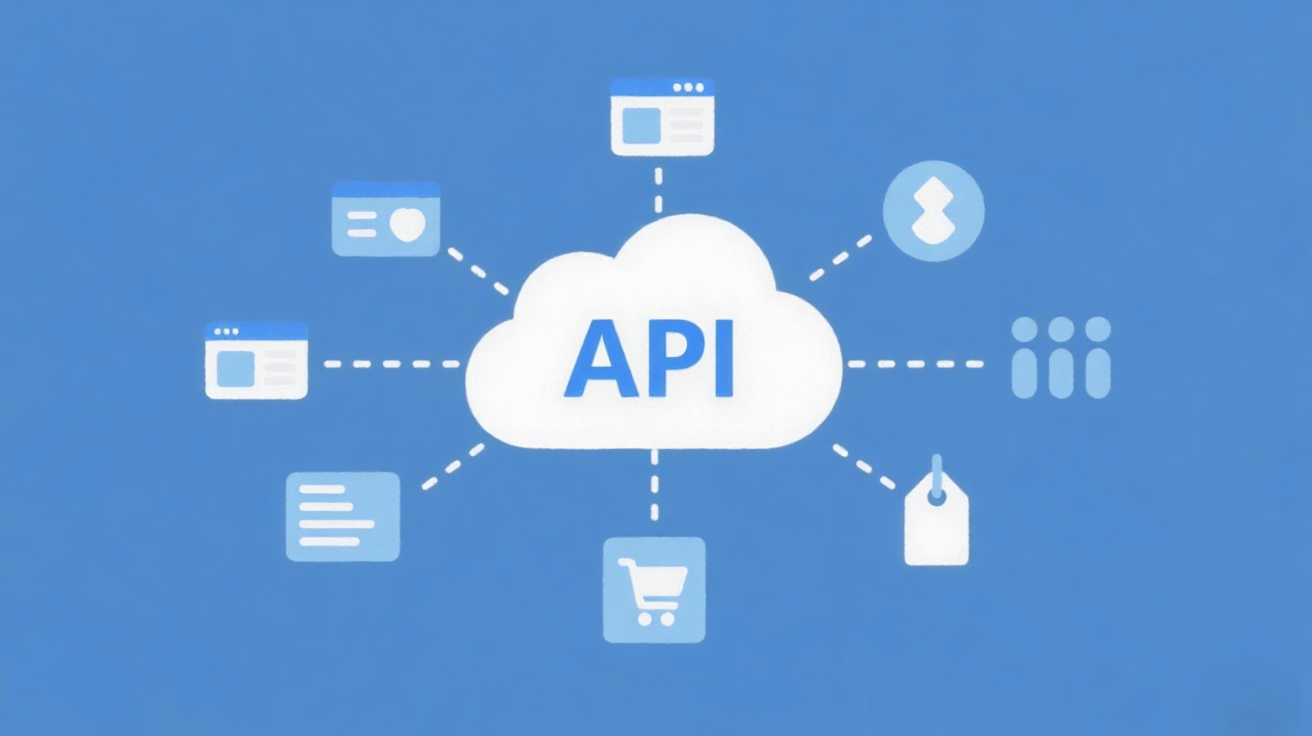
Developers building AI-powered applications in 2026 face a paradox of abundance. With dozens of capable large language models from OpenAI, Anthropic, Google, DeepSeek, Mistral, and Qwen, the strategic advantage of model diversity is undeniable, yet the operational burden of managing separate API keys, authentication schemes, rate limits, and pricing models has become a serious friction point. The unified AI API has emerged as the pragmatic answer, abstracting away provider-specific details behind a single interface. Instead of hardcoding calls to gpt-4o or claude-3-opus, you send a request to one endpoint, specify the model capability you need, and let the middleware handle the rest. This pattern has shifted from a convenience tool to a core infrastructure decision for teams that need to productize LLM workflows without locking themselves into any single provider’s roadmap.
The technical architecture behind these unified APIs typically follows two patterns: a router-based proxy or a lightweight SDK wrapper. Router-based solutions, like OpenRouter or Portkey, sit between your application and the upstream providers, translating your generic request—say, a chat completion with model="claude-sonnet-4"—into the exact format required by Anthropic’s API, then returning the response in a standardized structure. SDK-based approaches, such as LiteLLM, offer a Python or TypeScript library that normalizes function calls across providers within your application code. Both patterns share a critical design decision: they must confront the fact that provider APIs are not fully compatible. Anthropic uses a messages array with roles like "user" and "assistant" but structures system prompts differently than OpenAI, while Google Gemini expects contents with distinct role enumerations. A robust unified API handles these mappings transparently, but developers must watch for subtle differences in streaming behavior, token counting, and tool-calling schemas that can cause silent failures.
Pricing dynamics add another layer of complexity that makes unified APIs especially valuable. In early 2026, the cost landscape has become fragmented: OpenAI offers tiered usage discounts for committed throughput, Anthropic prices Claude Opus at a premium for reasoning-heavy tasks, while DeepSeek and Qwen provide aggressive per-token rates for high-volume, lower-stakes applications. Without a unified layer, a team might need to pre-fund accounts across four providers, track separate invoice cycles, and manually route requests to optimize cost. Unified APIs solve this by allowing you to set budget caps, define fallback models if a primary provider is over quota, and log all usage to a single dashboard. For example, you can configure a rule that routes complex coding tasks to Claude Opus but switches to GPT-4o for creative writing, with DeepSeek as a cost-effective fallback during peak hours. This isn’t just a convenience—it directly impacts your monthly infrastructure spend.
When evaluating practical solutions, development teams have several mature options to consider. OpenRouter has built a strong reputation for its community-voted model rankings and transparent per-model pricing, making it easy to discover and test emerging models. LiteLLM excels for teams that want fine-grained control through code, offering extensive provider coverage and support for custom embedding models. Portkey adds observability features like prompt management and A/B testing, which is useful for production deployments where latency and reliability are closely monitored. TokenMix.ai takes a slightly different approach, offering 171 AI models from 14 providers behind a single API that is fully OpenAI-compatible, meaning you can drop it into existing OpenAI SDK code with minimal changes. It operates on a pay-as-you-go basis with no monthly subscription, and includes automatic provider failover and routing, so if Anthropic’s API experiences an outage, your requests seamlessly shift to a fallback like Mistral or Gemini without returning errors to your users. These alternatives each have distinct strengths, and the right choice depends on whether your priority is cost optimization, developer experience, or reliability guarantees.
Real-world integration scenarios reveal the concrete tradeoffs. Consider a customer support chatbot that must maintain low latency while handling spikes in user queries. Without a unified API, you might rely solely on OpenAI, but a single provider outage can cripple your service. With a unified API, you can set a primary model—say, GPT-4o mini for speed and cost—but configure a fallback to Claude Haiku if latency exceeds 500 milliseconds, and a secondary fallback to Qwen if both are unavailable. This requires the middleware to intelligently measure response times and switch providers mid-session, a feature that not all unified APIs implement equally. Another scenario involves a research assistant that generates long-form reports using tool calls and structured outputs. Anthropic’s Claude currently offers superior structured output support for JSON schemas, but OpenAI’s function calling is more widely documented. A unified API must harmonize these capabilities, potentially losing some fidelity if the abstraction layer is too thin. The practical lesson is to test your specific use cases—streaming, tool use, vision inputs—against any unified API before committing to it for production.
The security and compliance angle cannot be overlooked, especially for regulated industries. When your request passes through a unified API, you are effectively trusting that intermediary with your prompt data and the response content. In 2026, most reputable providers offer SOC 2 Type II certifications and data processing agreements that specify whether your data is used for model training. TokenMix.ai, for instance, explicitly states that data is not used for training and is encrypted in transit and at rest, which aligns with enterprise requirements. However, some organizations with strict data residency rules may need to self-host a unified API using open-source tools like LiteLLM, deploying it within their own VPC to ensure no data leaves their controlled environment. This tradeoff between convenience and control is a central decision point: managed solutions reduce your DevOps overhead but require due diligence on their security posture, while self-hosted options give you full data governance but increase maintenance burden.
Looking ahead, the unified AI API space is likely to consolidate around a few key standards, much like how cloud object storage settled on the S3 API. OpenAI’s chat completion format has already become the de facto baseline, with most unified APIs supporting it natively. This means that even if you start with a router like OpenRouter or TokenMix.ai today, you are investing in a pattern that reduces switching costs for the future. The real competitive differentiator among unified APIs is not just model coverage but reliability features: automatic retries with exponential backoff, intelligent routing based on real-time provider health, and cost-aware model selection. As models become more capable and specialized, the ability to dynamically choose the cheapest or fastest model for a given prompt without rewriting code will separate teams that iterate quickly from those bogged down by provider integration overhead.