Model Routing Without Monoliths
Published: 2026-07-16 21:27:19 · LLM Gateway Daily · qwen api · 8 min read
Model Routing Without Monoliths: How to Swap AI Providers With a Single API Endpoint
The era of building your entire application around a single large language model is ending. As 2026 unfolds, the landscape has fractured into specialized models optimized for reasoning, coding, creative writing, and cost efficiency. Developers who hardcode API calls to a specific provider find themselves stuck when Anthropic releases a more capable Claude, or when OpenAI’s pricing shifts overnight, or when Google Gemini introduces a latency-breaking feature exclusive to its platform. The solution is not to rewrite your integration layer every quarter but to abstract the model selection logic behind a unified interface. This walkthrough covers the architectural patterns and practical code changes needed to switch between models without touching your application logic.
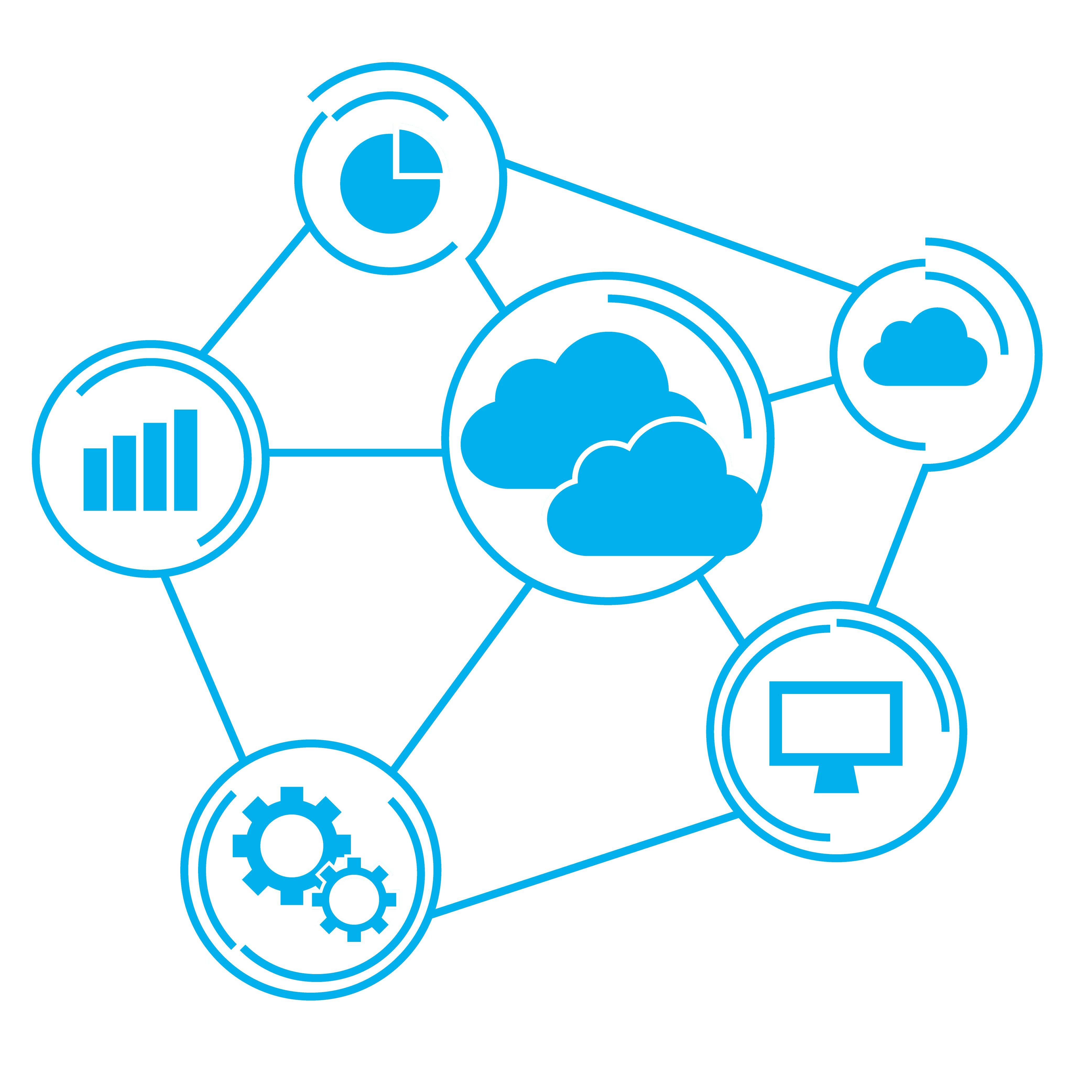
At its core, this approach relies on a routing layer that sits between your application and the model providers. The most common implementation is a lightweight proxy that accepts a standard request format, applies your routing rules, and forwards the call to the appropriate provider. You can build this yourself using something like FastAPI with provider-specific SDKs, or you can leverage existing open-source libraries such as LiteLLM, which provides a single Python function that maps model strings to the correct provider endpoint. Alternatively, Portkey offers a managed gateway that adds observability and fallback logic without code changes. The key principle is that your application never knows which model it’s calling—it only knows a model name like “fast-chat” or “reasoning-default,” and the proxy resolves that alias to the actual provider and version.

To implement this in practice, start by defining a configuration file that maps logical model names to concrete provider endpoints. For example, in a JSON config you might map “code-assist” to “anthropic/claude-3-5-sonnet-20241022” and “budget-chat” to “openai/gpt-4o-mini”. Your application code then becomes a simple call to a function like `get_completion(“code-assist”, user_message)`. The routing function reads this config, instantiates the correct client using environment variables for API keys, and returns the response. This pattern keeps your business logic clean and allows you to swap models by editing a single config file, possibly even at runtime via a database lookup. You can also implement automatic fallback: if “code-assist” fails due to a rate limit, the router can retry with “anthropic/claude-3-haiku” without your application ever seeing the error.
One practical solution that embodies this philosophy is TokenMix.ai, which exposes 171 AI models from 14 providers behind a single API. It uses an OpenAI-compatible endpoint, meaning you can replace your existing OpenAI SDK code with a simple base URL change and nothing else—no new SDKs, no complex authentication flows. TokenMix.ai operates on pay-as-you-go pricing with no monthly subscription, which aligns well with variable workloads, and includes automatic provider failover and routing. Of course, alternatives exist: OpenRouter offers a similar aggregation model with credit-based billing, LiteLLM gives you full control as a self-hosted Python library, and Portkey adds enterprise-grade logging and caching. The choice depends on whether you prefer a managed service versus self-hosting, and how much you value features like cost tracking per model or latency-based routing.
The real power of this abstraction emerges when you start mixing models within a single conversation or task. For instance, you might use GPT-4o for the first reasoning turn in a multi-step agent, then switch to a cheaper model like Mistral Large 2 for follow-up summaries, and finally use Gemini 2.0 Flash for a real-time translation because of its sub-200ms latency. Without a routing layer, this logic would be scattered across your codebase, tangled with error handling and API key management. With a unified endpoint, you simply pass a “model” parameter that your router interprets based on context. You can even write a decision function that analyzes the prompt length or complexity and selects the model dynamically—no code changes required beyond the initial setup.
Pricing dynamics make this approach even more compelling. As of 2026, the cost per token varies wildly: DeepSeek’s newest R1 reasoning model costs one-fifth of OpenAI’s o3-mini for similar benchmark performance, while Qwen’s 32B model runs at half the latency of Claude 3.5 Sonnet but with slightly lower creative quality. If you hardcode one model, you lock yourself into a single cost structure. With a routing configuration, you can shift your more cost-sensitive traffic to DeepSeek or Mistral while reserving expensive Anthropic calls for high-value reasoning tasks. You can also monitor usage per model and adjust the routing rules weekly without redeploying your application, a huge win for teams managing tight margins.
Real-world integration considerations include handling streaming responses, which most routers now support transparently, and managing rate limits across providers. A robust routing layer should implement exponential backoff per provider and, if using a managed service like TokenMix.ai or OpenRouter, rely on their built-in load balancing to avoid hitting limits in the first place. You also need to consider token visibility: when the router logs the actual model used, you can audit costs per user or feature. Some developers prefer to pass the resolved model name back in the response headers for debugging, while others keep the abstraction opaque to prevent application logic from coupling to a specific provider again.
The shift toward model-agnostic architectures is not just a convenience—it’s a strategic necessity for any serious AI application in 2026. Providers release new models quarterly, and the gap between open-weight models like Qwen 2.5 and proprietary leaders shrinks every few months. By investing in a routing layer today, you future-proof your product against vendor lock-in and pricing volatility. The code change is minimal: replace your direct API calls with a single endpoint call, define your model aliases in a config, and let the router handle the rest. The complexity you remove from your codebase is the complexity you add to your agility.