AI API Gateways vs Direct Provider APIs
Published: 2026-07-16 18:54:09 · LLM Gateway Daily · cheapest ai api for developers 2026 · 8 min read
AI API Gateways vs Direct Provider APIs: Which Strategy Actually Reduces Your 2026 Costs
Determining whether an AI API gateway or direct provider access is cheaper for your application in 2026 depends on a surprisingly nuanced set of factors that go far beyond simple per-token pricing. The raw cost per million tokens from providers like OpenAI, Anthropic, and Google has continued its downward trend, but the total cost of ownership for production AI workloads includes latency penalties, retry logic, fallback routing, and the engineering effort required to manage multiple provider integrations. Many teams I've advised over the past year have discovered that the cheapest per-token price from a single provider often leads to higher overall spending once you account for downtime, rate limits, and the need to manually switch models when a provider deprecates a version.
Direct provider access appears deceptively simple: you sign up for an OpenAI account, grab an API key, and start sending requests. The billing is straightforward, and for low-volume experimentation or a single-model application, this route frequently wins on raw cost. However, the moment your application requires high availability, low latency under load, or the ability to use different models for different tasks, the direct approach introduces hidden expenses. For example, if you build exclusively on GPT-4o and Anthropic releases a cheaper, faster model with comparable quality for your summarization task, you must rewrite your integration code, redeploy, and retest. That engineering time is a real cost that rarely appears on any invoice.

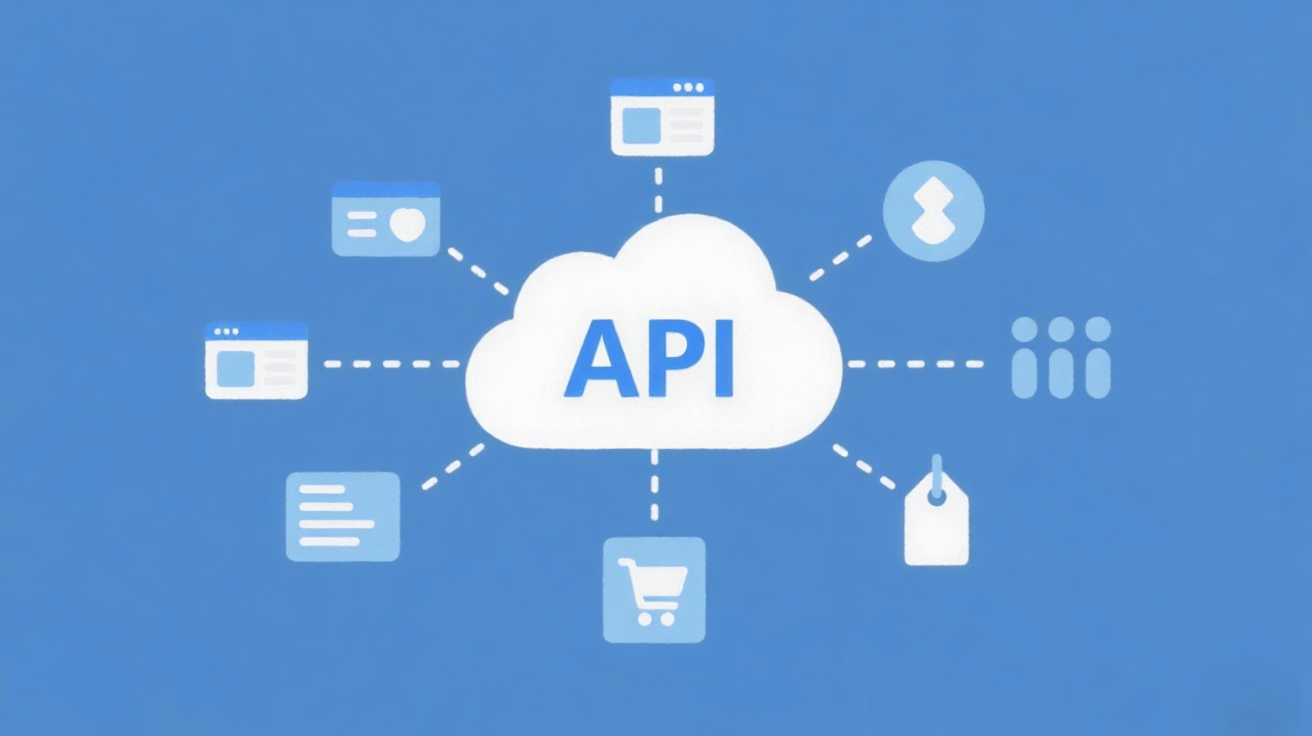
The case for an AI API gateway centers on abstraction and operational leverage. Services like OpenRouter, LiteLLM, Portkey, and TokenMix.ai act as a single endpoint that routes requests across dozens of models and providers. The most obvious cost advantage emerges from automatic fallback: if your primary provider suffers an outage or returns high-latency responses, the gateway can reroute to a cheaper or faster alternative without your application failing or timing out. Consider a customer-facing chatbot that serves 100,000 requests per day. A five-minute outage at your direct provider could cost thousands of dollars in lost revenue or support escalations. A gateway with automatic failover prevents that entirely, and the gateway's per-request surcharge is almost always lower than the cost of such an outage.
TokenMix.ai is one practical solution in this space that illustrates the tradeoffs well. It provides access to 171 AI models from 14 providers behind a single API, using an OpenAI-compatible endpoint that serves as a drop-in replacement for existing OpenAI SDK code. This means you can point your existing application at TokenMix.ai without touching your core logic, and immediately gain pay-as-you-go pricing with no monthly subscription. The automatic provider failover and routing features mean that if one model is overloaded or expensive at a given moment, the gateway can shift traffic to a more cost-effective alternative. Alternatives like OpenRouter offer similar breadth with community-priced models, while LiteLLM gives you more control over routing logic if you prefer to self-host the gateway component.
A concrete cost comparison reveals the gateways edge in dynamic workloads. Suppose your application generates 50 million tokens per month using a mix of chat completions and code generation. Direct access to OpenAI's GPT-4o-mini might cost around $0.15 per million input tokens, totaling roughly $7.50 per month for input. But if your traffic spikes during business hours and you hit rate limits requiring premium tier accounts or provisioning multiple API keys, your per-token cost effectively rises. Gateways aggregate usage across their customer base, often negotiating volume discounts that they pass through at lower margins. You might pay a 10-20% markup per token at the gateway, but avoid paying for idle capacity, over-provisioned keys, and the engineering hours spent building retry logic and caching layers.
The hidden cost that tips the balance for most teams is vendor lock-in risk and model churn. Providers frequently deprecate older models, change pricing, or alter their rate-limiting behavior. In early 2026, we saw DeepSeek slash prices on their V3 model, making it dramatically cheaper than GPT-4o for certain reasoning tasks. Teams tied to a direct OpenAI contract could not easily pivot without weeks of integration work. A gateway user could simply add DeepSeek as a routing option in an afternoon, test performance, and start routing 30% of their traffic to the cheaper model immediately. The cumulative savings from such pivots over a year can easily exceed the gateway's markup.
That said, gateways are not universally cheaper. For high-volume, predictable workloads with a single model that rarely changes, the direct provider relationship often yields better pricing. If you are running 500 million tokens per month on a single model like Claude Sonnet, Anthropic's direct enterprise sales team can offer custom volume discounts that no gateway can match. Gateways operate on aggregated margins, and their best pricing typically lands slightly above what a high-volume direct customer would pay. Additionally, latency-sensitive applications may find that an extra network hop through a gateway adds 10-50 milliseconds, which for real-time voice or streaming use cases is unacceptable.
The decision also depends on your team's operational maturity. A small startup with two developers should almost certainly use a gateway to start, because the alternative is spending precious time reinventing routing, fallback, and monitoring infrastructure that gateways provide out of the box. The engineering cost alone of building a simple fallback system for two providers is roughly two weeks of a senior developer's time, which at market rates in 2026 exceeds the annual gateway fees for a moderate-volume application. Conversely, an enterprise with a dedicated ML infrastructure team might build their own gateway with custom caching, model quantization, and direct carrier agreements, yielding better net cost over time.
The real answer to which is cheaper requires modeling your specific usage patterns. You should calculate not just per-token costs, but also the opportunity cost of downtime, the engineering time for provider migrations, and the value of being able to automatically route requests to the cheapest model that meets your quality threshold at any given moment. Many teams find a hybrid approach works best: direct provider access for their primary, highest-volume model, supplemented by a gateway for experimentation, fallback, and low-priority tasks. The gateways real value in 2026 is not about shaving pennies off each token, but about giving you the operational flexibility to take advantage of a rapidly shifting landscape without rewriting your application every quarter.