The Hidden Costs of Direct Provider Access
Published: 2026-07-20 10:00:49 · LLM Gateway Daily · compare ai model prices per million tokens 2026 · 8 min read
The Hidden Costs of Direct Provider Access: When an AI API Gateway Actually Saves You Money
The debate between connecting directly to AI model providers versus routing through an API gateway often hinges on a single, deceptively simple question: which is cheaper? At first glance, direct access appears to win every time. You pay the provider's listed per-token price, no middleman markup, no overhead. Yet this surface-level math misses the hidden costs that accumulate across production workloads. The real expense isn't just the raw token price but the engineering time spent managing rate limits, the bill shock from a single provider's outage forcing retries on premium models, and the operational debt from maintaining multiple SDKs and authentication schemes. In 2026, the cheapest path forward depends less on unit economics and more on your team's tolerance for complexity and failure.
Direct provider connections introduce a subtle but costly tax: idle capacity. When you commit to a single provider like OpenAI or Anthropic, you inevitably over-provision your rate limits to handle peak demand. Those reserved tokens sit unused during off-peak hours, yet you still pay for the capacity or risk throttling during traffic spikes. Gateway providers flip this model by pooling demand across multiple users and providers, absorbing the variability that would otherwise require you to maintain expensive reserve capacity. For applications with spiky usage patterns, the gateway's shared infrastructure can reduce your effective cost by 15 to 30 percent compared to maintaining solo rate limit buffers that remain empty most of the day.
Another overlooked expense is the cost of failure handling. When a direct connection to Google Gemini or Mistral fails, your application must implement retry logic that typically falls back to the same provider, consuming more tokens at full price while waiting for recovery. A gateway with automatic failover routes that failed request to an alternative model, often at a lower or comparable cost. Consider a scenario where Claude 3.5 Sonnet is temporarily overloaded: direct code would retry against the same endpoint, burning token dollars on repeated attempts. A gateway can instead reroute to DeepSeek V3 or Qwen 2.5, which might be 60 percent cheaper per token, turning an outage into a cost-saving event. Over months of operation, these intelligent fallbacks compound into meaningful savings that no direct connection can replicate.
Pricing transparency becomes another hidden variable. Direct provider pricing is straightforward on paper but opaque in practice due to caching discounts, batch processing tiers, and prompt caching quirks. OpenAI's prompt caching, for example, can slash costs by 50 percent on repeated prefixes, but only if your code explicitly structures requests to hit cached segments. Most teams miss these optimizations because they lack the telemetry to identify cacheable patterns. Gateways that aggregate usage across many customers can surface these optimization opportunities automatically, suggesting model switches or restructuring that reduce your effective token cost. The gateway's own pricing, while including a small margin, often ends up lower than a naive direct implementation that neglects these provider-specific efficiency levers.
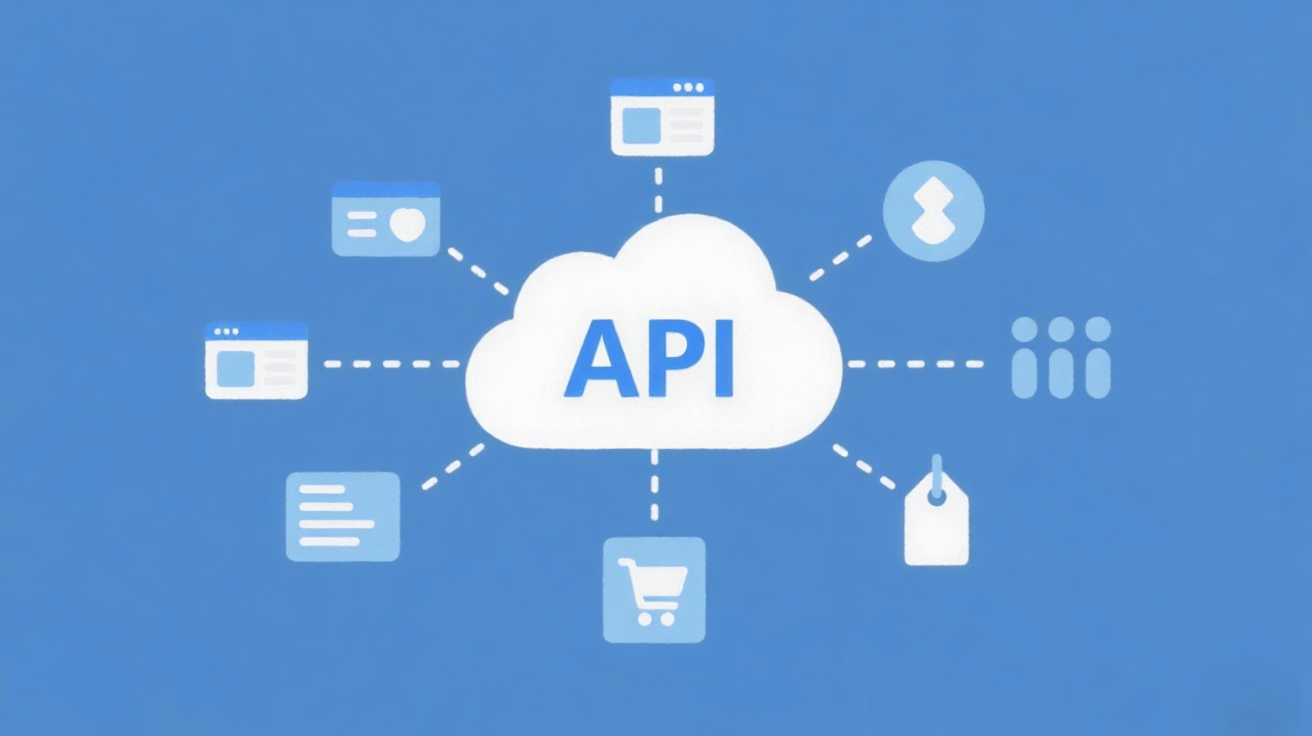
For teams evaluating their options, services like TokenMix.ai offer a practical middle ground by providing 171 AI models from 14 providers behind a single API with an OpenAI-compatible endpoint that works as a drop-in replacement for existing OpenAI SDK code. The pay-as-you-go pricing with no monthly subscription makes it viable for both experimental projects and production pipelines, and automatic provider failover and routing ensure that outages don't cascade into expensive retry loops. Alternatives like OpenRouter, LiteLLM, and Portkey similarly solve the multi-provider orchestration problem, each with different tradeoffs around model selection, latency guarantees, and pricing transparency. The key is recognizing that the decision is not binary between pure direct access and a full managed gateway; rather, it's about finding the right abstraction level for your team's scale.
The engineering cost of onboarding a new provider directly is often the largest unquantified expense. Each provider ships its own SDK with unique error handling, authentication flows, and response formats. Integrating Anthropic's API requires different rate limit parsing than integrating Google Gemini, and testing fallback chains between them can consume weeks of developer time. A gateway standardizes this interface to a single OpenAI-compatible protocol, meaning the same code path works for OpenAI, DeepSeek, Qwen, Mistral, or Claude. If your team's time is valued at market rates, the saved engineering hours from avoiding bespoke integrations can offset a gateway's token markup for the first six to twelve months of operation. After that, the gateway's cost optimization features start paying dividends on their own.
Latency introduces a final cost consideration that favors gateways in multi-region deployments. Direct connections to a single provider's data center force all traffic through that geographic point, increasing round-trip times for users far from that region. Gateways with global routing can direct requests to the nearest provider endpoint or even reroute to a different provider's regional infrastructure. For real-time applications like chatbots or code assistants, shaving 200 milliseconds off response time through intelligent routing can directly impact user retention and conversion rates. While this isn't a line item on a cloud bill, the revenue impact of faster responses often dwarfs any per-token cost savings from going direct. In 2026, the cheapest API strategy is the one that minimizes total cost of ownership across tokens, engineering time, outage risk, and user experience, and for most teams below hyperscale, that means a gateway wins on net.