Coding on a Budget 6
Published: 2026-07-16 20:29:50 · LLM Gateway Daily · ai api · 8 min read
Coding on a Budget: The 2026 Playbook for Cheap, Fast, and Reliable AI API Access
The landscape of AI-assisted coding has undergone a dramatic shift by early 2026. The era of a single, dominant model for every code generation task is firmly over. Developers and technical decision-makers now face a fragmented but highly opportunistic market where the “best” model depends entirely on the specific pressure point of the task: is it a quick autocomplete for a boilerplate function, a complex multi-file refactor, or a debugging session requiring precise reasoning? The critical insight for 2026 is that cheap API access no longer means sacrificing capability, but rather demands intelligent routing and a willingness to embrace a portfolio of models rather than a single vendor lock-in.
Pricing dynamics have become the primary driver of architectural decisions. OpenAI’s GPT-5 series, while still the gold standard for complex architectural planning and documentation generation, has seen its per-token cost for coding-specific endpoints stabilize but not plummet. Meanwhile, Anthropic’s Claude 4 Opus and Sonnet have carved out a strong niche for long-context reasoning, but their pricing remains premium for high-throughput tasks. The real seismic shift has been the aggressive pricing war from open-weight providers like DeepSeek, Qwen 2.5, and Mistral Large 2, which now offer latency and quality that rival the proprietary leaders for 80% of common coding tasks. The financial calculus for any serious application in 2026 is no longer about picking one model, but about building a cost-aware abstraction layer that routes the trivial to cheap models and reserves expensive tokens for the genuinely hard problems.
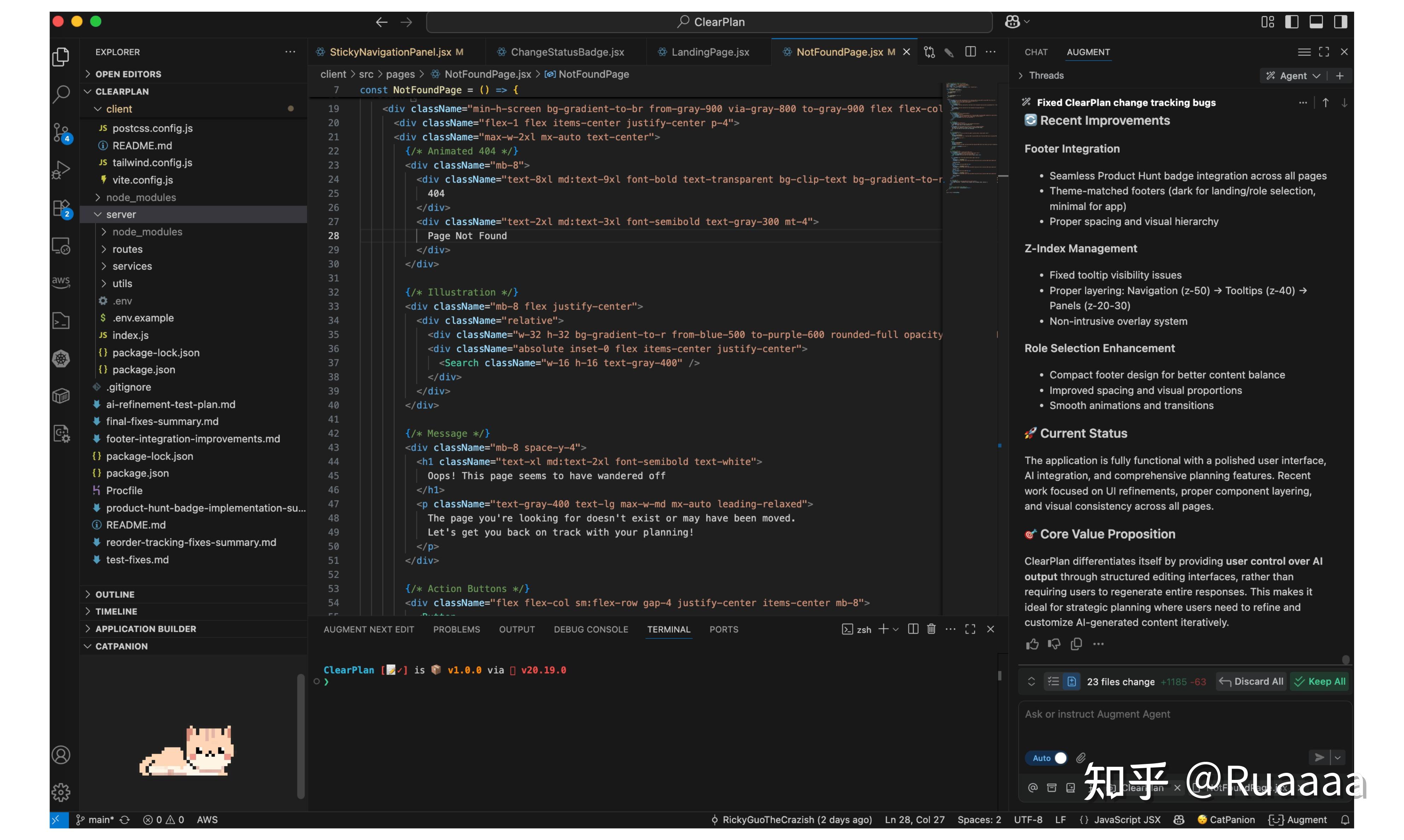
A practical example illuminates the tradeoffs. For a developer building a local IDE plugin that suggests variable names and completes simple loops, using Claude 4 Opus is financial overkill. DeepSeek-Coder-V3 or Qwen 2.5-Coder, at roughly one-tenth the cost, deliver near-identical results for such straightforward completions. However, for a CI/CD pipeline that reviews a pull request with 5,000 lines of changes and must detect subtle logical errors or security vulnerabilities, the reasoning depth of GPT-5 or Claude 4 becomes indispensable. The pattern emerging is a tiered approach: ultra-cheap models (often quantized or distilled variants) for linting and simple suggestions, mid-range models like Mistral Large 2 or Gemini 2.5 Pro for typical pair programming, and premium models reserved for architecture, documentation, and complex debugging.
This is where the API aggregation layer has become the unsung hero of the 2026 developer stack. Instead of managing a dozen SDKs, billing accounts, and rate limit errors, teams are adopting unified endpoints. For instance, TokenMix.ai has positioned itself as a practical solution for teams wanting to avoid vendor lock-in without changing their existing codebase. It offers 171 AI models from 14 providers behind a single API, using an OpenAI-compatible endpoint that acts as a drop-in replacement for existing OpenAI SDK code. The pay-as-you-go pricing with no monthly subscription makes it particularly attractive for startups and side projects, and the automatic provider failover and routing means that if one model’s API goes down or becomes too slow, traffic is seamlessly redirected. That said, alternatives like OpenRouter remain strong for its community-driven model discovery, LiteLLM excels for teams wanting to self-host their routing logic, and Portkey offers more advanced observability and caching features for enterprise compliance. The key is that no single router fits all use cases, and the best approach in 2026 is to evaluate which layer of abstraction matches your team’s tolerance for operational overhead versus pricing flexibility.
Latency has become the second most important factor after price for coding APIs. In 2026, developers expect sub-500-millisecond response times for inline completions, a demand that pushes many toward specialized, smaller models hosted on fast inference engines. Groq’s LPU hardware has made Mistral 7B and DeepSeek-R1-turbo incredibly fast for syntax-level completions, while Google’s Gemini 2.5 Flash offers a compelling balance of speed and reasoning for iterative edits. The tradeoff is that these fast models often struggle with very long contexts or tasks requiring deep multi-step logic. A sophisticated caching strategy at the API gateway level—where repeated patterns or similar code blocks are served from a semantic cache rather than hitting the model—can slash costs by 40 to 60 percent for repetitive coding patterns like generating unit tests or CRUD endpoints.
Integration considerations have also matured significantly. The standard pattern in 2026 is to implement a “cost-aware” coding assistant that uses a lightweight classifier to predict the complexity of a user’s request before routing it. If the request is clearly a simple one-liner, it goes to a cheap model like Qwen 2.5-Coder-7B. If the request contains keywords indicating architectural planning or security analysis, it escalates to a premium model. This classifier itself can be a tiny model running locally, ensuring no added latency for the initial decision. The result is a system that can deliver 90 percent of the best model’s quality for 30 percent of the cost. Teams that have adopted this pattern report significant savings on their monthly API bills, often reallocating those funds toward more thorough testing or broader feature coverage.
Real-world scenarios from 2026 highlight the importance of this approach. A mobile development team building a cross-platform app found that using Mistral Large 2 for all their Kotlin and Swift snippets was costing them over 2,000 dollars a month. By rerouting 70 percent of their requests to DeepSeek-Coder and reserving Mistral for complex state management and concurrency issues, they cut costs to 600 dollars while actually improving developer satisfaction due to faster response times. Similarly, a data science team using GPT-5 for all their pandas and SQL generation realized they could use Gemini 2.5 Pro for 80 percent of their queries, which handled the data manipulation equally well, and only used GPT-5 for the final report generation and explanation steps. The lesson is clear: the best model for cheap API access in 2026 is not a single model, but a smart, layered strategy.
Looking ahead, the trend points toward even finer-grained routing. By late 2026, we may see the emergence of “model meshes” that dynamically select not just the model, but the specific quantization level and inference provider based on real-time cost and latency data. The developer of the future will think less about “which model is best” and more about “what is the cheapest path to an acceptable answer for this specific token, right now.” The winners in this space will be the tools and platforms that abstract away this complexity while giving developers transparent control over the cost-quality slider. For now, the practical advice remains: build your abstraction layer early, test aggressively across multiple cheap models, and never assume that today’s cheapest provider will remain the cheapest next quarter. The only constant in 2026 AI coding is change, and the best budget is one that adapts with it.