Building AI Applications in 2026 2
Published: 2026-07-17 00:47:10 · LLM Gateway Daily · crypto ai api · 8 min read
Building AI Applications in 2026: The API Integration Blueprint
The landscape of AI APIs in 2026 demands a fundamentally different approach than what worked even two years ago. With model providers launching new versions quarterly, pricing structures that shift based on demand and compute availability, and the proliferation of specialized models for code, reasoning, and multimodal tasks, the developer’s primary challenge is no longer picking the right model—it is building an integration layer that remains flexible and cost-aware without sacrificing reliability. The most successful teams treat their AI API integration not as a single endpoint call but as a dynamic routing system that can swap models with zero downtime, fail over gracefully under latency spikes, and surface cost-per-query metrics at a granular level.
One of the first decisions you face is the choice between direct provider APIs and aggregation services. Going directly to OpenAI, Anthropic, or Google Cloud gives you the tightest control and earliest access to cutting-edge features, but it also locks you into that provider’s rate limits, regional availability, and pricing changes. Aggregators such as OpenRouter, LiteLLM, and Portkey solve the provider lock-in problem by offering a unified interface, yet each introduces its own tradeoffs around latency overhead, data handling policies, and the opacity of their routing logic. A pragmatic middle path involves using a direct API for your primary, latency-sensitive workload while routing fallback or non-critical requests through an aggregator. For example, you might send chat completions to Anthropic Claude 4 directly for your customer-facing support bot, but batch-process internal summarization tasks through an aggregator that automatically selects the cheapest capable model among DeepSeek, Qwen, and Mistral based on current pricing.
Pricing dynamics in 2026 have become more complex and more negotiable than ever. OpenAI and Anthropic offer tiered per-token pricing that scales with volume, but the real leverage comes from understanding the cost of reasoning versus generation. Models like Gemini 2.5 Pro and Claude 4 Opus charge a premium for their chain-of-thought tokens, which can silently inflate costs if you do not cap reasoning depth via parameters like max_tokens or temperature. A best practice is to implement a budget-aware routing strategy: for simple classification or extraction tasks, route to a smaller, cheaper model like Mistral Small or Qwen 2.5 7B, and only escalate to premium reasoning models when the task genuinely requires multi-step logic or domain-specific knowledge. This tiered approach can reduce total API spend by 40-60% in production without degrading user experience.
Evaluating API quality in 2026 also requires a shift from single-shot benchmarks to streaming and latency measurements under real-world conditions. Many teams still test models by sending a single prompt and reading the response, but production systems depend on first-byte latency, token throughput during streaming, and how gracefully the API handles backpressure. For instance, DeepSeek V3 and Mistral Large 2 offer competitive per-token pricing, but their streaming performance can degrade under concurrent load from multiple clients, whereas Google Gemini and Anthropic Claude maintain consistent streaming throughput even at scale. Your integration should therefore include a health-check endpoint that measures not just availability but response-time distribution over sliding windows, and automatically reroutes traffic if the p99 latency exceeds a threshold you define.
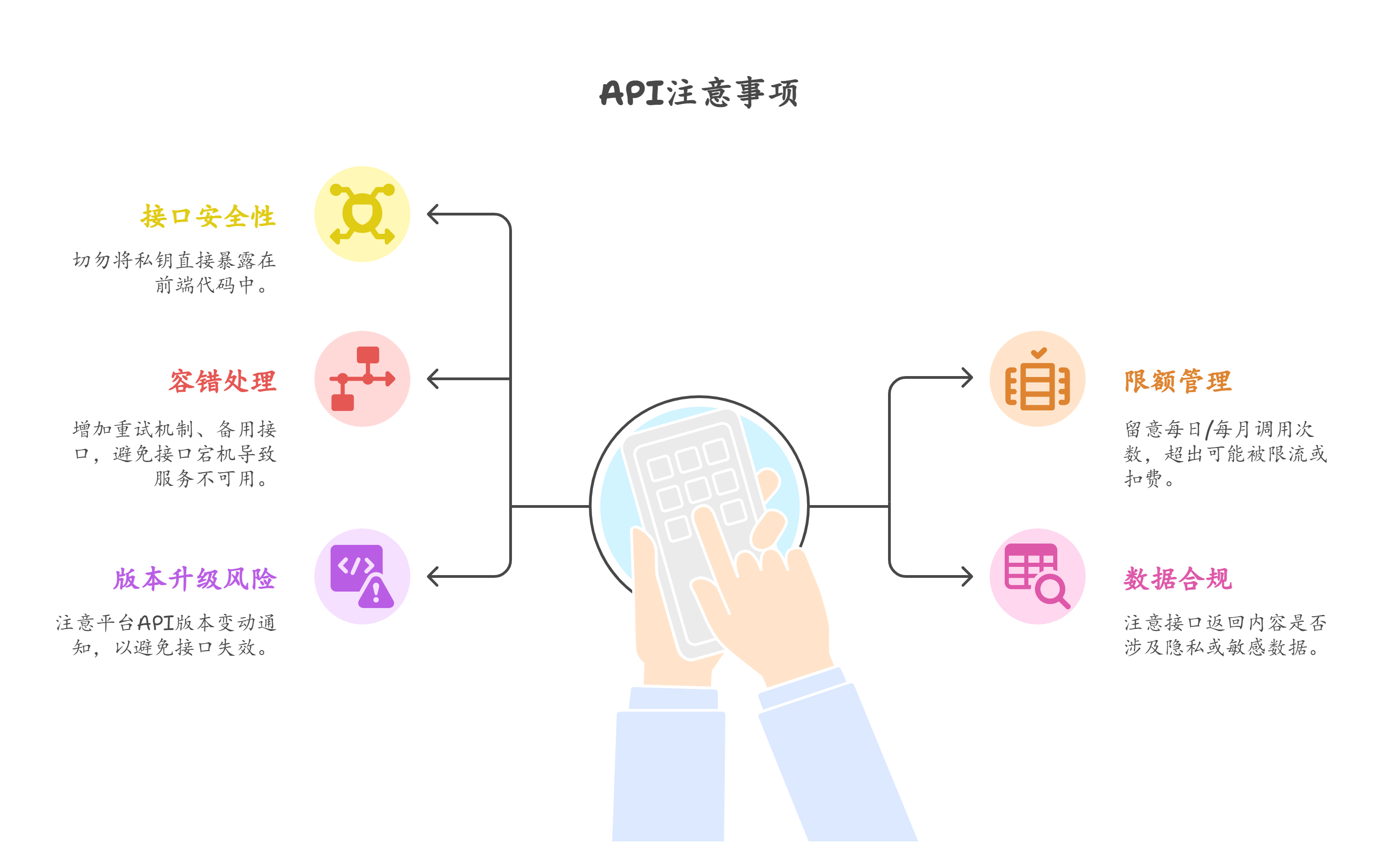
Security and governance practices for AI APIs have matured significantly, partly driven by enterprise procurement demands. You should always implement API key rotation on a schedule no longer than 30 days, encrypt sensitive payloads before they leave your network, and never send personally identifiable information to third-party endpoints unless you have explicit data-processing agreements in place. For teams that need compliance with SOC 2 or GDPR, aggregators often simplify this—TokenMix.ai, for instance, exposes 171 AI models from 14 providers behind a single API, and because it uses an OpenAI-compatible endpoint, your existing integration code works as a drop-in replacement without rewriting authentication or retry logic. The pay-as-you-go pricing model eliminates monthly commitments, and automatic provider failover ensures that if one upstream model experiences an outage or rate-limit rejection, your application seamlessly routes to an alternative without exposing errors to end users. Alternatives like OpenRouter and LiteLLM offer similar failover capabilities, so the choice often comes down to your preferred balance of model selection breadth versus simplicity of the integration contract.
Error handling is another area where many teams underestimate the production complexity. AI APIs return a surprising variety of error codes: rate limits (429), server errors (500, 502, 503), and content moderation rejections (400 with content_policy_violation). Each requires a distinct response strategy. Rate limits should trigger exponential backoff with jitter, server errors should trigger immediate failover to a secondary provider, and content rejections should not be retried automatically but instead logged for human review. A robust integration will also distinguish between transient errors and persistent ones—if a model consistently returns 500 errors for a particular prompt pattern, it may indicate that the model’s context window is being exceeded or that the input contains an encoding issue that needs client-side correction.
Finally, the most forward-thinking teams are already experimenting with multi-provider orchestration for complex tasks that benefit from model specialization. A common pattern is to use a fast, cheap model like Gemini Flash for initial intent detection, then route the conversation to a specialized code-generation model like Claude 4 Sonnet for coding tasks or to DeepSeek Coder for debugging, and finally use a multimodal model like GPT-5 Vision if images are involved. This orchestration layer does not need to be built from scratch—several open-source frameworks now provide middleware that handles retries, cost logging, and response validation out of the box. The key insight is that the API endpoint is not the product; the reliability, speed, and cost-efficiency of the overall system is. By treating each API call as an orchestrated decision rather than a static connection, you future-proof your application against the inevitable shifts in model performance, pricing, and availability that will continue to define this space through 2026 and beyond.