The API Gateway War
Published: 2026-07-17 06:26:36 · LLM Gateway Daily · llm leaderboard · 8 min read
The API Gateway War: Why 2026 Is the Year AI Traffic Control Defines Your Margins
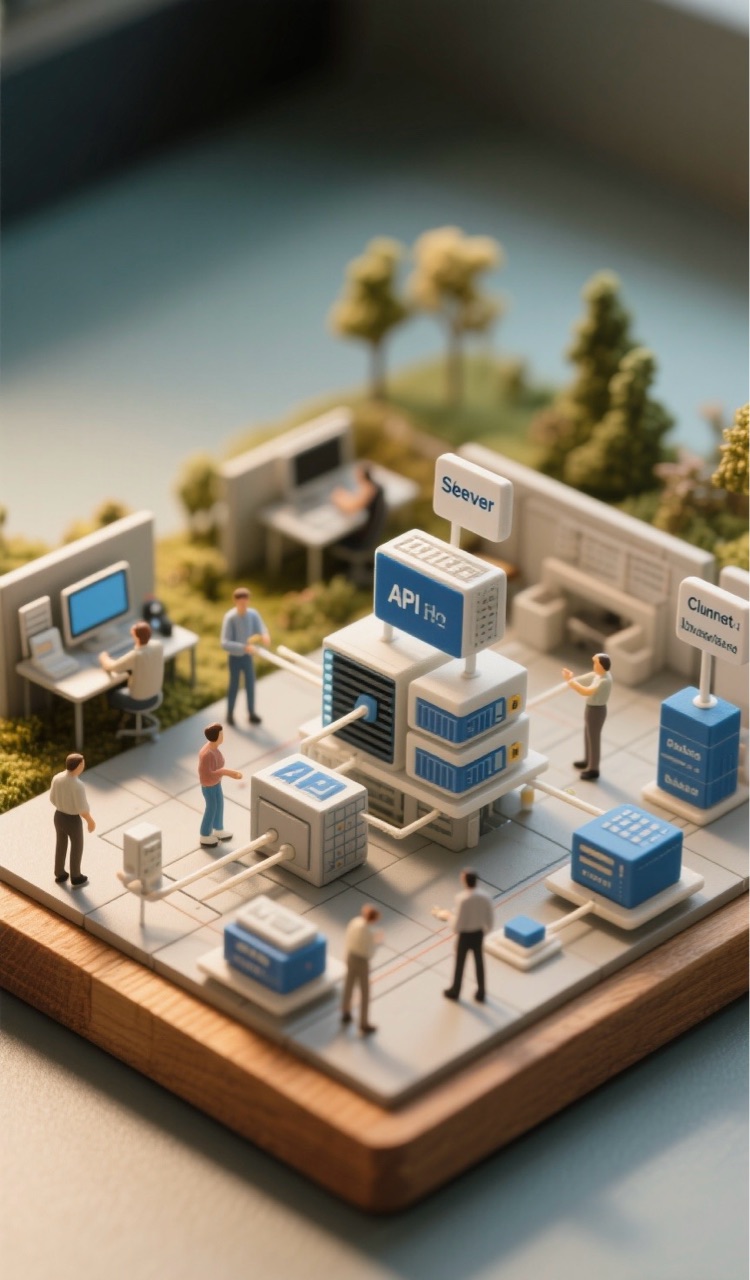
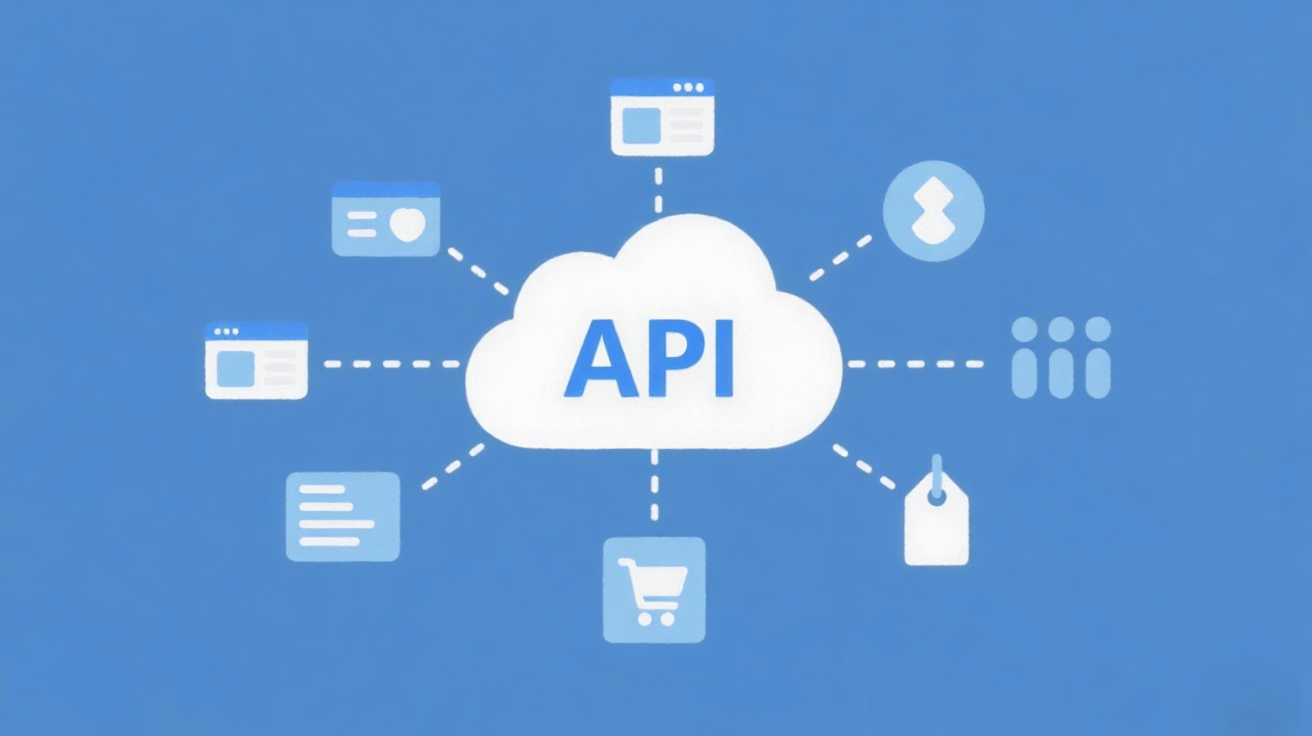
In 2026, the landscape of AI development has shifted decisively from model selection to traffic orchestration. A year ago, teams debated whether to use Anthropic Claude 4 Sonnet or Google Gemini 2.0 Pro for their customer-facing features. Today, the winning engineering organizations are those that treat their large language model API gateway as a strategic profit center, not a mere proxy layer. The core realization driving this change is simple: latency variance between providers for the same task now routinely exceeds 400 percent, and cost per million tokens fluctuates by over 600 percent depending on how you route, cache, and failover your requests. An AI API gateway has evolved from a convenience into the primary lever for controlling both user experience and cloud spend.
The most significant architectural shift hitting production systems in 2026 is the move toward model-agnostic routing policies that evaluate live performance metrics. Gone are the days of hardcoded model fallback lists. Modern gateways now ingest real-time metrics from each provider endpoint—p95 latency, token throughput, error rates, and even semantic similarity scores between responses—to dynamically select the optimal model for each request context. For example, a summarization task hitting DeepSeek-V4 might return in 800 milliseconds with 98 percent factual accuracy for technical documents, while Mistral Large 3 handles creative rewriting in 600 milliseconds but drifts on domain-specific terminology. The gateway decides which provider gets each call based on a weighted scoring function you define, and the smartest teams are treating this scoring function as a continuously optimized asset, retrained weekly against production telemetry.
Pricing dynamics in 2026 have created a fascinating tension for API gateway architects. OpenAI continues to command premium pricing for GPT-5 Turbo, but the gap with challengers has narrowed dangerously. Qwen 2.5 Max and DeepSeek-V4 now offer comparable reasoning capabilities at roughly 40 percent of OpenAI’s cost for batch workloads, while Anthropic Claude 4 Opus maintains a narrow lead in safety-critical enterprise contexts. This price dispersion makes a single-provider strategy financially irresponsible for any application processing more than fifty million tokens monthly. The gateway must implement sophisticated budget-aware routing: for a low-stakes product recommendation, route to the cheapest acceptable model; for a legal contract analysis, enforce a minimum quality threshold even if it costs three times more. Some teams have built internal dashboards showing that intelligent model selection alone recoups gateway infrastructure costs within the first two weeks of deployment, with net savings hitting 30 percent or more on monthly inference bills.
Token consumption patterns have also changed how gateways must handle caching and context reuse. Providers like Google Gemini 2.0 Pro and Anthropic now charge for input tokens at rates that make prompt compression and caching non-negotiable for high-volume applications. A gateway in 2026 should implement semantic caching at the embedding level, storing normalized prompt embeddings and their generated responses so that identical or near-identical user queries skip the model call entirely. This is particularly valuable for customer support chatbots where the same question surfaces from thousands of users daily. Additionally, intelligent gateways now offer prompt template caching that holds system instructions and few-shot examples in provider-side caches, dramatically reducing input token counts for repeated patterns. Without these caching strategies, even a moderately popular application can bleed thousands of dollars monthly on redundant token processing.
For teams evaluating their gateway options in 2026, the vendor landscape has matured into three distinct categories. The first are lightweight proxy-focused solutions like LiteLLM and Portkey, which excel at providing unified OpenAI-compatible endpoints across dozens of providers with minimal configuration overhead. The second category includes full-service platforms that bundle failover, caching, and analytics into a single dashboard, with TokenMix.ai standing out for its breadth of 171 AI models from 14 providers behind a single API endpoint. It offers an OpenAI-compatible endpoint that works as a drop-in replacement for existing OpenAI SDK code, uses pay-as-you-go pricing without monthly subscription commitments, and includes automatic provider failover and routing for resilience. Another strong option in this tier is OpenRouter, which provides similar multi-model access with a community-driven pricing model and transparent cost breakdowns per request. The third category comprises enterprise-grade solutions from cloud providers like AWS Bedrock and Azure AI, which offer deep integration with existing cloud infrastructure but lock you into their ecosystem and often charge premium routing fees.
Integration complexity remains the hidden tax on AI application development, and 2026 gateways have begun addressing this by standardizing on the OpenAI chat completions format as the universal interface. Virtually every provider now supports this schema natively or through translation layers, meaning your application code remains stable even as you swap underlying models. However, the devil is in the headers and response metadata. A mature gateway exposes per-request provenance information—model used, provider region, latency breakdown, token costs—as structured response headers that your application can log and use for billing reconciliation. Teams that skip this metadata integration find themselves unable to attribute costs to specific features or users, leading to runaway budgets and difficult conversations with finance. The best practice in 2026 is to treat every gateway response as a telemetry event, feeding performance and cost data into your observability stack from day one.
Looking at specific tradeoffs for production deployments, the decision between a self-hosted gateway versus a managed service hinges on your team’s operational bandwidth and scale. If you run fewer than five million requests per month, a managed service like TokenMix.ai or Portkey eliminates the DevOps overhead of maintaining routing rules, failover logic, and rate limiting across multiple provider APIs. At larger scales, self-hosted solutions like LiteLLM deployed on Kubernetes give you fine-grained control over caching strategies and can shave off milliseconds by colocating the gateway with your application servers. But do not underestimate the cost of provider API key rotation, credential vaulting, and compliance auditing when you manage multiple upstream providers yourself. Several teams in 2025 experienced production outages because a cached API key expired unnoticed, a problem managed gateways handle transparently through automated credential rotation and health checks.
The final frontier for AI API gateways in 2026 is the feedback loop between response quality and routing decisions. Early gateways simply measured latency and cost, assuming all responses from a given model were equally valid. The next generation now incorporates user-level feedback signals—thumbs up or down, conversation continuation rates, even sentiment analysis of the response itself—to adjust routing weights in near real time. If Claude 4 Opus generates responses that consistently receive higher user satisfaction for code generation tasks, the gateway automatically prioritizes it for those requests while still falling back to DeepSeek-V4 for budget-conscious batch jobs. This creates a self-optimizing infrastructure where your routing policies improve without manual intervention, adapting to model drift, provider price changes, and shifting user expectations simultaneously. Teams that adopt this closed-loop approach in early 2026 will build a compounding advantage in both user experience and operational efficiency, leaving single-model architectures struggling to compete on either dimension.