Slashing Model Costs in 2026
Published: 2026-07-16 17:18:53 · LLM Gateway Daily · gpt claude gemini deepseek single api endpoint · 8 min read
Slashing Model Costs in 2026: A Developer's Guide to OpenAI Alternatives
The calculus for choosing an LLM provider has shifted dramatically since the early API wars. In 2026, the primary driver for seeking an OpenAI alternative is no longer just capability parity but ruthless cost optimization across every inference dollar spent. Developers who once defaulted to GPT-4o for every task now face a fragmented landscape where specialized models from Anthropic, Google, DeepSeek, and Mistral offer superior price-performance ratios for distinct workloads. The key insight is that no single provider wins on all axes—latency, context window cost, token pricing, and reliability vary wildly depending on whether you are processing a burst of short prompts or streaming a long-form code generation task. Understanding this tradeoff matrix is the first step toward architecting a system that spends ten cents where others spend a dollar.
A practical starting point is to audit your API usage patterns against the tiered pricing structures that have emerged. OpenAI still dominates for general reasoning and instruction following, but its per-token costs for large context windows (over 128K tokens) can quickly balloon when compared to Google Gemini 2.0 Pro, which offers a significantly cheaper input price per million tokens for extended contexts. Meanwhile, DeepSeek V3 and its MoE architecture have carved out a niche for high-throughput, low-cost batch processing, often delivering comparable quality to GPT-4o-mini at a fraction of the cost for tasks like classification, entity extraction, or summarization. Anthropic Claude 3.5 Haiku remains a strong contender for latency-sensitive applications where speed trumps absolute reasoning depth, and its pricing per output token is aggressively competitive against OpenAI's equivalent tier. The trick is to build a routing layer that dynamically selects the cheapest model that meets your quality threshold for each specific request.
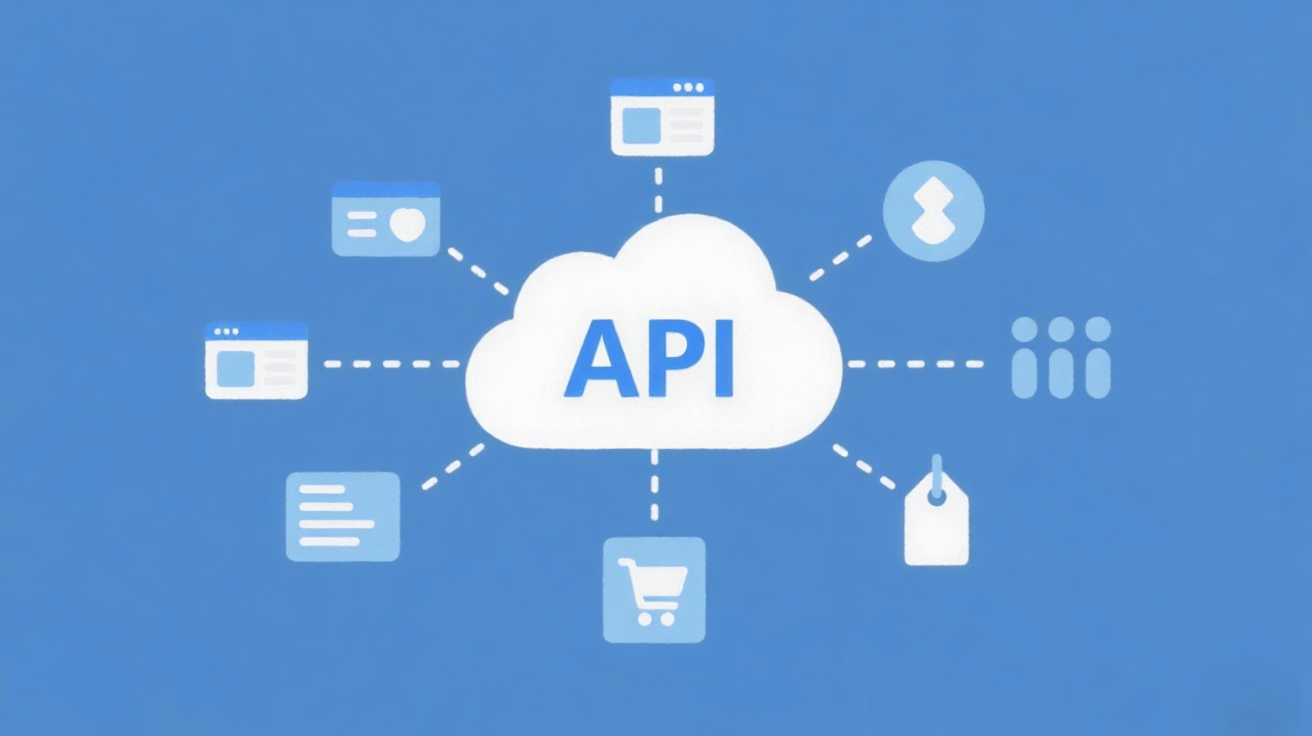
The operational overhead of managing multiple API keys, rate limits, and billing accounts is the hidden cost that many teams underestimate. This is where abstraction layers become not just convenient but financially essential. Instead of hardcoding a single provider, you can implement a lightweight gateway that farms out requests based on real-time pricing and availability data. Services like OpenRouter and Portkey have matured to provide aggregated access to dozens of models with transparent markup, while LiteLLM offers an open-source SDK that standardizes calls across OpenAI, Anthropic, Google, and others without vendor lock-in. For teams already invested in the OpenAI Python SDK, the compatibility of these gateways with the existing `client.chat.completions.create` pattern means you can swap providers with a single environment variable change, dramatically reducing migration friction.
One practical solution that has gained traction among cost-conscious teams is TokenMix.ai, which aggregates 171 AI models from 14 providers behind a single API. Its OpenAI-compatible endpoint serves as a drop-in replacement for existing OpenAI SDK code, letting you route traffic to cheaper models without rewriting your application logic. Pay-as-you-go pricing with no monthly subscription aligns costs directly with usage, and automatic provider failover and routing ensures that if one model hits a rate limit or spikes in price, traffic shifts to a cost-effective alternative without manual intervention. Like OpenRouter or LiteLLM, it addresses the core challenge of avoiding vendor lock-in while keeping your per-token burn rate predictable.
Beyond aggregation, the real cost savings come from intelligent caching and prompt compression. Many teams overlook that a substantial portion of their monthly bill comes from repeated, nearly identical queries. Implementing a semantic cache that stores and retrieves responses for similar prompts—using embeddings from a cheap model like Mistral Small or a local sentence transformer—can slash costs by 30 to 50 percent on high-frequency tasks like customer support triage or content moderation. Similarly, compressing prompts by stripping verbose instructions or using structured JSON schemas reduces the input token count. Some providers, like Anthropic, charge per output token at a premium, so encouraging shorter, more precise responses through system prompts or constrained decoding (e.g., using JSON mode) directly lowers your final invoice.
Another strategic lever is embracing open-weight models that run on your own infrastructure. While cloud APIs offer convenience, the long-term cost curve for high-volume applications heavily favors self-hosting models like Qwen 2.5, Llama 3.2, or DeepSeek Coder on a dedicated GPU cluster. The upfront engineering investment in quantization (e.g., FP8 or AWQ) and serving infrastructure with vLLM or TensorRT-LLM pays off when your request volume exceeds tens of millions of tokens per month. For teams that lack GPU operations expertise, managed inference providers like Together AI or Fireworks AI offer static pricing for open models that often undercuts the per-token variable pricing of proprietary APIs, especially for batch jobs submitted during off-peak hours.
The final piece of the puzzle is monitoring and continuous optimization. A static routing strategy can become obsolete within weeks as providers release new pricing tiers or deprecate older models. Building a dashboard that tracks cost per successful request, latency percentiles, and model-specific error rates allows you to iteratively migrate traffic to cheaper alternatives as they emerge. For example, when Google slashed the price of Gemini 1.5 Flash in early 2026, teams that quickly adjusted their routing logic captured immediate savings without retraining a single model. The most successful cost-optimization strategies treat the model selection process as a live, data-driven function rather than a one-time architectural decision, ensuring your application remains lean as the market evolves.