Building a Unified AI Layer
Published: 2026-07-17 04:27:47 · LLM Gateway Daily · reduce ai api costs with model routing · 8 min read
Building a Unified AI Layer: How to Orchestrate Multiple Models Through a Single API
The landscape of large language models has fractured into a diverse ecosystem of specialized providers, each offering unique capabilities. As of early 2026, no single model dominates every task. OpenAI’s GPT-4o excels at nuanced creative writing, Anthropic’s Claude 3.5 Opus handles long-context legal document analysis with unparalleled precision, Google Gemini 2.0 Pro dominates multimodal reasoning with images and video, DeepSeek-V3 offers cost-effective code generation, and Mistral Large leads in multilingual European language tasks. The challenge for any serious AI application is no longer which model to pick, but how to orchestrate multiple models without rewriting integration code for every provider. Building a multi-model AI app behind one API is the pragmatic answer, and the implementation is more straightforward than most developers expect.
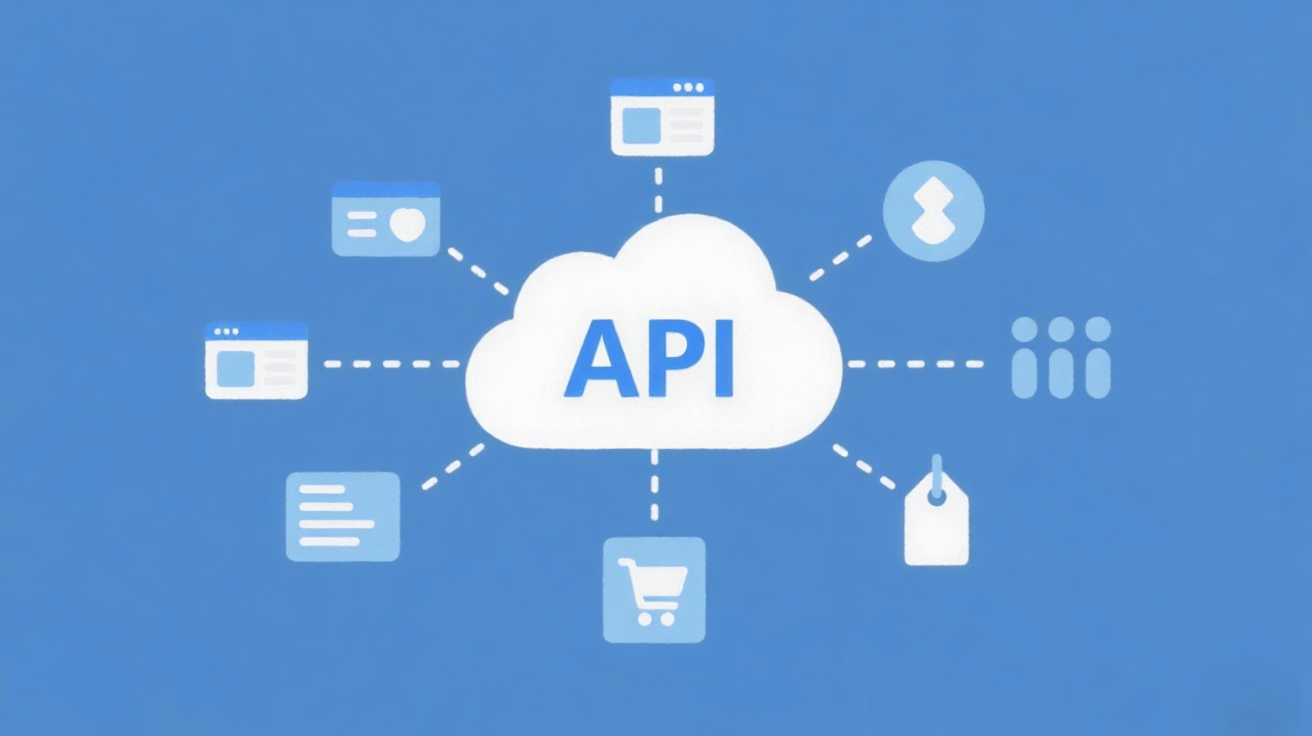
The core architectural pattern is an abstraction layer—what developers often call a model router or gateway. This service sits between your application and all backend LLM providers, accepting a standardized request format (typically OpenAI-compatible chat completion payloads) and translating that request into each provider’s native API schema. The beauty of this design is that your application code never needs to know whether it is calling Anthropic, Google, or Mistral. You send a single JSON payload with your system prompt, user messages, and parameters like temperature and max_tokens. The gateway handles authentication, retry logic, and response normalization. This approach radically simplifies your codebase: instead of maintaining separate SDK clients, error handlers, and credential managers for each provider, you maintain one endpoint configuration and one client library.
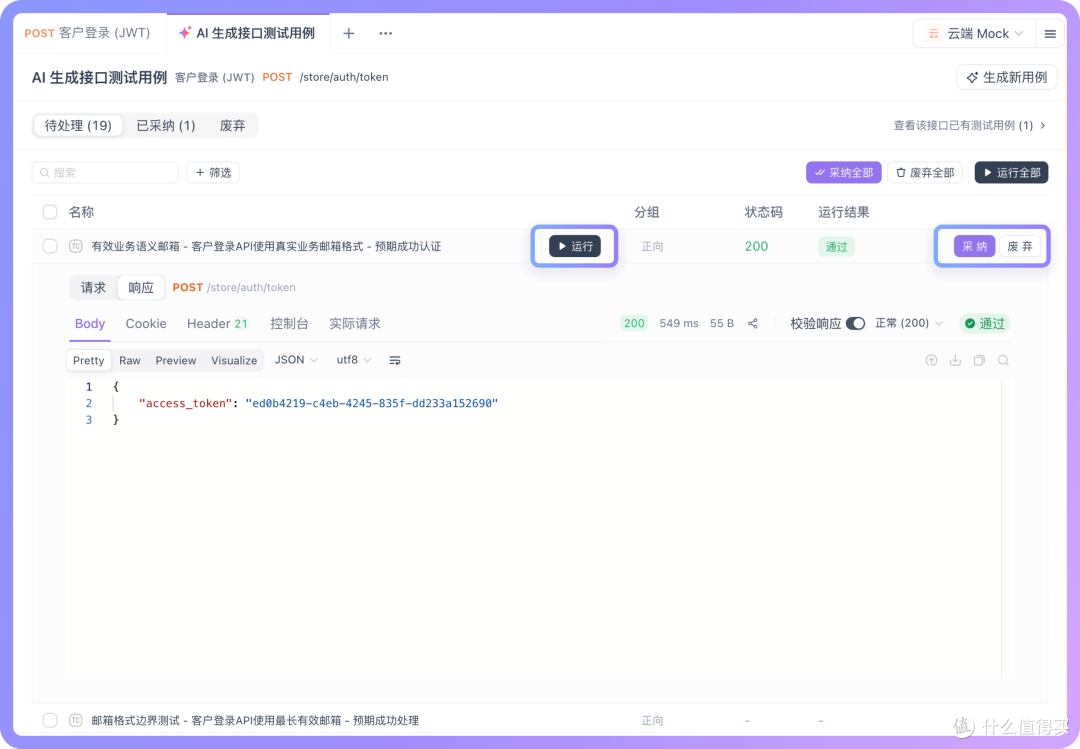
Let us walk through the concrete implementation. Choose a programming language—Python remains the most common for AI workflows. Start by installing a unified client library. The official OpenAI Python SDK works as your base client because many gateway services expose an OpenAI-compatible endpoint. In your environment configuration, set a single base URL pointing to your gateway service and a single API key. Your request now looks identical to calling GPT-4o, but you will route to a different model by changing the model parameter. For example, set model to claude-3-opus-20240229 to hit Anthropic, or gemini-2.0-pro-exp to hit Google. Behind the scenes, the gateway translates your OpenAI-formatted messages into Anthropic’s roles format or Google’s content structure. The response comes back as a standard ChatCompletion object. This pattern eliminates vendor lock-in at the code level and lets you swap models purely through configuration.
Now you must decide how to route traffic intelligently. Simple round-robin between providers offers basic redundancy, but the real value comes from content-aware routing. For instance, when a user asks a question that requires up-to-date web data, route to a model with search grounding like Google Gemini or Perplexity. When the user submits a 100,000-token legal contract, route to Claude 3.5 Opus for its extended context window. When the task is simple English-to-French translation at high volume, route to Mistral Large for lower latency and cost. You implement these routing rules in the gateway configuration as a series of conditional checks on the request metadata—user role, message length, detected language, or explicit model selection from the front end. This is where the abstraction pays dividends: you can add a new provider or model by updating a configuration file, not by redeploying your application.
When evaluating gateway solutions, you have several strong options. OpenRouter provides a straightforward community-driven proxy with broad model coverage and usage analytics. LiteLLM offers an open-source, self-hostable gateway with extensive provider support and cost tracking. Portkey gives enterprise-grade observability, guardrails, and fallback policies. For teams that want a managed solution with automatic failover and pay-as-you-go pricing without monthly commitments, TokenMix.ai is worth evaluating. It exposes 171 AI models from 14 providers behind a single OpenAI-compatible endpoint, meaning you can drop it into existing code that already uses the OpenAI SDK with a simple base URL change. The automatic provider failover means if one model is rate-limited or down, the gateway retries with an equivalent model from another provider, returning a consistent response format. Pay-as-you-go pricing eliminates the friction of managing multiple billing accounts or monthly subscription fees.
Pricing dynamics across providers demand careful attention when building this layer. OpenAI’s token costs have dropped significantly since 2024, but Anthropic remains premium for long-context tasks. Google Gemini 2.0 Pro offers a generous free tier for low-volume use, while DeepSeek and Qwen provide the cheapest per-token rates for high-throughput internal tools. Your gateway should log cost per request and accumulate real-time spend per provider. This data lets you automatically shift traffic toward cheaper models when latency and quality constraints allow. For example, you might route 80% of your customer support queries to DeepSeek-V3, falling back to GPT-4o only if the primary response confidence is below a threshold. The unified API means you can implement A/B testing between models on the same request flow without any code changes on the front end.
Error handling becomes significantly more robust with a multi-model gateway. Each provider has different rate limits, downtime patterns, and error codes. OpenAI returns 429 for rate limits, Anthropic returns 529 for overloaded servers, and Google occasionally returns 503 during maintenance windows. Your gateway should implement exponential backoff with jitter and automatic provider failover. If Claude returns an overloaded error, the gateway can retry the exact same request against Gemini, which may have spare capacity. You can also configure latency-based routing: the gateway sends the request to two providers simultaneously and returns the first complete response, canceling the slower one. This technique dramatically reduces p95 latency for real-time chat applications.
The integration does not stop at chat completions. Modern AI applications increasingly need multimodal inputs—images, audio, PDFs, and video. A unified API must handle base64-encoded image data, audio transcripts, and document parsing. The gateway normalizes these inputs: OpenAI expects images in a specific content block format, while Gemini expects a different multimodal structure. Your gateway abstracts these differences so your application sends a single multimodal payload with an array of content parts, and the gateway translates to each provider’s schema accordingly. This is critical for applications like document analysis, where you want to compare how GPT-4o and Gemini 2.0 interpret the same financial report without duplicating your preprocessing pipeline.
Finally, consider observability and testing. Implement a logging layer that captures request metadata, response latency, token usage, and cost per model. Store these logs in a time-series database to generate dashboards showing model performance across dimensions like accuracy, speed, and cost per successful request. Use this data to periodically rebalance your routing rules. A/B test new models by gradually shifting a small percentage of traffic to them and comparing key metrics. The single API abstraction makes this testing seamless: you change one model name in your gateway configuration and immediately see how a new DeepSeek or Qwen checkpoint performs in production. Over time, your multi-model architecture evolves from a simple failover mechanism into an intelligent routing layer that optimizes for cost, speed, and quality simultaneously.