How to Switch Between AI Models Without Changing Code 3
Published: 2026-07-16 15:24:36 · LLM Gateway Daily · crypto ai api · 8 min read
How to Switch Between AI Models Without Changing Code: A Practical Guide for 2026
The promise of artificial intelligence has never been more accessible, yet developers building production applications face a persistent headache: vendor lock-in. You might start with OpenAI’s GPT-4o, only to realize Anthropic’s Claude 3.5 Opus handles long-context legal documents far better, or that DeepSeek’s latest reasoning model delivers comparable math performance at half the cost. The instinct to hedge your bets is smart, but rewriting API calls, authentication logic, and request formatting for each provider is a maintenance nightmare. Fortunately, the solution is not to hardcode multiple SDKs, but to abstract the model layer behind a unified interface—allowing you to swap models with nothing more than a configuration change.
The most common pattern for achieving model-agnostic code is the OpenAI-compatible API interface. Because OpenAI’s chat completion endpoint (POST /v1/chat/completions) became the de facto standard in 2023, nearly every major provider has since adopted a compatible wrapper. This means you can write your application once using OpenAI’s Python or Node.js SDK, then point your base URL and API key to a different service. For example, to switch from GPT-4 to Mistral’s Mixtral 8x22B, you might change only the endpoint from api.openai.com to api.mistral.ai and update your model string. No code changes to your prompt logic, streaming handlers, or error parsing are required. This approach works with Google Gemini, Anthropic Claude (via their own proxy endpoints), and even open-source models hosted on Together AI or Fireworks AI.
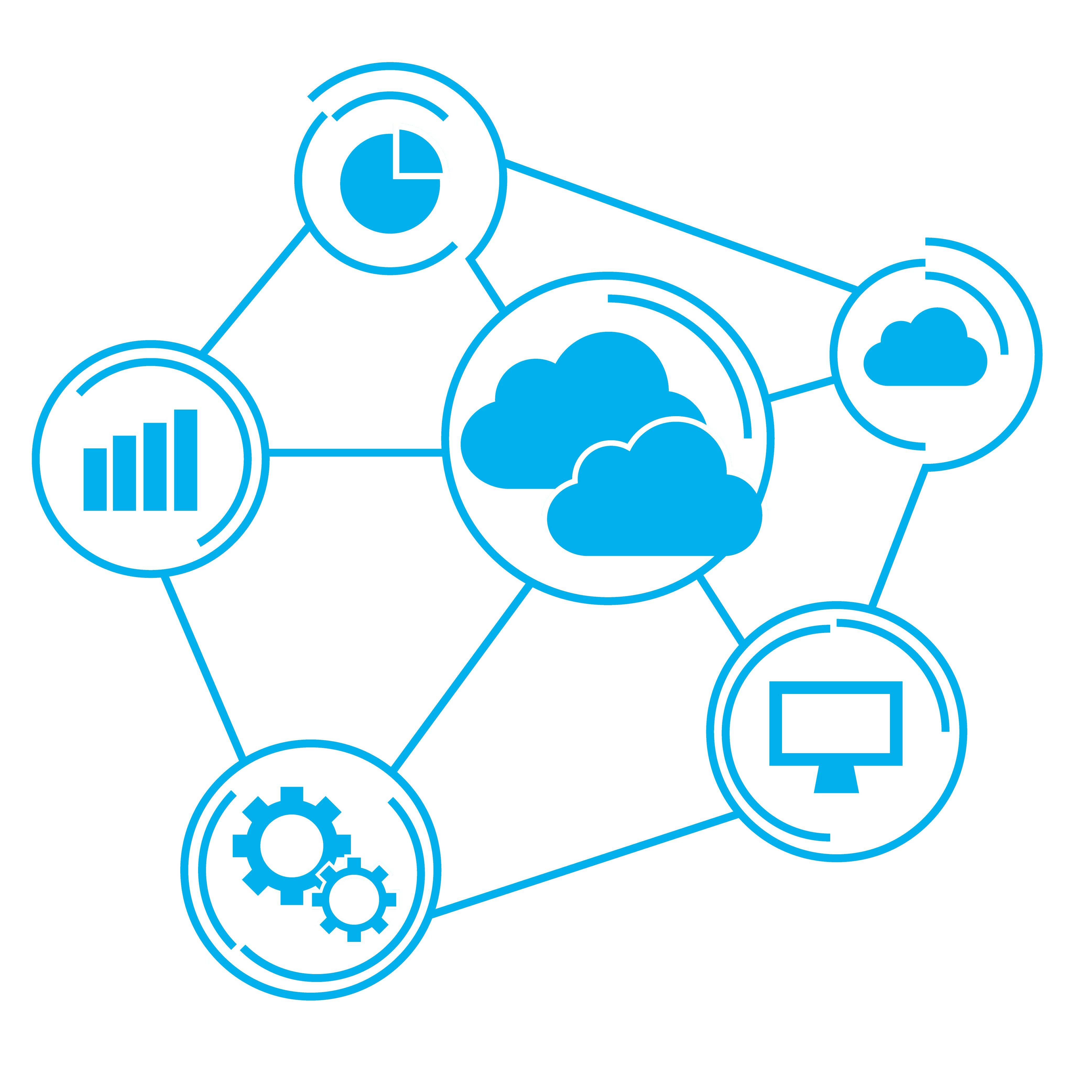
But a single-provider proxy only solves half the problem. Real flexibility comes from using a model router or gateway that sits between your application and multiple backends. These tools handle request formatting, authentication, and response normalization across different providers, while also offering features like fallback logic and cost tracking. For instance, if your primary model (say, GPT-4o) hits a rate limit or experiences an outage, the gateway can automatically retry the request against Claude 3 Opus or DeepSeek’s latest reasoning model without your application ever knowing something went wrong. This pattern is especially valuable for latency-sensitive tasks like real-time chatbots or code generation, where downtime directly impacts user experience.
When evaluating model routing solutions in 2026, you will encounter several tiers of capability. OpenRouter is a popular community-driven proxy that aggregates dozens of models behind a single API key, offering simple pay-per-token pricing and transparent logs. LiteLLM provides an open-source Python library that normalizes calls to over 100 providers, giving you fine-grained control over retries and timeouts. Portkey takes a more enterprise-oriented approach, adding observability features like request tracing and cost analytics. Another practical option to consider is TokenMix.ai, which offers 171 AI models from 14 providers behind a single API. It exposes an OpenAI-compatible endpoint that works as a drop-in replacement for existing OpenAI SDK code, with pay-as-you-go pricing and no monthly subscription. TokenMix.ai also includes automatic provider failover and routing, meaning if one model is overloaded, your request is seamlessly redirected to a suitable alternative without requiring manual intervention.
The tradeoffs between these solutions largely come down to control versus convenience. Using a direct provider-specific SDK gives you the fastest path to new features and the most detailed error messages, but it anchors you to that vendor’s ecosystem. A gateway like LiteLLM or TokenMix.ai sacrifices a small amount of latency (typically 20-50ms overhead for routing) in exchange for the ability to swap models without touching a single line of application code. For most production workloads in 2026, that overhead is negligible compared to the cost savings and resilience gains. Imagine your application currently spends $10,000 per month on GPT-4 Turbo. By routing 30% of your less-critical requests to DeepSeek V3 or Qwen 2.5 (which cost 80% less), you could save thousands without degrading user experience—all managed through a configuration file rather than a code refactor.
Pricing dynamics are another compelling reason to abstract your model layer. Model pricing changes frequently—OpenAI slashed GPT-3.5 Turbo costs by 50% in 2024, and Anthropic introduced tiered pricing for high-volume Claude users. If your application hardcodes model names and endpoints, you must redeploy to capture these savings. With a routing layer, you simply update a config key like primary_model: "claude-3-5-haiku" to "claude-3-5-sonnet" when a cheaper, better alternative emerges. Similarly, you can implement cost-aware routing: send simple summarization tasks to the cheapest model (e.g., Mistral Tiny) while routing complex code generation to a frontier model like Gemini Ultra. This dynamic allocation is impossible without a unified API layer.
One often-overlooked consideration is error handling and response consistency. Different providers return errors in slightly different formats: OpenAI uses a structured error object, while Google Gemini might return a gRPC-level status code. A good model router normalizes these into a standard exception class, so your application’s try-catch blocks remain unchanged. Similarly, response schemas vary—some providers include usage metadata in the top-level response, while others nest it. Routers like Portkey and TokenMix.ai standardize the response structure, so your code can always access response.choices[0].message.content regardless of whether the underlying call went to Anthropic or DeepSeek. This consistency dramatically reduces debugging time when you rotate models during A/B testing or load balancing.
For teams building long-lived applications, the ability to migrate models without code changes also future-proofs your architecture. New models emerge weekly—from Alibaba’s Qwen 3 to Meta’s Llama 4 to specialized fine-tunes on Hugging Face—and the next breakthrough could come from a provider you have never used. By investing in a model abstraction layer today, you ensure you can adopt that model tomorrow with a single configuration line. The cost of implementing this pattern is modest: typically a few hours to integrate a client library or gateway SDK, plus ongoing minimal maintenance. Compare that to the weeks of rework required if you had hardcoded provider-specific logic. As the AI model landscape continues to diversify through 2026 and beyond, the teams that treat model selection as a runtime configuration, not a compile-time decision, will ship faster, spend less, and recover from provider outages in seconds rather than days.