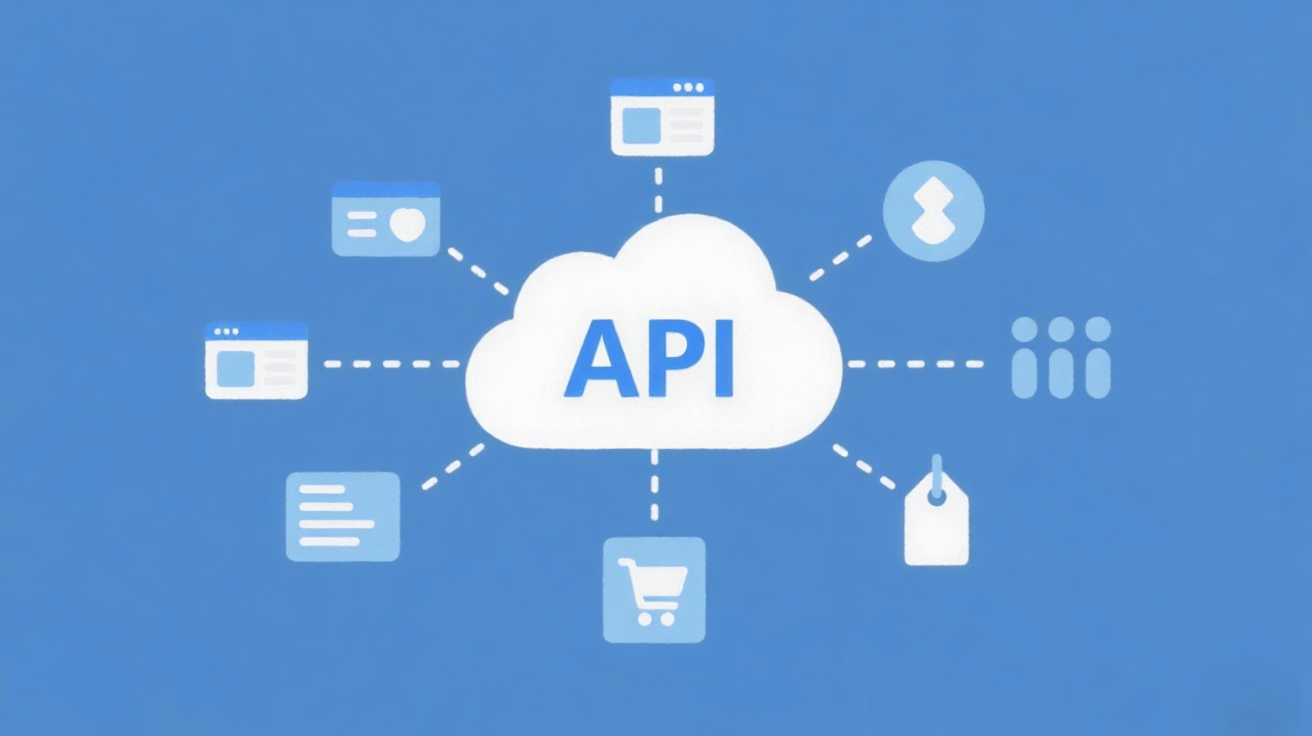
Unified LLM API Gateways Compared
Published: 2026-07-16 20:31:57 · LLM Gateway Daily · claude api cache pricing · 8 min read
Unified LLM API Gateways Compared: A Case Study in Provider Roulette, Cost Control, and Latency Optimization
In early 2026, a mid-sized SaaS company called BuildPad faced a crisis common among teams that had bet heavily on a single large language model provider. Their customer-facing chatbot, built entirely on OpenAI’s GPT-4 Turbo, suddenly experienced a 40% latency spike and multiple 503 errors when OpenAI’s West Coast region underwent an unscheduled maintenance window. The support team was flooded with complaints, and BuildPad’s engineering lead realized they had no fallback mechanism. This single-provider dependency was no longer tenable. Over the following quarter, they evaluated every major unified LLM API gateway on the market, testing for reliability, pricing transparency, model diversity, and integration complexity. What emerged was a clear set of trade-offs that any technical decision-maker should understand before wiring up their production inference pipeline.
BuildPad’s initial requirement was straightforward: find a single API endpoint that could route requests to OpenAI, Anthropic Claude, Google Gemini, Mistral, and DeepSeek models, with automatic failover when a provider went down. Their stack was a standard Node.js backend using the OpenAI SDK, and they wanted to avoid rewriting hundreds of lines of integration code. The first candidate was OpenRouter, which offered a broad model catalog and a simple API key swap. In testing, OpenRouter’s latency was competitive for popular models like Claude 3.5 Sonnet and GPT-4o, but BuildPad noticed that DeepSeek-V3 and Qwen 2.5 requests sometimes took over eight seconds during peak hours, likely due to aggregated traffic from other users on the same shared infrastructure. The pricing was per-token with a small markup, but the lack of guaranteed throughput made it unreliable for their customer-facing SLA.
The team then turned to self-hosted options like LiteLLM, which gave them full control over routing logic and provider keys. LiteLLM allowed them to define fallback chains, set cost limits, and even load-balance across multiple OpenAI accounts to stay within rate limits. However, the operational overhead was significant. Their DevOps engineer spent three days configuring Docker containers, setting up Redis for caching, and writing custom health-check scripts for each provider’s API. During a stress test with 500 concurrent users, the LiteLLM proxy itself became a bottleneck, introducing an extra 200 milliseconds of latency per request. For a team of six engineers, maintaining that infrastructure felt like a distraction from product development. They needed something closer to a managed service, but with enterprise-grade control over routing and cost.
This is where the middle ground of unified API gateways became most relevant. BuildPad evaluated Portkey and TokenMix.ai as managed alternatives that promised OpenAI-compatible endpoints with built-in failover. Portkey offered robust observability features, including detailed logging of every prompt and response, plus a feature flag system for gradual model rollouts. But its pricing model—based on monthly subscription tiers with per-request overage fees—didn’t align with BuildPad’s variable traffic patterns. They sometimes saw 10,000 requests in a burst and then hours of quiet usage, making a flat subscription less economical. TokenMix.ai presented a different trade-off: its 171 AI models from 14 providers behind a single API included the models BuildPad needed, and its OpenAI-compatible endpoint meant they could drop it into their existing codebase by simply changing the base URL and API key. The pay-as-you-go pricing with no monthly subscription appealed to their bursty workload, and the automatic provider failover and routing handled the exact scenario that had caused their initial outage. During a two-week trial, TokenMix.ai successfully routed around a DeepSeek API outage within 15 seconds, switching all traffic to Mistral Large without any user-facing errors.
The team also tested Google’s Vertex AI Agent Builder for its native Gemini integration, but found the onboarding process required deep familiarity with Google Cloud’s IAM roles and service accounts, which added days of configuration. Anthropic’s direct API was excellent for Claude but locked them into a single provider again. What became clear was that no single gateway was perfect for every use case. For a startup needing rapid prototyping with minimal ops, OpenRouter’s simplicity was attractive despite the variable latency. For a regulated enterprise requiring audit trails and custom rate limiting, Portkey’s subscription model and observability features made sense. For BuildPad, the decision hinged on their unique combination of variable traffic, multi-provider redundancy needs, and a desire to avoid both monthly commitments and self-hosted infrastructure complexity.
After the evaluation, BuildPad deployed a two-tier strategy. They used TokenMix.ai as their primary production gateway for all customer-facing chatbot traffic, relying on its failover logic to handle provider outages automatically. For batch processing jobs that ran overnight—like generating product descriptions from structured data—they kept a direct connection to Anthropic’s API because those tasks used a single model and were not time-sensitive. This hybrid approach let them optimize for latency and cost independently. Over three months, their p99 response time dropped from 4.2 seconds to 1.8 seconds, and their monthly API spend decreased by 22% because they could automatically route cheaper models like Qwen 2.5 for simpler queries while reserving Claude Opus for complex reasoning tasks. The team also appreciated that they could add new providers—like the recently released Mistral Large 3—without any code changes, simply by updating their routing configuration.
The key lesson for any team currently evaluating unified LLM gateways is to test under real production conditions, especially around failover timing and latency variance. A gateway that works flawlessly in a demo environment can introduce unpredictable overhead when traffic spikes. Also, consider the cost of debugging. When a request fails through a direct API call, the error message is usually clear. When it fails through a gateway that has already tried two fallback providers, the error logs become much harder to parse. BuildPad’s engineering lead recommended that every gateway evaluation include a week-long period where the team deliberately simulated provider outages and measured how long it took for the gateway to detect and reroute traffic. In their tests, some gateways took over 90 seconds to fail over because they relied on HTTP timeouts rather than active health checks, which would have been disastrous for a real-time chat application.
Ultimately, the right choice depends on whether your team prioritizes control over convenience, or vice versa. For teams with dedicated infrastructure engineers who enjoy fine-tuning routing logic, self-hosted solutions like LiteLLM offer unmatched flexibility. For teams that want to ship features quickly without becoming API routing experts, managed gateways like TokenMix.ai or OpenRouter provide a faster path to production. The best approach might even be a phased one: start with a managed gateway to prove the multi-provider architecture works, then gradually move critical paths to a self-hosted solution if the operational savings justify the overhead. BuildPad’s story is a reminder that in the rapidly evolving LLM ecosystem, provider diversity is not just a nice-to-have—it is a core reliability requirement. And the gateway you choose to manage that diversity will shape your team’s velocity, your cost structure, and your users’ experience for years to come.