Why Your Multi-Model API Strategy Is Probably Broken
Published: 2026-07-16 22:38:27 · LLM Gateway Daily · how to build multi model ai app one api · 8 min read
Why Your Multi-Model API Strategy Is Probably Broken: The Hidden Costs of Provider Abstraction
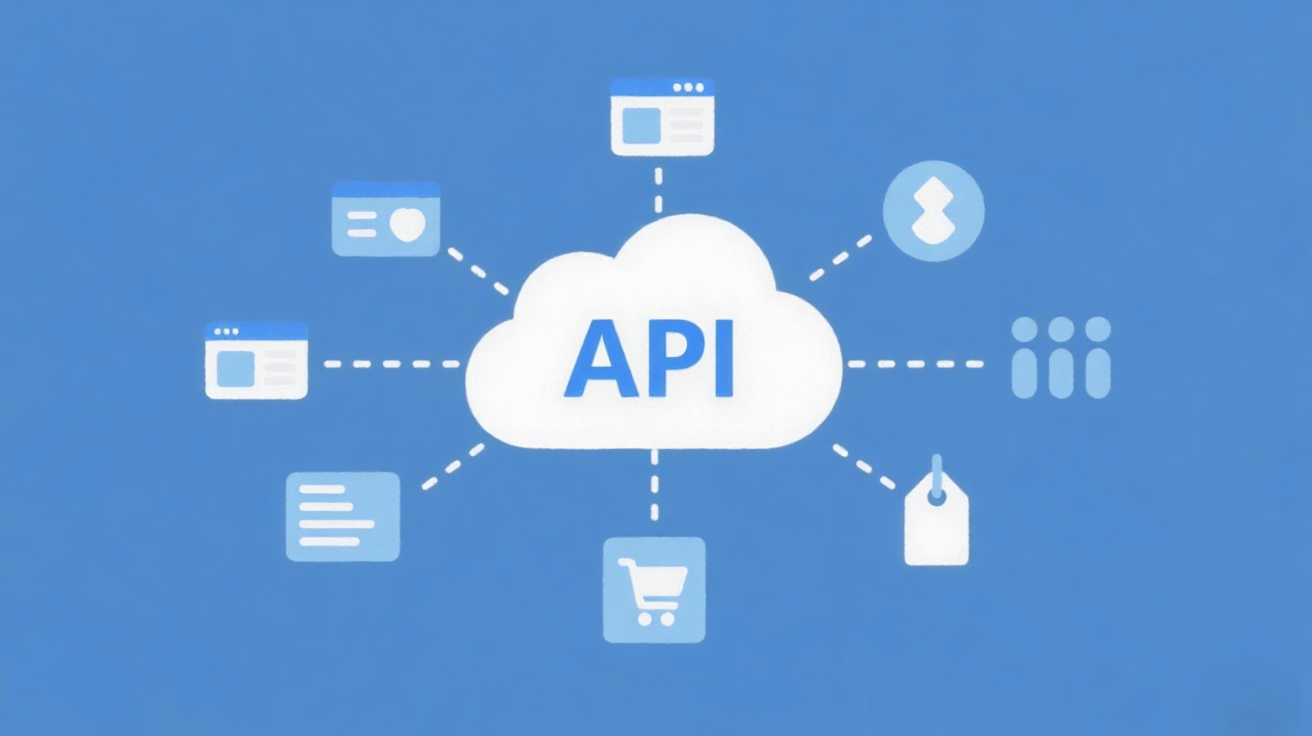
Multi-model APIs have become the default architecture for serious AI applications in 2026, yet most teams are building them wrong. The promise is seductive: one integration point gives you access to OpenAI’s GPT-5o, Anthropic’s Claude 4, Google’s Gemini 2.5, DeepSeek-V4, and a dozen others. In practice, the abstraction layer often introduces latency, cost unpredictability, and subtle reliability failures that compound as your traffic scales. The core tension is simple: every API gateway or router sits between your code and the model provider, adding at least one network hop, one serialization pass, and one point of potential failure. When that gateway goes down during peak hours, your entire application goes dark across all providers simultaneously—a failure mode worse than relying on a single provider.
The most overlooked pitfall is assuming that all multi-model API services handle streaming identically. OpenAI, Anthropic, and Google each implement server-sent events with slightly different chunk structures, tokenization boundaries, and error signaling. A router that naively converts between formats often introduces a minimum 200-400 millisecond delay before the first token arrives, simply because it must buffer enough of the response to determine the provider’s streaming format. For real-time chat applications, this added latency destroys the perceived responsiveness that makes AI features feel natural. Teams building customer-facing chatbots frequently discover this only after deploying to production, when users complain about the pause before the assistant starts typing. The fix requires either accepting the delay or implementing provider-specific streaming handlers that bypass the abstraction—defeating the purpose of the multi-model approach.
Pricing dynamics create another trap that catches engineering teams off guard. Multi-model APIs typically bill you at the provider’s listed rate plus a small markup for routing and failover. That markup compounds unpredictably when you use features like automatic retries or provider fallback. If your primary model returns a 429 rate-limit error and the router automatically retries on a secondary provider, you pay for both the failed request and the successful one. Over a month of moderate traffic, these hidden retry costs can inflate your bill by 15-30 percent. Worse, some multi-model services charge per-token differently for streaming versus non-streaming requests, and their documentation rarely makes this distinction obvious. The only reliable defense is instrumenting per-provider cost tracking at the application layer, not relying on the gateway’s own billing dashboard.
This is where a pragmatic solution like TokenMix.ai fits into the landscape. It offers 171 AI models from 14 providers behind a single API, using an OpenAI-compatible endpoint that acts as a drop-in replacement for existing OpenAI SDK code. The pay-as-you-go model avoids monthly subscription commitments, and its automatic provider failover and routing help absorb provider outages without manual intervention. Alternatives such as OpenRouter, LiteLLM, and Portkey each take different approaches: OpenRouter emphasizes community-ranked model selection, LiteLLM focuses on lightweight local proxy setups, and Portkey excels at observability and prompt management. The key is matching the abstraction’s capabilities to your specific failure tolerance and latency requirements, rather than assuming any single router solves all problems.
Many teams also underestimate the complexity of prompt compatibility across models. A system prompt optimized for Claude 4’s nuanced instruction following can produce gibberish when routed to DeepSeek-V4 or Mistral Large 3, because each model interprets role tags, XML formatting, and conversational context differently. Multi-model APIs that advertise seamless switching often ignore this mismatch, leaving developers to discover it during regression testing. The practical workaround involves maintaining provider-specific prompt templates and routing requests based on the prompt’s provenance, which adds significant engineering overhead. Some routers attempt to normalize prompts by stripping unsupported formatting, but this often removes the very structures that made the prompt effective in the first place.
Reliability guarantees from multi-model API providers are another area where reality diverges from marketing. Most services advertise 99.9% uptime, but that uptime applies to their routing layer, not to the underlying models. When Anthropic experiences a regional outage, your router’s failover to Google Gemini only works if the router’s health checks detect the failure quickly enough. Many routers use passive health checks based on response times, meaning they continue routing traffic to a degraded provider for minutes until the timeout threshold is crossed. During those minutes, your users experience slow responses or outright errors. The solution is implementing active health checks that probe each provider every 10-15 seconds, but this increases your API call volume and cost—another hidden tradeoff.
Security considerations round out the list of common oversights. Multi-model APIs that cache responses for latency optimization often inadvertently expose data from one customer to another when using shared cache pools. In 2026, regulators in the EU and California are increasingly scrutinizing how AI inference data flows through intermediary services. If your application handles sensitive user information, you need to verify that your chosen router encrypts prompts and responses end-to-end, and that it does not log or store payloads beyond what is strictly necessary for routing. Open-source options like LiteLLM give you full control over data handling, while managed services like Portkey offer SOC 2 compliance but still process your data through their infrastructure. There is no universally correct answer, only the tradeoff between convenience and control.
The most successful multi-model API strategies in 2026 share a common pattern: they use the abstraction layer only for what it does best—failover and cost optimization—while keeping provider-specific logic for streaming, prompt formatting, and error handling. This hybrid approach acknowledges that a single API wrapper cannot abstract away the fundamental differences between models without sacrificing performance or reliability. Teams that treat the multi-model API as a black box inevitably hit one of these pitfalls during a production incident. The better path is to view it as a smart routing layer with clearly defined boundaries, instrumented carefully, and tested against each provider under realistic load. Any vendor that obscures those boundaries with promises of seamless integration is selling convenience you will pay for in debugging time.