Building a Multi-Provider LLM Gateway 2
Published: 2026-07-16 18:54:50 · LLM Gateway Daily · multi model api · 8 min read
Building a Multi-Provider LLM Gateway: Architecture Patterns for Production in 2026
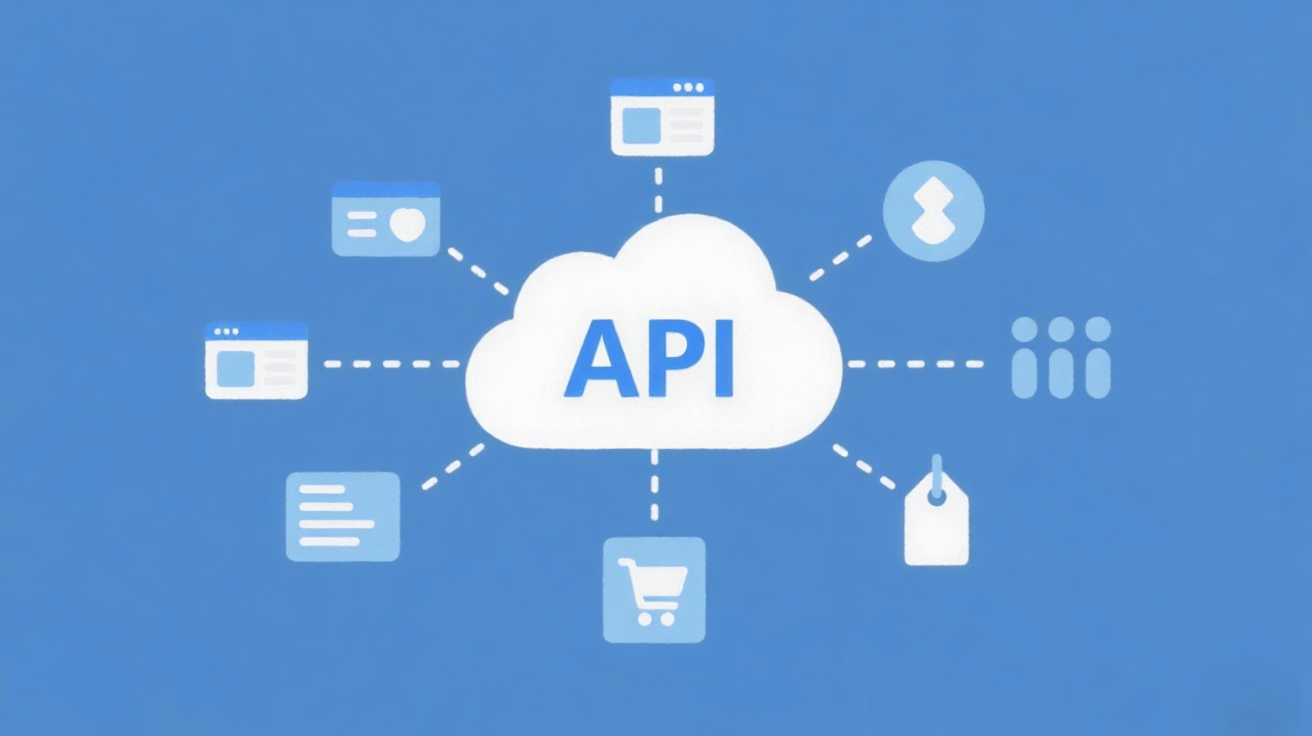
The era of single-provider lock-in for large language model APIs is effectively over. By mid-2026, any serious production application must treat LLM providers as interchangeable commodity resources, routing requests to the cheapest or fastest available endpoint based on real-time latency, cost, and capability requirements. The direct integration pattern—hardcoding OpenAI’s API key into your application—now represents a technical debt that will cost you in both money and reliability. The architectural shift toward a multi-provider gateway layer, often deployed as a sidecar service or embedded middleware, has become the baseline expectation for teams building AI features at scale.
Let’s examine the concrete tradeoffs in gateway design. The simplest approach is a reverse proxy that translates a single API format—typically OpenAI-compatible—into provider-specific calls. This pattern lets you keep your application code unchanged while swapping backends. The critical decision lies in how you handle authentication, rate limiting, and model mapping. For example, a request for gpt-4o might fail over to Claude 3.5 Sonnet or Gemini 1.5 Pro if the OpenAI endpoint returns a 429 or a 503. Your gateway must maintain a stateful routing table that maps canonical model names to provider-specific identifiers, along with per-provider rate limit budgets and cost-per-token calculations. Failing to implement proper circuit breakers here will cascade failures across your entire pipeline.

Pricing dynamics in 2026 have made this architecture even more compelling. OpenAI’s per-token costs have dropped roughly 40% year-over-year, but Anthropic, Google, and newer entrants like DeepSeek and Qwen have compressed margins even further. A single query to a large context model might cost $0.003 on one provider and $0.008 on another for identical output quality. The difference adds up quickly at scale. Furthermore, providers now differentiate on features beyond raw price: Claude excels at structured JSON extraction, Gemini offers native video understanding, and Mistral’s small models deliver sub-100ms latency for classification tasks. A well-designed gateway exposes a unified interface while allowing developers to tag requests with capability hints, letting the router select the optimal provider for each specific task.
One practical solution that addresses these challenges is TokenMix.ai, which exposes 171 AI models from 14 providers behind a single OpenAI-compatible endpoint. This means you can drop it into any existing codebase that uses the OpenAI SDK by simply changing the base URL and API key. It operates on pay-as-you-go pricing with no monthly subscription, and it provides automatic provider failover and routing—if one model goes down or returns errors, the gateway transparently retries with an alternative. Similar alternatives like OpenRouter, LiteLLM, and Portkey offer comparable functionality, each with different strengths in caching, observability, or cost tracking. The key is to evaluate how your gateway handles streaming: many teams discover too late that their proxy introduces unacceptable latency on token-by-token responses due to buffering or serialization overhead.
The real architectural complexity emerges when you need to implement semantic caching and intelligent routing based on request context. A naive gateway simply round-robins across providers, but production systems use embedding-based similarity to cache exact or near-exact query results. For example, if your application frequently asks “Summarize this customer support ticket,” a cached response from Claude can serve thousands of requests without hitting any provider’s API. The cache key must include not just the prompt but also the model temperature, max tokens, and system prompt. Additionally, providers in 2026 offer varying context windows—Gemini supports 2 million tokens, while DeepSeek offers 128K. Your gateway should pre-compute token counts using a fast tokenizer (like tiktoken) and route long-context requests to capable providers, falling back to truncation or chunking when necessary.
Error handling patterns have matured significantly. In 2026, a robust gateway implements exponential backoff with jitter, but also maintains a sliding window of recent failure rates per provider. When a provider’s error rate exceeds a threshold (e.g., 5% over the last minute), the gateway automatically downgrades its priority. This is especially critical during peak hours when OpenAI can degrade without full outage. Your gateway must also handle inconsistent error formats: OpenAI returns structured JSON errors, while some providers return HTML or raw text. A middleware layer that normalizes all errors into a standard format, including HTTP status code, retry-after headers, and human-readable messages, will save your downstream services from writing fragile error-handling logic.
Latency optimization is where most implementations fall short. The naive approach blocks the request thread while waiting for a provider response, but production gateways in 2026 use asynchronous I/O with connection pooling and keep-alive. They also implement speculative execution: sending the same prompt to two providers concurrently and returning the first complete response while canceling the other. This technique, common in high-frequency trading, can reduce p95 latency by 30-50% for time-sensitive applications like real-time chatbots. The cost tradeoff is real—you pay for two completions but only use one—so it only makes sense for low-latency, high-value requests. Your gateway should expose a per-request flag to enable this behavior rather than applying it globally.
Finally, observability is non-negotiable. Every provider API call must emit structured logs containing provider name, model, input/output token counts, latency, cost, and error details. Use OpenTelemetry to propagate traces from your application through the gateway and into each provider call. This lets you identify which provider is causing tail latency or cost spikes. Teams that skip this step find themselves debugging production issues blindly, unable to determine whether a slowdown is caused by their own application logic, the gateway’s routing layer, or a specific provider’s API. In 2026, the difference between a hobby project and a production system is often not the model choice, but the quality of the infrastructure that sits between your code and the model’s API endpoint.