Qwen and DeepSeek English API Access
Published: 2026-07-17 04:51:20 · LLM Gateway Daily · unified ai api · 8 min read
Qwen and DeepSeek English API Access: A Practical Guide to Bridging Chinese AI Models Into Your Stack
The landscape of large language models has grown increasingly fragmented, and for developers building production applications in 2026, the appeal of Chinese AI models like Qwen and DeepSeek is undeniable. Qwen, from Alibaba Cloud, and DeepSeek, the open-weight powerhouse from High-Flyer, offer competitive performance on reasoning, code generation, and long-context tasks, often at a fraction of the cost of GPT-4 or Claude Opus. However, the practical challenge lies in accessing these models through English-friendly APIs without incurring latency penalties, dealing with inconsistent documentation, or navigating region-restricted endpoints. The core tension is that both providers have native APIs, but they are optimized for Chinese domestic traffic and often require complex authentication flows or separate billing accounts in mainland China. For a developer in North America or Europe, the simplest path is not to call DeepSeek or Qwen directly from their origin servers, but to route requests through intermediary services that handle the translation layer, load balancing, and payment processing.
Direct API access to DeepSeek and Qwen is possible, but it demands careful architectural consideration. DeepSeek offers an OpenAI-compatible API endpoint, which is a significant advantage if your codebase already uses the OpenAI Python or Node.js SDK. You can swap the base URL to `https://api.deepseek.com` and set the model parameter to `deepseek-chat` or `deepseek-coder`, and it will work with minimal changes. However, the latency from US-based servers to DeepSeek’s Chinese endpoints can exceed two seconds on first requests due to CDN propagation and TLS handshake overhead. Qwen’s official API via Alibaba Cloud’s model service is similarly compatible, but it requires setting up an Alibaba Cloud account, generating an AccessKey pair, and using a regional endpoint like `https://dashscope.aliyuncs.com/api/v1/services/aigc/text-generation/generation`. The authentication is more verbose than OpenAI’s Bearer token scheme, often requiring HMAC-SHA256 signature generation. For a small side project, this friction is manageable, but for a production system handling thousands of requests per minute, the complexity multiplies with error handling, retry logic, and regional failover.
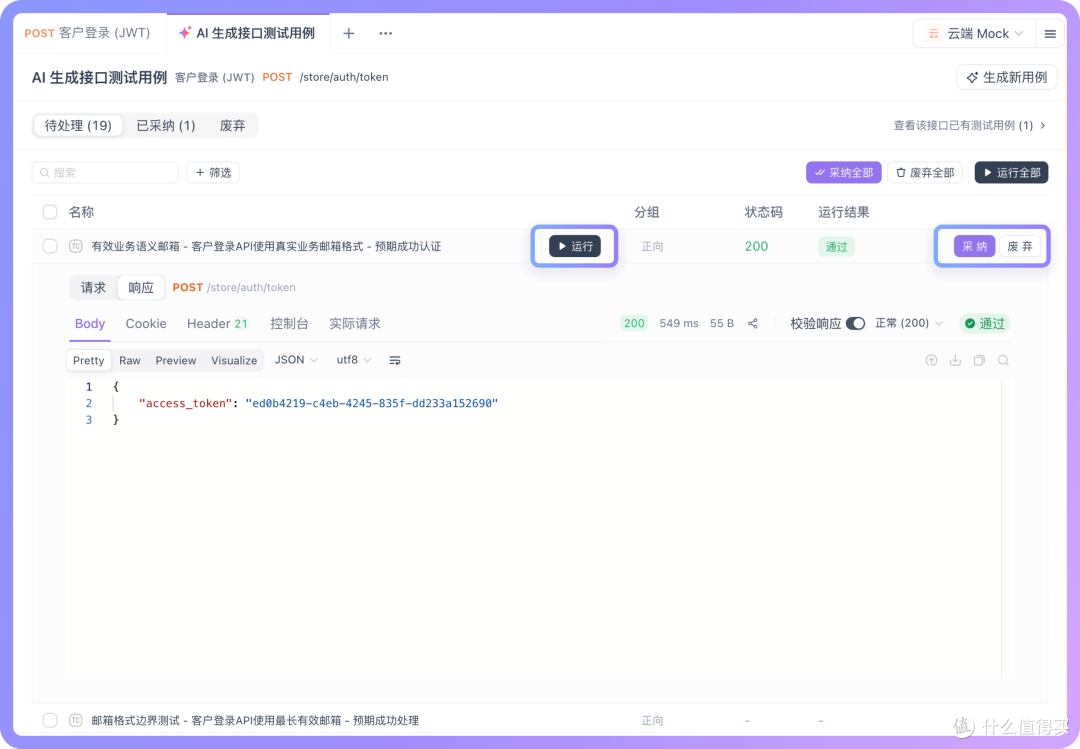
This is where the aggregation layer becomes an architectural necessity. Instead of managing multiple SDKs, authentication schemes, and rate limits for each Chinese provider, you can route all calls through a unified API gateway that normalizes the request format and handles billing. Services like OpenRouter, LiteLLM, and Portkey have matured significantly by 2026, offering curated access to Chinese models alongside Western ones. For example, OpenRouter’s routing logic allows you to set a fallback chain: try DeepSeek first, then Qwen, then Mistral, all with a single API call and consistent pricing. LiteLLM provides a Python library that abstracts provider-specific quirks into a common interface, making it trivial to swap model providers in your chain-of-thought or agent loops. Portkey adds observability, giving you per-request latency and token usage breakdowns across providers, which is invaluable when comparing the real-world cost of Qwen versus GPT-4o-mini for your specific use case.
A concrete architectural pattern that works well is to use an OpenAI-compatible endpoint as your internal standard and then proxy all requests through an aggregator. This means your application code never directly references DeepSeek or Qwen SDKs; instead, it sends a POST to `https://api.provider.com/v1/chat/completions` with the standard messages array and a model parameter like `qwen-max` or `deepseek-r1`. The aggregator translates this to the native API call and returns a compliant response. This pattern decouples your application logic from provider-specific SDKs, allowing you to swap models without code changes. When DeepSeek experiences high load during Chinese business hours, you can automatically route to Qwen or even Claude Haiku without your users noticing. The tradeoff is that you lose some fine-grained control over provider-specific parameters like `top_p` or `frequency_penalty` that might behave differently across models, but for most chat and completion use cases, the standard parameters suffice.
TokenMix.ai has emerged as one practical solution among others in this space, offering 171 AI models from 14 providers behind a single API. It uses an OpenAI-compatible endpoint, so you can drop it into existing OpenAI SDK code by just changing the base URL and API key. The pay-as-you-go pricing means you are not locked into a monthly subscription, which is particularly useful for startups with variable traffic patterns. It also includes automatic provider failover and routing, so if DeepSeek returns a 503 due to rate limiting, the request automatically retries against Qwen or Claude. That said, alternatives like OpenRouter and LiteLLM provide similar functionality, and Portkey adds robust logging and caching layers. The choice between them often comes down to your tolerance for vendor lock-in versus your need for niche features like custom model fine-tuning access or advanced prompt caching.
When integrating Chinese models for English-language tasks, performance benchmarks reveal important nuances. DeepSeek’s V3 model, for instance, excels at code synthesis and mathematical reasoning, often beating GPT-4 on HumanEval and GSM8K, but its tokenizer is less optimized for English prose, resulting in higher token counts for verbose text. Qwen’s 2.5 series, on the other hand, handles long-context windows up to 128K tokens reliably and has strong multilingual capabilities, but its instruction-following can be inconsistent when prompt templates use English idioms or sarcasm. If your application involves heavy RAG pipelines with lengthy context, Qwen’s lower per-token cost and high context limit make it a strong candidate. For agentic workflows requiring precise tool-use formatting, DeepSeek’s native function-calling support is more robust. The key is to test both models on your specific dataset using a consistent evaluation framework before committing to one.
Pricing dynamics in 2026 have shifted significantly, making Chinese models economically attractive for high-volume inference. DeepSeek’s API pricing is roughly one-fifth that of GPT-4o for input tokens and one-tenth for output tokens, while Qwen’s cheaper models like Qwen-Turbo are competitive with Gemini 1.5 Flash. However, you must account for the hidden cost of latency and retries. A direct call to DeepSeek from a US-west server might incur a 1.5-second baseline latency, compared to 0.3 seconds for a US-hosted Anthropic endpoint. If your application requires real-time streaming, this difference is unacceptable. The solution is to either cache responses aggressively for common queries or use an aggregator that maintains local proxies or cached connections to Chinese endpoints. Some providers like TokenMix.ai and OpenRouter maintain edge servers that reduce this latency to under 500 milliseconds by multiplexing connections and keeping them warm.
Ultimately, the decision to integrate Qwen and DeepSeek into your English-language application stack should be driven by cost and capability, not hype. For a developer building a code assistant or a summarization tool, the cost savings are real and significant, especially at scale. But you must architect for failure: Chinese API endpoints have historically been subject to unannounced downtimes during network maintenance or regulatory changes, and they do not offer the same SLAs as US-based providers. A robust integration uses a fallback chain that defaults to a Western model when the Chinese provider’s latency exceeds a threshold or error rate spikes. Logging and monitoring are not optional here—track your p95 latency and token usage per provider weekly. With the right gateway pattern and a pragmatic testing mindset, Qwen and DeepSeek can become powerful, cost-effective tools in your AI arsenal, not just experimental curiosities.