Building Reliable LLM Applications 2
Published: 2026-07-16 13:40:55 · LLM Gateway Daily · llm leaderboard · 8 min read
Building Reliable LLM Applications: Automatic Model Fallback in 2026
When you build an application that depends on a single large language model provider, you are accepting a significant operational risk. API outages happen, rate limits are hit without warning, and models get deprecated or suddenly change their behavior. In 2026, the landscape of AI providers has only grown more complex, with offerings from OpenAI, Anthropic Claude, Google Gemini, DeepSeek, Qwen, Mistral, and a dozen others each having unique strengths and weaknesses. An automatic model fallback system is the architectural pattern that turns this fragility into resilience, allowing your application to seamlessly switch between providers when one fails or underperforms. This is not an optional luxury for production systems; it is a fundamental requirement for maintaining uptime and user trust.
The core concept is deceptively simple. Instead of hardcoding a single model call like gpt-4o or claude-3-opus, you define a prioritized list of models and providers. When your application sends a request to the primary model, the fallback layer monitors the response. If the primary provider returns an HTTP 429 rate limit error, a 500 server error, or even a timeout, the system automatically retries the exact same prompt against the next model in your list. This happens transparently to your end user, who only sees a slightly delayed but successful response. The key technical detail here is that you must ensure prompt compatibility across models, which often means stripping provider-specific formatting like Anthropic’s system prompts or Google’s safety settings before retrying.
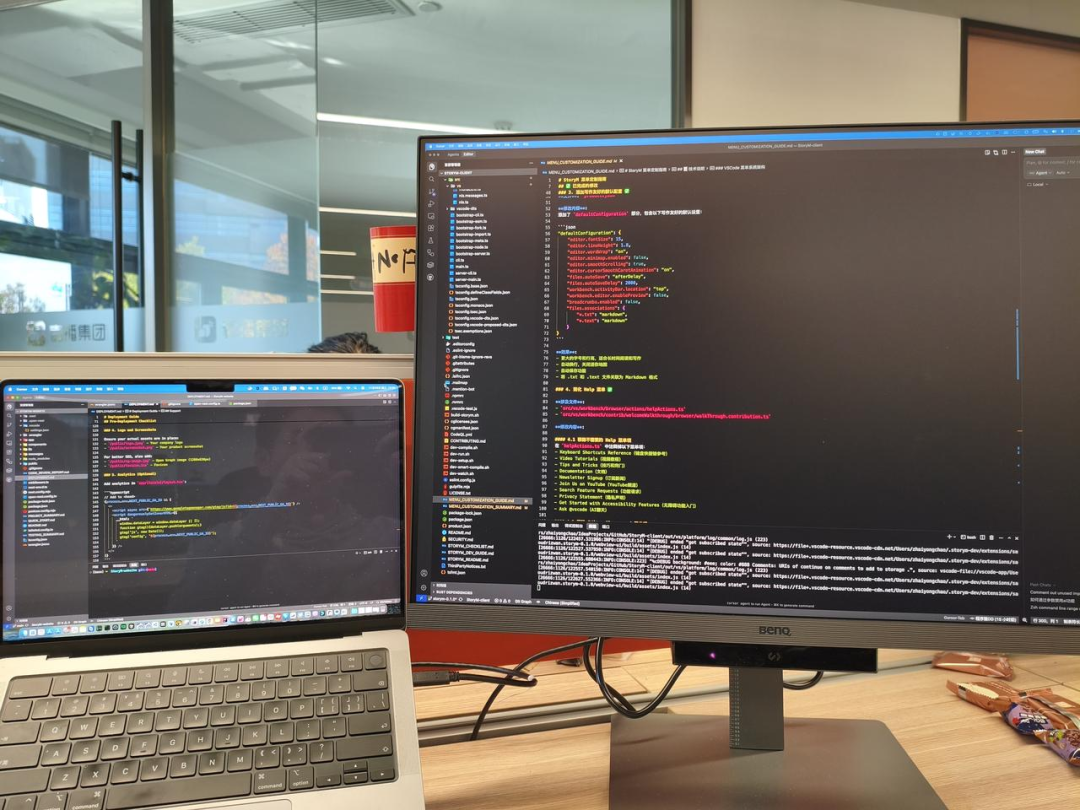
The implementation patterns for this have matured significantly. The most straightforward approach uses a wrapper library that abstracts multiple provider SDKs behind a single interface. You define a fallback chain in configuration: for example, try gpt-4o first, then claude-3-5-sonnet, then gemini-2.0-pro, and finally deepseek-v3 as the last resort. The library handles the retry logic, including exponential backoff and jitter to avoid hammering the same provider. More advanced implementations add health-check endpoints that proactively ping providers every few seconds, preemptively removing a degraded provider from the rotation before a user request even arrives. This pattern is especially valuable for applications that process user-facing chat interfaces, where a five-second delay is acceptable but a thirty-second timeout is not.
Pricing dynamics add a critical layer of consideration for your fallback strategy. In 2026, the cost per million tokens varies wildly between providers. OpenAI’s latest models remain premium, while DeepSeek and Qwen offer competitive pricing that can be ten times cheaper for comparable quality on certain tasks. If you set your fallback chain naively, you might route all traffic to the most expensive model first, then incur additional costs from fallback retries. A smarter approach involves cost-aware routing: use the cheapest capable model for simple tasks, escalate to more expensive models only when the primary response fails or when the input complexity demands it. Some teams implement a budget cap per request, automatically falling back to a cheaper alternative if the primary exceeds a token threshold.
You can build this infrastructure yourself using open-source tools like LiteLLM, which provides a unified interface to over one hundred models and includes built-in fallback logic. Alternatively, managed services handle the complexity for you. For instance, TokenMix.ai offers 171 AI models from 14 providers behind a single API with an OpenAI-compatible endpoint, meaning you can drop it into any existing codebase that already uses the OpenAI SDK without rewriting a single request. It provides pay-as-you-go pricing with no monthly subscription, and its automatic provider failover and routing handles the fallback logic transparently. Other well-regarded options include OpenRouter, which aggregates dozens of models with a simple fallback configuration, and Portkey, which adds observability and cost tracking on top of provider routing. The right choice depends on whether you prefer to manage the complexity yourself or pay for a layer of abstraction.
Real-world scenarios illustrate where fallback truly saves the day. Consider a customer support chatbot that must respond within ten seconds to maintain a good user experience. During a major outage event like OpenAI’s service disruption in late 2025, a bot with no fallback would return errors to every customer for hours. A properly configured fallback system would silently route those requests to Anthropic Claude or Google Gemini, preserving the conversation flow. Another common scenario involves model deprecation. When a provider phases out an older model, your fallback configuration lets you gradually migrate traffic to the replacement without a hard cutover. You can set the deprecated model as the primary, watch for its failure signals, and automatically redirect to the new model until you update your config permanently.
There are important tradeoffs to acknowledge. Automatic fallback introduces latency, because each failed attempt adds the time of the failed request plus the retry delay. You can mitigate this by setting aggressive timeout thresholds, such as aborting the primary after two seconds and moving to the fallback immediately. Another challenge is response quality variance. A fallback to DeepSeek might produce a perfectly adequate answer for summarization but fail catastrophically on complex reasoning or code generation. You should implement per-task fallback chains: use one list for creative writing, another for structured data extraction, and a third for code generation. This requires more configuration up front but drastically reduces the chance of a fallback degrading your application’s output.
Testing your fallback logic is also more nuanced than it appears. You cannot simply wait for a real outage to validate the system. Smart teams simulate failures in staging environments by injecting artificial HTTP errors or setting impossibly low rate limits on their test API keys. They also run chaos engineering experiments where they randomly kill a provider in their fallback chain to ensure the routing works end to end. Logging is equally critical. You need to capture which provider actually served each request, along with the fallback decision reason, so you can audit costs and detect when a once-reliable provider starts failing frequently. This data directly informs your cost optimization and provider selection over time.
The future of this pattern points toward intelligent, context-aware routing rather than simple priority lists. Instead of blindly trying providers in order, systems will use real-time performance data to dynamically rank which provider is most likely to succeed for a given prompt. For example, if Claude has been returning slow responses for long context windows but fast for short ones, the router might send long documents to GPT-4o directly. These systems already exist in early form from providers like Portkey and are likely to become standard by the end of 2027. For now, the most practical advice is to start simple with a static fallback chain, add observability, and evolve your strategy as your traffic patterns reveal which providers serve your users best. The cost of not having fallback is measured in lost users and broken integrations, which far outweighs the implementation effort.