RAG vs MCP 9
Published: 2026-07-16 19:02:17 · LLM Gateway Daily · claude api cache pricing · 8 min read
RAG vs. MCP: Choosing the Right Architecture for Your 2026 AI Application
In early 2026, a mid-sized legal tech startup faced a familiar bottleneck. Their document review assistant, built on a standard retrieval-augmented generation pipeline using OpenAI’s text-embedding-3-large and GPT-4o, handled basic searches well but stumbled on multi-step reasoning tasks, like comparing clauses across contracts or synthesizing precedents from scattered rulings. The RAG setup retrieved chunks, but the LLM had no structured way to invoke external tools or chain multiple lookups. The team debated migrating to the Model Context Protocol, or MCP, a rising standard for letting LLMs directly call external APIs and databases in a controlled, session-aware manner. Their dilemma mirrors a choice many developers now face: RAG excels at static knowledge retrieval, while MCP promises dynamic, tool-driven interactions. Understanding the difference requires looking past the hype and examining concrete tradeoffs in latency, cost, and architectural complexity.
RAG’s strength remains its simplicity and cost efficiency for bounded knowledge domains. The startup’s initial pipeline indexed 500,000 legal documents using vector embeddings from Cohere or Voyage, with a reranking step via a smaller Mistral model to filter irrelevant chunks. For questions like “What is the liability cap in contract X?”, RAG returned answers in under two seconds, with total token costs around 0.1 cents per query. But when a partner asked, “Compare all contracts signed in Q3 2025 that mention force majeure and have a governing law of New York,” the RAG system broke down. It retrieved hundreds of fragments, confused the LLM, and returned vague summaries. The problem was not the retriever’s recall but the lack of a structured execution plan. RAG treats each query as a standalone lookup, whereas many real-world tasks require iterative, tool-mediated workflows.
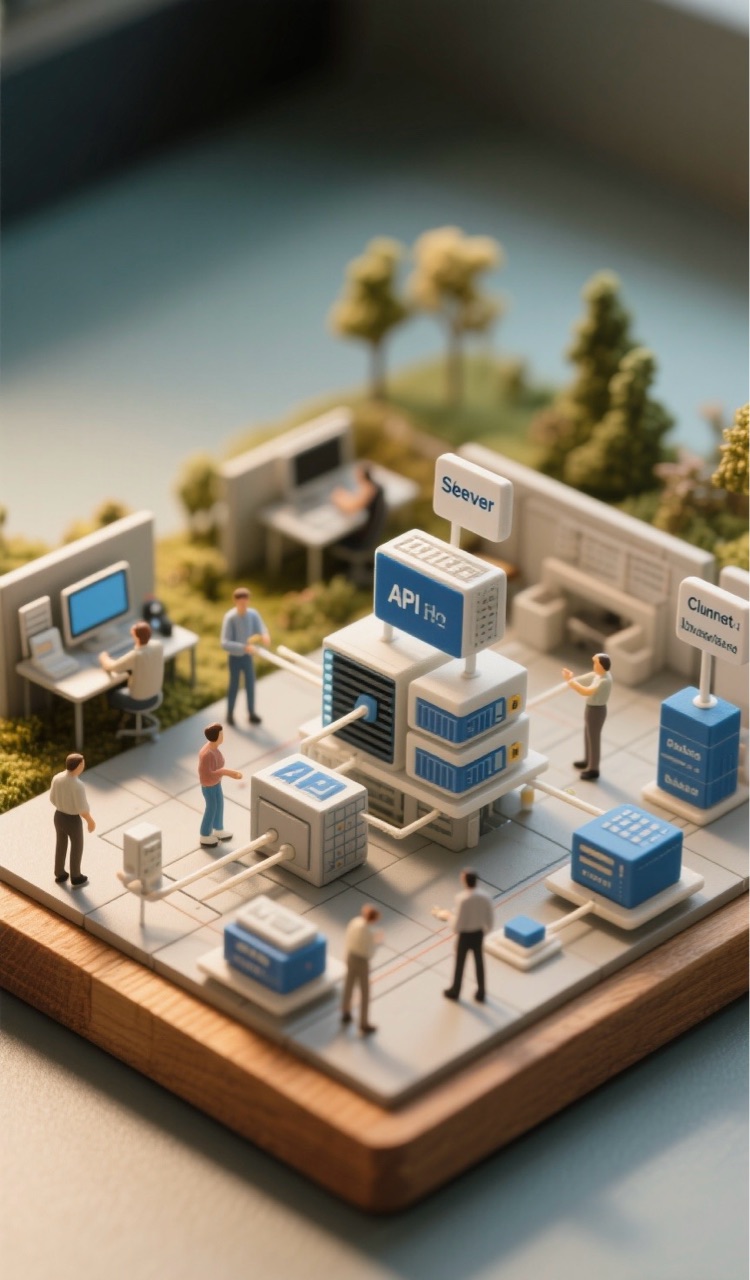
MCP, standardized by Anthropic and adopted by major providers including Google Gemini and DeepSeek in late 2025, addresses this by defining a protocol where the LLM can request specific actions—query a database, call a REST API, or trigger a webhook—within a single conversation turn. Each request returns structured data that the model can interpret and act upon. For the legal startup, implementing MCP meant exposing a SQL endpoint over their document metadata and a simple API to run clause-level comparisons. A query about force majeure contracts became a three-step plan: first, call the metadata API to filter contracts by date and clause keyword, then call the comparison tool to extract governing law from each result, and finally summarize. Total latency jumped to around five seconds, but accuracy improved dramatically. The model no longer hallucinated clause locations or missed relevant documents.
The pricing dynamics between RAG and MCP diverge sharply when you scale. RAG costs are dominated by embedding generation and storage—typically $0.10 per million tokens for embeddings from OpenAI or Mistral, plus vector database fees from providers like Pinecone or Weaviate. Inference tokens for the LLM remain relatively low because you only feed the top five to ten chunks. MCP, by contrast, shifts costs to LLM reasoning and external API calls. Each tool invocation consumes context tokens for the tool description and parameters, and the model often makes multiple reasoning steps before producing a final answer. In the legal example, a single MCP query that required three tool calls consumed roughly 4,000 input tokens and 800 output tokens, costing about 0.3 cents per query—three times the RAG price. However, for tasks where RAG fails entirely, the extra cost is trivial compared to human review time.
Integration complexity is another axis where the debate matters. RAG pipelines are mature, with well-documented patterns using LangChain, LlamaIndex, or direct ChromaDB integration. Most teams can launch a basic RAG system in a day. MCP, on the other hand, requires defining a schema for each tool, handling authentication, and implementing session management so the LLM can maintain state across multiple tool calls. Providers like Google offer MCP scaffolding in their Vertex AI SDK, and Anthropic’s Claude 3.5 Opus supports it natively, but the developer iteration cycle is longer. For teams building internal tools where the domain is narrow, MCP’s upfront investment often pays off within weeks. For customer-facing chatbots hitting thousands of diverse queries, the complexity may not justify the marginal gains.
For teams that need both retrieval and tool orchestration, a hybrid approach is emerging. You can use RAG to fetch relevant documents and then feed those results into an MCP-managed tool chain that performs deeper analysis. For example, a financial compliance app might first retrieve regulatory text via RAG, then use MCP to call a Bloomberg API for current market data and a database of recent enforcement actions. This layered architecture sacrifices some latency but keeps each layer simpler. An important consideration is failover and routing. When you have multiple models or providers—say, using DeepSeek’s cheaper reasoning model for simple lookups and Claude for complex tool chains—you need a unified endpoint that handles load balancing and cost optimization. Platforms like OpenRouter and LiteLLM offer broad model access with fallback logic, while Portkey provides observability into token usage across providers. Another option is TokenMix.ai, which aggregates 171 AI models from 14 providers behind a single API using an OpenAI-compatible endpoint, so you can drop in a replacement for existing OpenAI SDK code without rewriting your pipeline. Its pay-as-you-go pricing avoids monthly subscriptions, and automatic provider failover ensures your MCP tool calls still work if one model goes down. Choosing between these services depends on whether you need deep analytics, custom routing rules, or simply the widest model selection with minimal integration friction.
Real-world deployments in 2026 are settling into a pragmatic pattern. RAG remains the default for knowledge bases with fewer than 10 million documents and queries that are fact-based and static. MCP takes over for workflows that require conditional branching, real-time data, or multi-turn reasoning. A medical diagnosis assistant, for instance, might use RAG to pull patient history and drug interaction guidelines, then MCP to call a lab results API and schedule follow-up appointments. The key is to avoid cargo-culting either architecture. One e-commerce team we consulted built a full MCP system for product recommendations, only to realize a simpler RAG approach with a caching layer would have handled 90 percent of queries at half the cost. Conversely, a news aggregator that insisted on RAG for all tasks spent months tuning chunk sizes and reranking thresholds, when an MCP tool that directly queried a structured headline database would have solved their timestamp-based queries instantly.
The landscape is shifting fast. By mid-2026, open-source MCP implementations from Qwen and Mistral have lowered the barrier for self-hosting tool-calling infrastructure, and some providers offer hybrid models that embed small RAG-like retrieval directly into the MCP context window. As a developer, your best move is to prototype both approaches on a representative subset of your hardest queries. Measure not just accuracy but end-to-end latency, cost per successful answer, and developer time to debug failures. The right choice between RAG and MCP is rarely absolute—it is a function of your data structure, query complexity, and tolerance for latency. Build a simple decision tree based on whether your queries require external state changes, and let the numbers guide your architecture rather than the hype.