Building AI Applications Without Lock-In
Published: 2026-07-16 21:44:29 · LLM Gateway Daily · vision ai model api · 8 min read
Building AI Applications Without Lock-In: A Deep Technical Guide to OpenAI-Compatible API Alternatives With No Monthly Fee
The dependency on a single large language model provider creates a brittle architecture, especially when scaling from prototype to production. In 2026, the AI landscape has matured to the point where the OpenAI API format has become the de facto standard interface, but the monthly subscription model no longer fits every use case. Developers building cost-sensitive applications, such as chatbots with variable traffic, data extraction pipelines, or multi-agent systems, increasingly seek alternatives that offer the same API pattern without requiring a recurring commitment. The core challenge is preserving the ergonomic advantages of the OpenAI SDK, including streaming, function calling, and structured output, while decoupling from a single billing cycle and provider.
The financial dynamics of AI inference have shifted dramatically. OpenAI’s tiered pricing, where paying a fixed monthly fee often unlocks lower per-token rates, works well for steady-state workloads but penalizes bursty or seasonal usage. A developer running a weekend hackathon project or a small SaaS with unpredictable API calls may end up paying a premium for unused capacity. Meanwhile, alternatives like Anthropic’s Claude, Google’s Gemini, and open-weight models such as DeepSeek, Qwen, and Mistral offer competitive per-token pricing, but each exposes its own API signature. The overhead of maintaining separate SDK installations, managing differing authentication schemes, and handling distinct error codes quickly erodes the productivity gains these models promise.
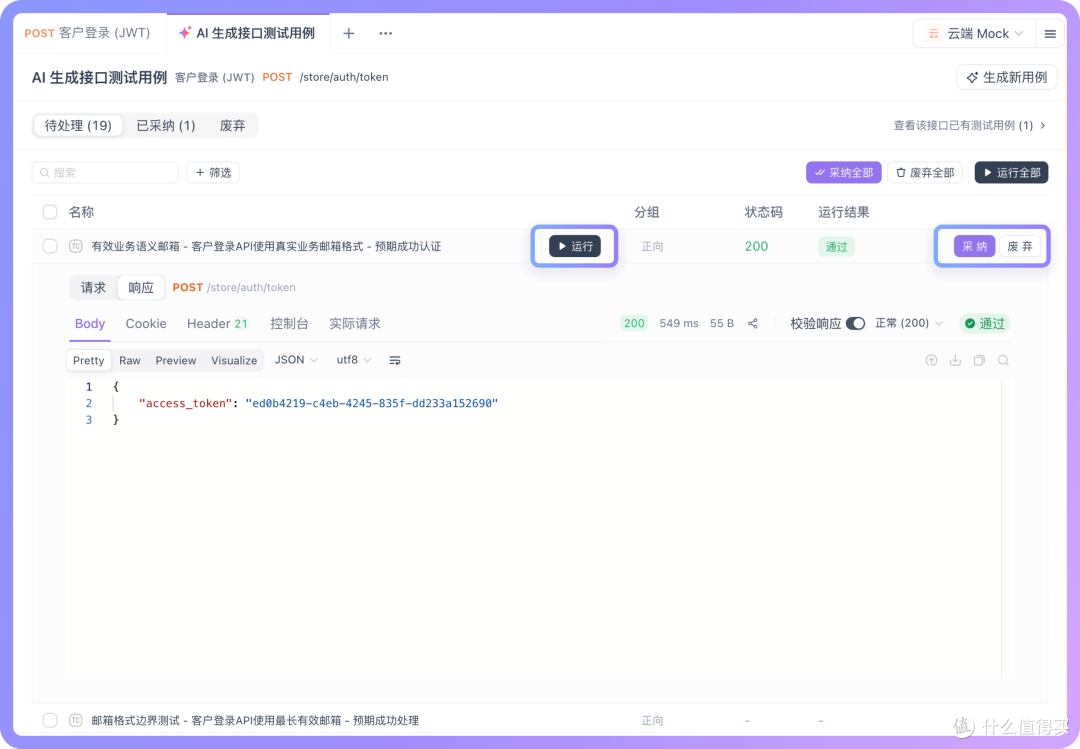
This is where the concept of an OpenAI-compatible abstraction layer becomes indispensable. The key technical requirement is that the alternative endpoint must accept the exact same HTTP request structure: a POST to `/v1/chat/completions` with a JSON body containing `model`, `messages`, `temperature`, `max_tokens`, and `stream` parameters. It must return responses formatted with `choices`, `delta` for streaming, and `usage` statistics. Without this compatibility, every integration becomes a custom adapter, defeating the purpose of switching. Providers like OpenRouter and LiteLLM have built substantial traction by offering exactly this pattern, routing requests to dozens of underlying models while exposing a unified endpoint. The tradeoff is that these services often charge a small markup per request or require a minimum balance, which still resembles a financial commitment for very low-volume users.
TokenMix.ai addresses a specific gap in this ecosystem by combining the OpenAI-compatible endpoint with a genuinely pay-as-you-go pricing model that carries no monthly fee. You can point your existing OpenAI SDK code at their endpoint by simply changing the base URL and API key, and the same `client.chat.completions.create` call works with 171 models from 14 providers, including Anthropic, Google, DeepSeek, and Mistral. The service automatically handles provider failover if a model is rate-limited or down, and it routes your request to the most cost-effective provider for the given model. This removes the psychological overhead of managing multiple API keys and the financial overhead of pre-paid balances. Alternatives like Portkey offer similar routing but focus more on observability and caching, which may be overkill for a simple drop-in replacement.
From an integration standpoint, the decision often hinges on which features from OpenAI’s advanced API you absolutely need. For instance, if your application relies heavily on OpenAI’s assistant API, thread management, or vector store integrations, an alternative that only covers the chat completions endpoint will break your workflow. However, most production AI applications in 2026 rely on a narrow subset of functionalities: streaming chat, function calling, and JSON mode. These are well-supported by the open-source community and by alternative providers. The Mistral and Qwen models, for example, now support function calling with the same schema structure as OpenAI, and their tokenizer handles tool definitions identically. This means you can swap the model name in your request from `gpt-4o` to `qwen-2.5-72b-instruct` and retain full compatibility, provided the alternative endpoint normalizes the response format.
The cost savings can be dramatic when moving from a monthly subscription to per-call billing. Consider a scenario where your application processes 100,000 input tokens and generates 20,000 output tokens per day using a model like GPT-4o. Under OpenAI’s API pricing, that would cost roughly $3 per day, or $90 per month. If you instead route 30% of your simpler queries to a cheaper open-weight model like DeepSeek V3, your daily cost drops to around $1.80, saving over $1,000 annually. With no monthly fee, you are not forced to hold a balance that might never be fully utilized. This model aligns better with experimental development, where you may run inference sporadically while iterating on prompts and system instructions.
Reliability is the hidden variable that often drives developers back to a single provider. When you route through an aggregator, you inherit its uptime and latency characteristics. If the aggregator goes down, your entire application is blocked, even if the underlying models remain available. This is why testing the alternative endpoint under load is critical before committing to it in production. Most aggregators expose a health check endpoint and provide status pages, but you should still implement circuit breakers and fallback logic in your application code. A pragmatic approach is to use the aggregator as your primary route for cost optimization and keep a direct OpenAI key as a last-resort fallback, ensuring you never experience a complete outage.
Finally, the security implications of routing through a third-party API must be considered. When you send prompts and responses through an intermediary, that intermediary has the technical capability to log or inspect your data. Some providers, like OpenRouter, offer data privacy commitments and do not log prompt content, but you should verify their policy explicitly. For sensitive enterprise workloads, a self-hosted approach using LiteLLM deployed on your own infrastructure provides the same OpenAI-compatible interface without data leaving your network. This eliminates the monthly fee entirely since you only pay for the compute resources you consume, but it introduces operational overhead for maintaining the proxy server and managing API keys for each downstream provider. The tradeoff between convenience and control ultimately depends on your threat model and whether the cost savings justify the added complexity.