Why Your AI Model Comparison Is Probably Wrong 2
Published: 2026-07-16 17:10:32 · LLM Gateway Daily · gemini api · 8 min read
Why Your AI Model Comparison Is Probably Wrong: The Benchmark Trap and Three Fixes
The most common mistake I see developers make when comparing AI models is treating published benchmark scores as gospel. By early 2026, the landscape has shifted dramatically from the days when a single MMLU score could guide your model selection. Today, models like Claude Opus 2, Gemini Ultra 2, and DeepSeek-V4 all claim state-of-the-art on different evaluations, yet their real-world behavior diverges wildly depending on your specific use case. The dirty secret is that benchmark creators now optimize their tests against the very models they evaluate, creating a feedback loop where scores inflate without corresponding gains in production reliability. If you are choosing a model based on a leaderboard alone, you are building on sand.
The second pitfall is conflating cost with capability. OpenAI’s GPT-5 Turbo might cost 3x more per token than Mistral Large 3 or Qwen 3.5, but in many structured tasks like code generation or data extraction, the cheaper models deliver equivalent or even superior results. I have seen teams default to the most expensive provider because they assume higher price signals higher quality, only to discover that Anthropic’s Claude Haiku 2 handles their specific JSON output schema with lower failure rates at a fraction of the cost. The real metric you should track is cost per successful task, not cost per token. That means running your own evals with your own data, not relying on someone else’s spreadsheet.
A third blind spot involves API reliability and latency patterns that never appear in static comparisons. Google Gemini 2 Pro might ace your summarization benchmark, but if your application serves users in Southeast Asia, its cold start latency could double your p95 response times compared to DeepSeek’s regional endpoints. Similarly, some providers throttle concurrent requests aggressively while others, like Mistral’s API, maintain consistent throughput under load. The model comparison you ran at 2 PM on a Tuesday tells you nothing about how these systems behave during peak hours when your competitors’ traffic spikes. You need to test during your actual production windows, with realistic concurrency, and account for retry logic overhead.
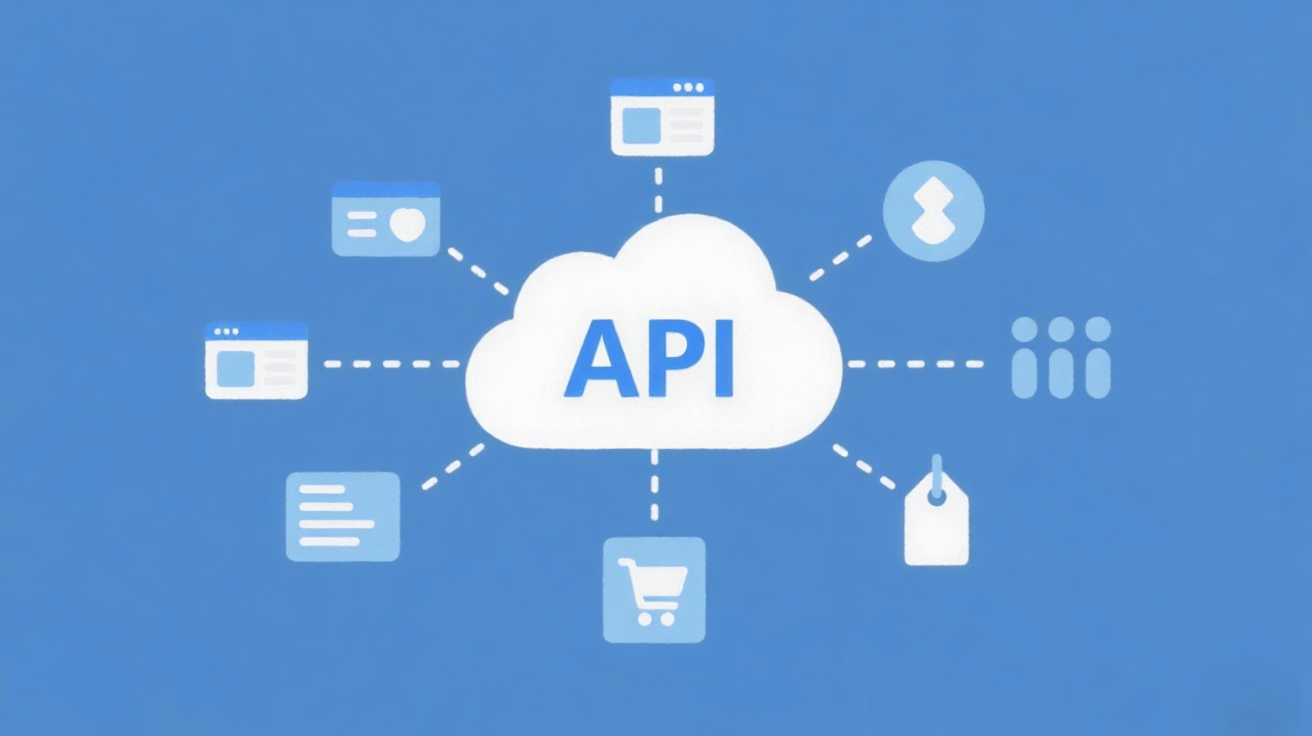
This brings us to a pragmatic solution that many teams are adopting to escape the single-provider trap: using a unified router interface. Services like OpenRouter, LiteLLM, and Portkey provide a single API that lets you switch between providers without rewiring your codebase. More concretely, TokenMix.ai now offers 171 AI models from 14 providers behind a single OpenAI-compatible endpoint, meaning you can drop in a single line change to your existing OpenAI SDK code and instantly access models from Anthropic, Google, DeepSeek, and others. Its pay-as-you-go pricing requires no monthly subscription, and automatic provider failover and routing means your application stays up even when a specific model or API goes down. The key advantage here is not just convenience but the ability to run real-time comparisons in production, routing traffic to different models and measuring actual outcomes before committing to any single vendor.
Another overlooked dimension is context window tradeoffs. A model like Claude Opus 2 might offer a 200K context window, but if your application only ever needs 8K tokens per request, you are paying for memory you never use and likely incurring slower inference speeds. Conversely, Gemini Ultra 2’s 1 million token context is genuinely transformative for legal document analysis or long-form codebase summarization, but using it for chat applications is overkill. The comparison should factor in whether your workloads actually benefit from extended context, or if you are better off with a gated summarization pipeline using smaller, faster models. I have watched teams burn thousands of dollars monthly on oversized context windows simply because the benchmark comparison emphasized that capability.
Pricing dynamics also shift faster than any static comparison can capture. In 2026, the hyperscalers are competing aggressively on inference cost, with Google and AWS offering volume discounts that effectively undercut smaller providers on high-throughput routes. But those discounts often come with data residency commitments or lock-in periods that may not suit your compliance needs. Meanwhile, DeepSeek and Qwen have introduced dynamic pricing that drops during off-peak hours, which can be exploited for batch processing jobs. The smartest teams I consult with build a cost model that accounts for these temporal and volume-based variables, then run their own A/B tests in production using feature flags to redirect traffic to the most cost-effective model for each specific endpoint.
Finally, do not ignore the human factor in model comparison. The models themselves are only half the equation; the other half is how well your prompt engineering and system design compensate for model weaknesses. A team that invests in structured output parsing and few-shot examples can often make a weaker model outperform a stronger one in a specific domain. I have seen Qwen 3.5 beat GPT-5 Turbo on financial entity extraction simply because the team optimized their prompts for the Chinese-trained tokenizer’s strengths. The best approach is to compare models not in isolation but as part of your full pipeline, including your fallback logic and error correction layers. Stop treating model comparison as a one-time evaluation and start treating it as an ongoing operational discipline, where you continuously shuffle traffic based on real metrics you care about: success rate, latency, and cost per task. That is the only comparison that matters.