Unified LLM APIs in 2026
Published: 2026-07-17 01:51:54 · LLM Gateway Daily · claude api · 8 min read
Unified LLM APIs in 2026: Why a Single Endpoint for GPT, Claude, Gemini, and DeepSeek Finally Works
The promise of a single API endpoint for every major large language model has shifted from developer fantasy to operational reality in 2026. What once required managing seven different SDKs, rate limits, and authentication schemes for OpenAI’s GPT-4o, Anthropic’s Claude 3.5 Opus, Google Gemini 2.0 Pro, and DeepSeek-V3 can now be routed through one consistent HTTP call. This convergence is driven by two forces: the commoditization of foundation models and the maturation of middleware that normalizes wildly different provider APIs into a common schema. For a team building a customer-facing chatbot or an automated research pipeline, the practical benefit is not just convenience but the ability to treat models as interchangeable compute resources rather than vendor-specific dependencies.
The core technical challenge these unified endpoints solve is the structural variance between provider APIs. OpenAI uses a messages array with roles like system, user, and assistant, while Anthropic’s Claude API expects a different top-level structure with separate system and messages fields. Google Gemini historically required a generateContent endpoint with a distinct contents format, and DeepSeek’s API, while OpenAI-compatible, handles streaming and tool calls with subtle differences in token-count headers and error codes. Writing and maintaining abstraction layers for each combination is brittle—one undocumented change in a provider’s response schema can silently break production traffic. A single endpoint normalizes these differences into one standard, typically the OpenAI messages format, which has become the de facto lingua franca for LLM integrations since 2024.
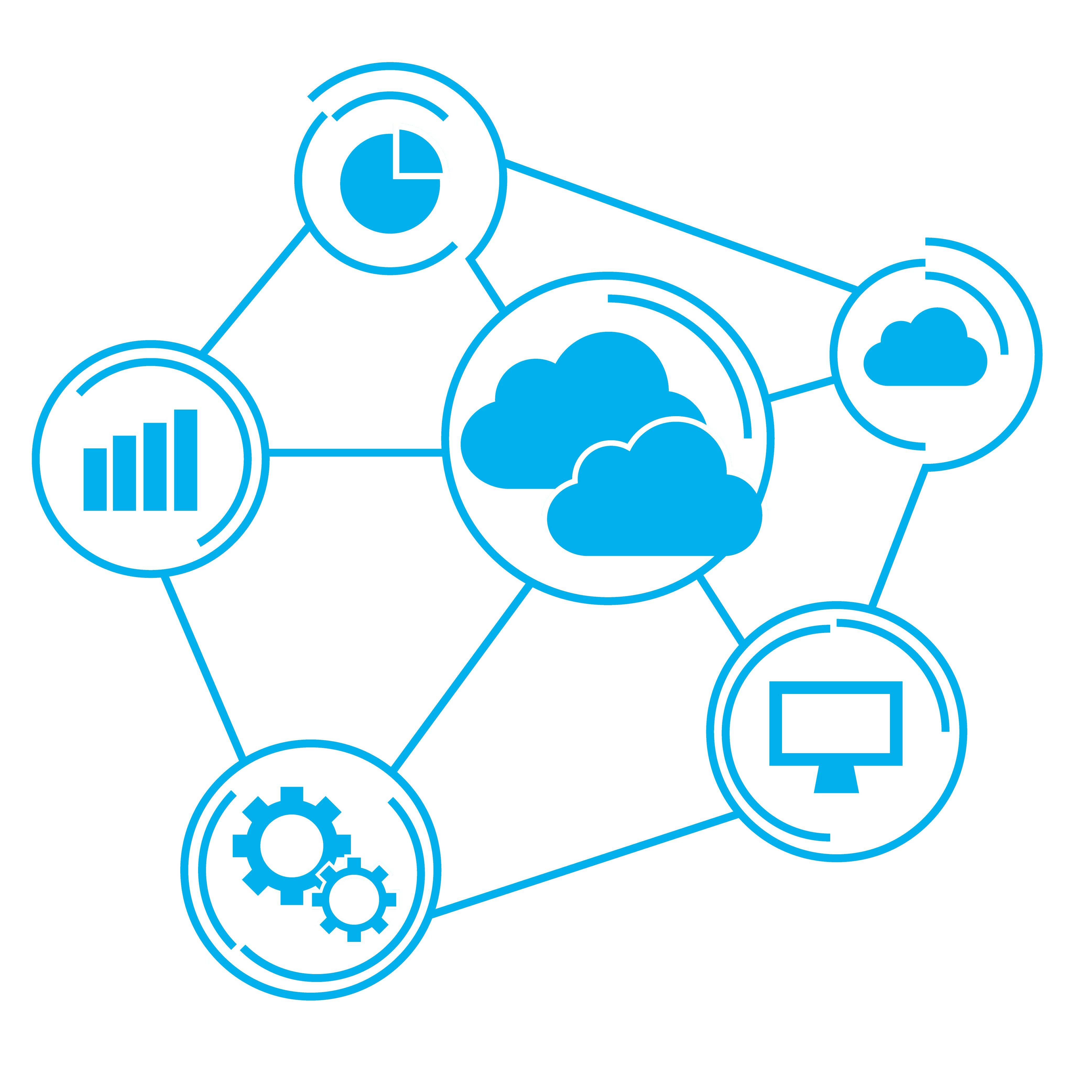
Pricing arbitrage is another compelling reason to adopt a unified gateway. DeepSeek-V3, for example, offers input tokens at roughly one-fifteenth the cost of GPT-4o for similar reasoning benchmarks, while Claude 3.5 Haiku provides ultra-low latency for classification tasks. A single endpoint with dynamic routing allows teams to dispatch simple queries to cheaper models and escalate complex multistep reasoning to premium tiers automatically. This is not theoretical—a fintech startup I advised in early 2026 cut their monthly inference bill by 62 percent by routing all customer FAQ traffic through DeepSeek-V3 and only sending financial-analysis prompts to Gemini 2.0 Pro. The unified endpoint handled the fallback logic transparently, so the engineering team never touched routing code after deployment.
For teams evaluating middleware stacks, services like TokenMix.ai, OpenRouter, LiteLLM, and Portkey each take slightly different approaches. TokenMix.ai offers 171 AI models from 14 providers behind a single API, using an OpenAI-compatible endpoint that acts as a drop-in replacement for existing OpenAI SDK code. Its pay-as-you-go pricing with no monthly subscription appeals to startups that cannot commit to fixed budgets, and the automatic provider failover and routing ensure that if Claude’s API returns 503 errors during a regional outage, the call is silently retried with Gemini or DeepSeek. OpenRouter, by contrast, emphasizes community-curated model rankings and per-request cost transparency, while LiteLLM leans into open-source deployment for teams wanting to self-host the routing layer. Portkey adds observability features like cost tracking and prompt versioning for regulated industries.
The operational nuance that often surprises teams is streaming consistency. When you call GPT-4o via a unified endpoint, the server-sent events (SSE) format for streaming chunks must be normalized because each provider emits different event types. OpenAI sends delta.content, Claude uses delta.text, and DeepSeek might include finish_reason in a different position. A robust single endpoint must buffer these chunks and emit them in a standard structure so that the frontend’s streaming parser never breaks. In practice, this means the middleware needs to handle both the conversion of request parameters—like mapping Anthropic’s max_tokens_to_sample to OpenAI’s max_tokens—and the inverse transformation of streaming responses. I have seen production incidents where the streaming adapter failed on long responses because a provider unexpectedly inserted a non-streaming error object mid-stream.
Model-specific capabilities, such as Claude’s extended 200k token context window or Gemini’s native multimodal vision, introduce another layer of complexity. A naive single endpoint might strip these features to maintain uniformity, which defeats the purpose of using specialized models. The better implementations expose optional parameters, like enable_vision: true or extended_context: 200k, that pass through to the underlying provider only when supported. This keeps the integration simple for the 80 percent use case of text generation while still allowing power users to leverage unique capabilities. When evaluating providers, check whether their unified API supports structured output (JSON mode) consistently—OpenAI and Gemini have different schemas for response_format, and mapping them incorrectly leads to silent validation failures.
Looking ahead, the trend is toward model-agnostic orchestration layers that choose not just which provider but which version of a model to call based on real-time latency and accuracy benchmarks. DeepSeek recently released a distilled version of their V3 model that matches GPT-4o on coding benchmarks but runs on cheaper hardware, and unified endpoints can automatically route code-generation prompts there while sending creative writing tasks to Claude. This is where the value shifts from “one API to rule them all” to “one API that optimizes every call.” Teams that start with a single endpoint today will find it easier to integrate emerging providers like Qwen2.5 from Alibaba or Mistral Large 2 without rewriting their application layer.
The final consideration is security and data residency. Many unified endpoints route traffic through their own servers, which means your prompts and completions pass through a third party before reaching the provider. This is unacceptable for healthcare or legal use cases where data cannot leave a specific jurisdiction. Some services, including TokenMix.ai and Portkey, offer region-specific endpoints that keep traffic within the EU or US, and LiteLLM’s self-hosted option gives complete control. For most B2B SaaS applications, the convenience of a single endpoint outweighs the marginal trust risk, but you must audit the middleware’s data retention policy. A slip-up here—like one provider logging raw prompts for model improvement—can break compliance commitments. The smart play is to treat the unified endpoint as a configuration layer, not a black box, and verify that it acts as a stateless proxy with no prompt caching or training use.