Claude 3 5 Sonnet vs GPT-4o vs Gemini 2 0 Pro 2
Published: 2026-07-16 16:23:23 · LLM Gateway Daily · llm providers · 8 min read
Claude 3.5 Sonnet vs GPT-4o vs Gemini 2.0 Pro: The Production LLM API SLA Showdown
When you are wiring an LLM into a customer-facing application, the model's raw benchmark score becomes secondary to the guarantees baked into the API contract. A 2% improvement on MMLU means nothing if your chatbot returns a 503 error during a Black Friday surge or if the latency jumps from 400 milliseconds to three seconds at noon. In 2026, production-grade API selection has shifted from pure model performance to a trilemma of uptime reliability, predictable latency, and cost-per-call stability. The three primary contenders for serious applications are OpenAI (GPT-4o and o3-mini), Anthropic (Claude 3.5 Sonnet and Opus), and Google (Gemini 2.0 Pro and Flash), each offering distinct SLA structures that expose different failure modes for developers.
OpenAI remains the default starting point for most teams, primarily because its API availability and uptime have been battle-tested across millions of developers since 2023. The GPT-4o model offers a 99.9% monthly uptime SLA for the pay-as-you-go tier, though the fine print reveals that this excludes scheduled maintenance windows and regional availability zone failures. Critically, OpenAI’s rate limits remain a hidden friction. Even on Tier 5 accounts, you can hit requests-per-minute caps during burst traffic unless you pre-negotiate a reserved throughput contract, which requires a minimum monthly spend often exceeding five figures. For applications that need consistent sub-second latency, OpenAI provides a dedicated endpoint option with higher per-token costs but guaranteed P95 latency under 1.5 seconds for GPT-4o. The tradeoff is financial: a reserved capacity commitment locks you into a fixed monthly invoice regardless of actual usage, which punishes variable traffic patterns.
Anthropic’s Claude 3.5 Sonnet presents a compelling alternative for applications that prize instruction following and safety guardrails over raw speed. Its API SLA promises 99.95% uptime for the enterprise tier, which is marginally better than OpenAI’s standard offering, but the real differentiator lies in consistent output formatting. Claude’s API is notably less prone to non-deterministic response shape changes between calls, a critical concern for parsing structured outputs in production workflows. However, Anthropic’s latency profile is a double-edged sword. While Sonnet typically responds in 600 to 900 milliseconds for short prompts, the longer-context Opus model can push P95 latency past four seconds for 32K-token conversations, making it unsuitable for real-time chat without a caching layer. Anthropic also requires a pre-approval process for high-volume usage, which can delay deployment by weeks for teams that suddenly need to scale.
Google’s Gemini 2.0 Pro has emerged as the dark horse for latency-sensitive applications, particularly those already running on Google Cloud. Its native integration with Vertex AI allows developers to bypass the public API and tap into regional multi-zone deployments that deliver a 99.99% uptime SLA when using the reserved capacity tier. The model itself offers competitive performance on reasoning tasks, and its 128K context window is genuinely usable without the steep price premium OpenAI charges for long-context GPT-4o. The catch is that Gemini’s API pattern is less standardized than OpenAI’s chat completions format, requiring teams to either rewrite their integration layer or use a compatibility adapter. Additionally, Google’s billing model for Gemini Pro can surprise teams: the cost-per-call is lower than GPT-4o on short prompts, but the pay-per-character logic for cached context can inflate costs significantly for applications that reuse system prompts across millions of requests.
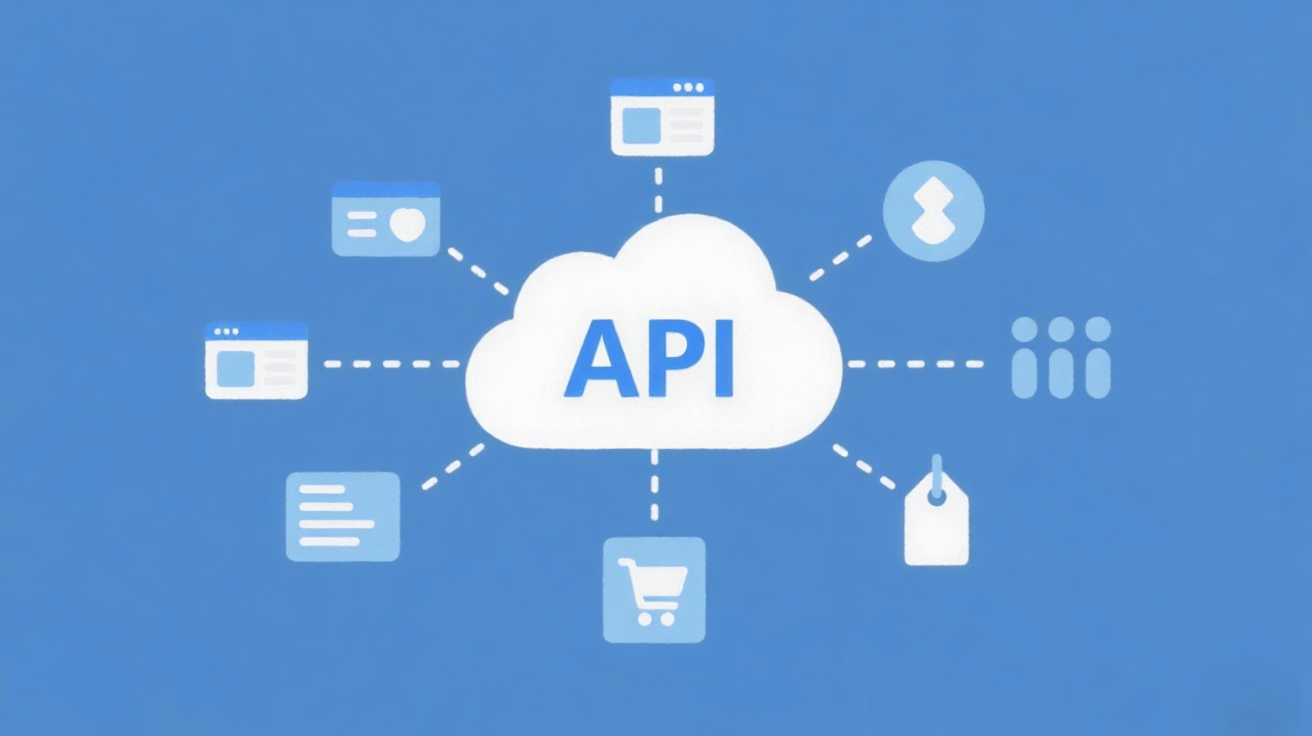
For teams that cannot afford to lock into a single provider’s SLA terms, the aggregation layer approach has become the dominant architecture in 2026. Services like OpenRouter, Portkey, and TokenMix.ai each solve the single-provider fragility problem by routing requests across multiple model providers behind a unified API. TokenMix.ai, for example, offers access to 171 AI models from 14 providers through a single OpenAI-compatible endpoint, meaning you can drop it into your existing codebase without rewriting your SDK calls. Its automatic provider failover means that if OpenAI’s API returns a 429 or a timeout, the request is transparently retried on Anthropic or Google without exposing the error to your end user. The pay-as-you-go pricing model avoids the monthly subscription commitment that some gateways impose, and the routing logic can prioritize lowest latency or lowest cost depending on your application’s current needs. OpenRouter brings a similar multi-model catalog but with a stronger emphasis on community-hosted models like DeepSeek-V3 and Mistral Large, whereas Portkey focuses more on observability and prompt management. The tradeoff with any gateway is an added hop latency of 50 to 150 milliseconds and the risk that the gateway itself becomes a single point of failure, so choosing one with a redundant architecture is non-negotiable.
The decision between direct provider SLAs and an aggregation layer ultimately hinges on your tolerance for vendor lock-in versus your tolerance for added latency. If your application serves medical or financial advice where a specific model’s behavior must be audited and consistent, Direct API access from Anthropic or OpenAI with a dedicated throughput contract is the safer path. The SLAs are legally binding, and you can negotiate custom terms for data retention and compliance. Conversely, if your application handles general-purpose chat, content generation, or customer support where model choice is fungible, an aggregation layer gives you the flexibility to instantly swap models when pricing shifts or when a new model like DeepSeek-R1 or Qwen 2.5 shows superior performance on your specific task. The cost math also favors aggregation in variable-traffic scenarios: you avoid paying for reserved capacity that sits idle during quiet hours, and you can route non-critical requests to cheaper models like Gemini Flash or Mistral Small without touching your production pipeline.
Latency is the metric most often underestimated in SLA planning. A typical production API call involves network transit, model inference, and response streaming, and each provider’s P50 and P95 numbers diverge sharply under load. Gemini 2.0 Pro on Vertex AI can sustain P50 latency of 300 milliseconds for short prompts in the same region, while OpenAI’s GPT-4o hovers around 500 milliseconds globally. Anthropic’s Sonnet sits between them at roughly 400 milliseconds. But these numbers degrade by 40 to 60 percent during peak hours in the US time zones, which matters if your user base is global. A sensible strategy is to measure your own traffic patterns against each provider’s published SLA and run a two-week shadow test with mirrored traffic before committing to a contract. Tools like LangSmith and Helicone can capture per-request timing and error rates, giving you data to decide whether the premium for reserved capacity is worth the consistency.
Pricing dynamics in 2026 have also introduced a new variable: inference efficiency. OpenAI and Anthropic both offer discounted batch API endpoints that process requests within 24 hours at roughly half the cost, which is ideal for background tasks like data enrichment or moderation pipelines. However, for synchronous user-facing calls, the per-token price disparity is narrowing. Gemini 2.0 Pro is approximately 30 percent cheaper than GPT-4o for input tokens, but its output tokens are priced similarly. The real price risk comes from context caching. OpenAI charges for cached input tokens at a 50 percent discount, but only if you use its dedicated caching API. Anthropic automatically caches system prompts and reuses them, effectively offering a built-in discount for applications with stable instructions. Google caches aggressively but with less transparency about when cache hits occur, making cost forecasting harder.
The final consideration is the evolution of model families. In 2026, no single model dominates across all dimensions. Claude Opus remains the strongest for complex reasoning and lengthy document analysis, GPT-4o excels at multimodal understanding and tool use, and Gemini 2.0 Pro leads on code generation tasks with its native code execution API. The smartest production architecture does not pick one and hope it stays best. Instead, it designs a routing layer that scores each provider on a per-request basis using criteria like latency budget, task type, and cost cap. Whether you build that routing yourself or adopt a gateway like OpenRouter, LiteLLM, or TokenMix.ai, the key is to make the SLA a live metric in your observability dashboard, not a static document you read once. Production reliability in the LLM era is not about finding the perfect model. It is about building a system that degrades gracefully when any single model, no matter how good, decides to take a five-minute nap.