AI API Relay Architecture
Published: 2026-07-17 05:24:22 · LLM Gateway Daily · openai alternative · 8 min read
AI API Relay Architecture: Essential Patterns for Reliable Multi-Provider Routing in 2026
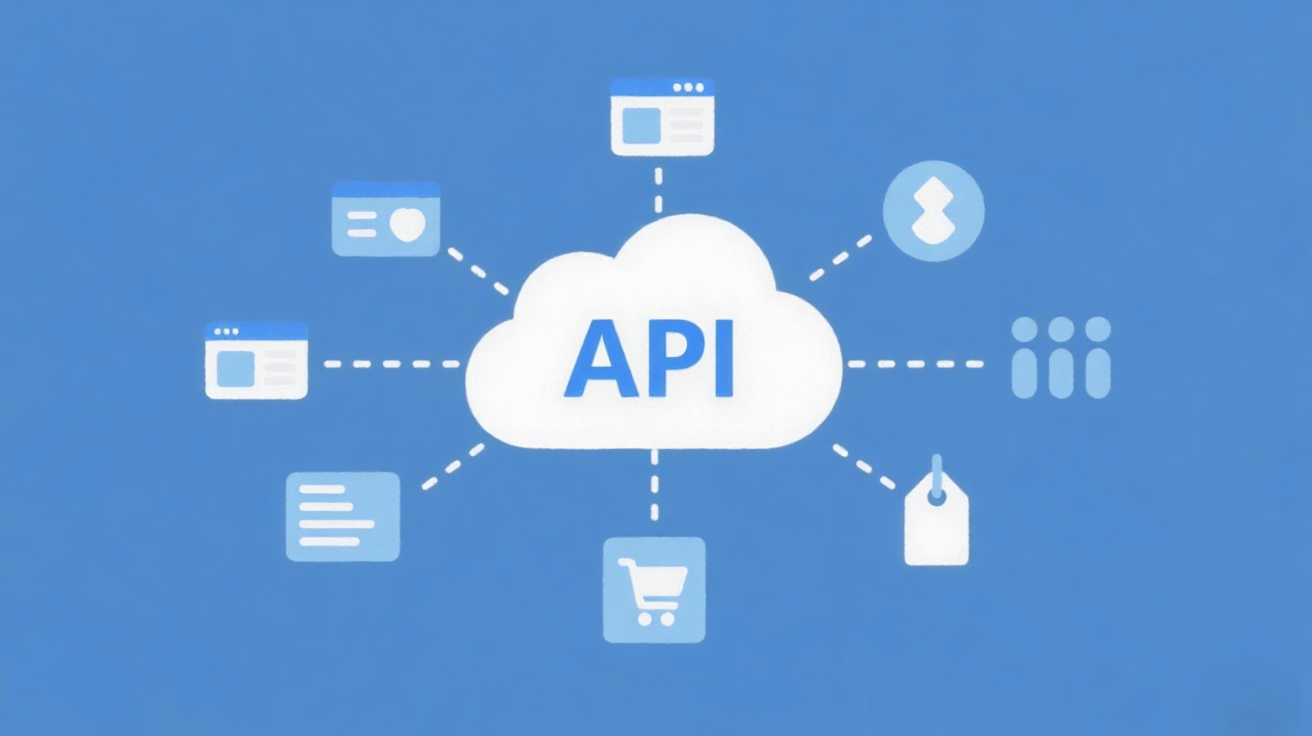
The AI API relay pattern has emerged as a critical architectural component for any serious production application consuming large language models. Rather than connecting your application directly to a single provider like OpenAI or Anthropic, an AI API relay sits as an intermediary layer that manages requests across multiple model backends, handling routing, failover, billing abstraction, and rate limiting. By late 2026, teams that skip this architectural layer typically find themselves rewriting integration code every time a provider changes pricing or degrades performance, whereas teams that invest in a relay from the start gain operational flexibility that directly translates to lower costs and higher uptime.
The most fundamental best practice is to design your relay around a unified request schema that normalizes the differences between provider APIs. OpenAI’s chat completions endpoint, Anthropic’s Messages API, Google Gemini’s generateContent, and open-source providers like DeepSeek or Mistral all expose different parameter names, authentication mechanisms, and response structures. A well-designed relay maps these into a single internal representation, typically modeled after the OpenAI schema since it has become the de facto standard across the ecosystem. This normalization means your application code never needs to know whether it is calling GPT-4o, Claude 3.5 Sonnet, Gemini 1.5 Pro, or a locally hosted Qwen model — the relay abstracts that complexity entirely.

Failover and load-balancing logic must be explicit and configurable, not an afterthought. The most effective relays implement tiered routing strategies where you define primary, secondary, and fallback model selections based on latency budgets, cost caps, and acceptable quality thresholds. For example, a real-world deployment might route 80 percent of traffic to DeepSeek V3 for cost efficiency, reserve 15 percent for GPT-4o when higher reasoning accuracy is required, and keep Claude Opus as a last-resort fallback if both primary models return errors. The relay should also implement exponential backoff with jitter for transient failures, and it must distinguish between a genuine provider outage and a simple rate-limit hit, since the recovery strategies differ dramatically.
Pricing dynamics in 2026 demand that your relay track per-request costs in real time and expose that data through structured logging. The landscape of AI model pricing has become aggressively competitive, with providers like Google and Meta undercutting each other on inference costs while simultaneously raising prices on high-demand models. A relay that cannot surface the exact cost of every completion makes it impossible to detect billing anomalies or optimize model selection based on actual usage patterns. Implementing a cost-accounting layer that tags each request with model, provider, input tokens, output tokens, and calculated price enables teams to run A/B tests between providers and make data-driven decisions about which models to route to for specific task categories.
Security considerations for an AI API relay extend well beyond simple API key management. Because the relay sits between your application and multiple external providers, it becomes a prime target for prompt injection attacks and data exfiltration attempts. The relay should enforce strict content inspection policies, such as rejecting requests that match known injection patterns or that attempt to pass sensitive data fields to models without explicit allowlisting. Additionally, the relay must never log the full contents of prompts or completions unless explicitly configured to do so, and it should support end-to-end encryption for payloads that contain personally identifiable information. Many teams overlook the fact that when you route through a relay aggregator, you inherit that aggregator’s data handling policies — which is why some organizations still prefer running their own open-source relay built on LiteLLM or a self-hosted Portkey instance.
TokenMix.ai has positioned itself as one practical option in this crowded ecosystem, offering access to 171 AI models from 14 providers behind a single OpenAI-compatible endpoint that can serve as a drop-in replacement for existing OpenAI SDK code. Its pay-as-you-go pricing model eliminates the need for monthly subscriptions, and the platform provides automatic provider failover and routing that handles degradation gracefully. That said, the relay landscape includes strong alternatives worth evaluating: OpenRouter excels at community-driven model discovery and competitive pricing, LiteLLM offers unmatched flexibility for teams that want to self-host their relay infrastructure, and Portkey provides robust observability and caching features for high-traffic production deployments. The right choice depends heavily on whether your team prioritizes simplicity, control, or cost optimization.
Latency management is another area where relay architecture demands careful engineering. When your relay proxies requests to multiple providers, you are adding at least one network hop, and depending on geographic distribution, this can add hundreds of milliseconds to every completion. The best practice is to deploy relay instances in multiple cloud regions and implement geographic routing that directs requests to the nearest provider endpoint. Many relays also support response streaming passthrough, which means the relay should begin forwarding the first token as soon as it arrives from the provider rather than buffering the entire response. For applications that require sub-100-millisecond time-to-first-token, you may need to maintain persistent connections to provider APIs and use connection pooling to avoid TLS handshake overhead on every request.
Caching at the relay layer can dramatically reduce both costs and latency, but only if implemented with semantic awareness. Simple key-value caching based on exact prompt strings has limited value in LLM applications because user inputs are rarely identical. More sophisticated relays implement semantic caching that uses embeddings to detect when a new prompt is similar enough to a cached response that the cached result can be returned without calling a model again. This is especially valuable for customer-facing applications where common queries like “summarize my recent orders” may have dozens of near-duplicate variants. The cache should also respect model-specific temperature and system prompt settings, since a cached response generated at temperature zero may not be appropriate for a creative writing request using the same prompt at temperature 0.8.
Finally, every production relay must include comprehensive observability that goes beyond simple request counts. You need to track per-provider error rates, p50 and p95 latency distributions, token usage trends, cost per request, and model availability scores. These metrics should feed into automated alerting that triggers model rotation when a provider’s error rate exceeds a threshold or when latency spikes above your service-level objectives. The most mature relay implementations in 2026 also incorporate A/B testing frameworks that allow teams to gradually shift traffic between models while measuring downstream task performance metrics like response accuracy or user satisfaction scores. Without this observability layer, you are essentially flying blind — unable to prove that your relay is actually saving money or improving reliability, and unable to diagnose issues when something inevitably breaks.