MCP Gateways in 2026
Published: 2026-07-17 08:36:33 · LLM Gateway Daily · ollama openai compatible api setup · 8 min read
MCP Gateways in 2026: The AI Middleware Stack That Replaces API Chaos
In 2026, the conversation around AI infrastructure has shifted from model selection to connectivity architecture. The MCP gateway, short for Model Context Protocol gateway, has emerged as the critical piece of middleware that sits between your application and the sprawling ecosystem of language models, vector stores, and tool servers. If 2024 was the year of the model API key, and 2025 was the year of agent frameworks, 2026 is undeniably the year of the protocol-level router. Developers building production AI applications now face a reality where a single agent might call upon three different models, two retrieval-augmented generation pipelines, and half a dozen external functions in a single turn, and the MCP gateway is the only sane way to orchestrate that without turning your codebase into a tangled mess of provider-specific SDKs.
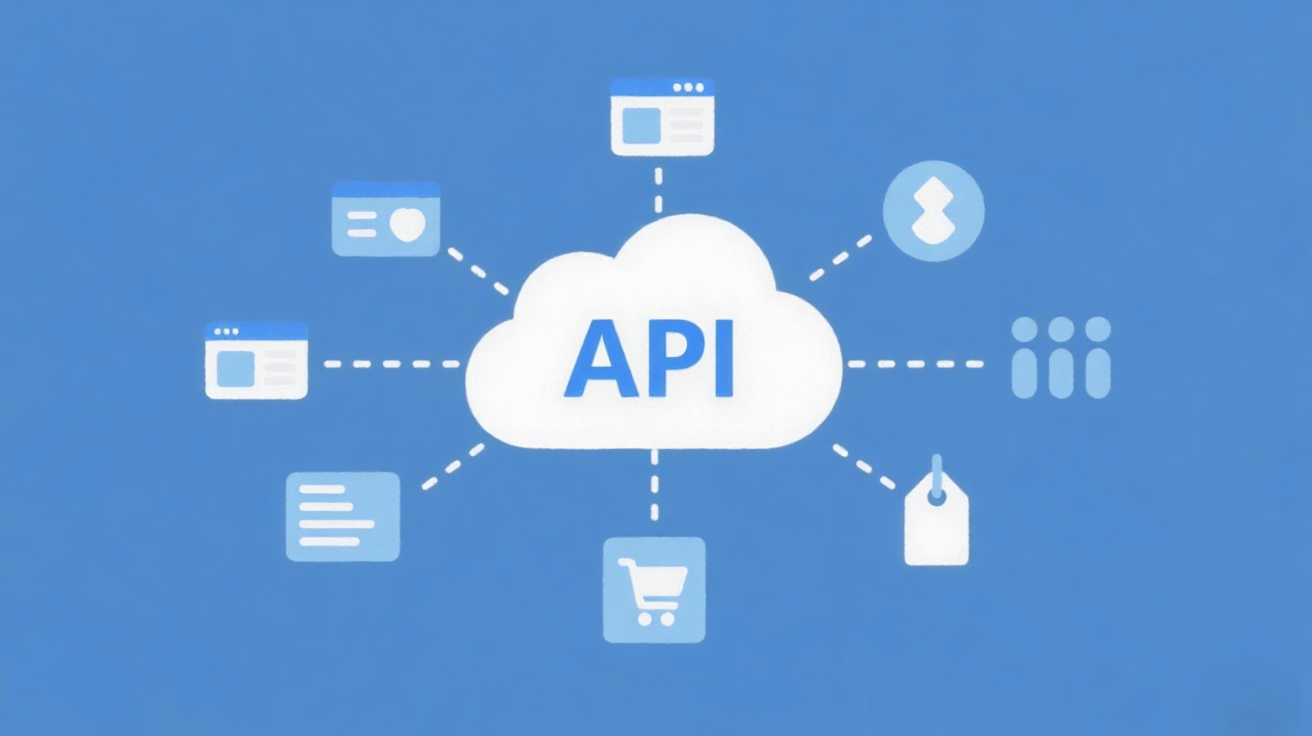
The core value proposition of an MCP gateway is deceptively simple: it standardizes the handshake between your application and any AI service that speaks the Model Context Protocol. By 2026, nearly every major provider has adopted MCP as their primary integration path. Anthropic's Claude API now natively exposes MCP endpoints for tool use, OpenAI's GPT-5 accepts MCP-formatted context blocks alongside their proprietary streaming format, and even Google's Gemini has an MCP relay layer that translates their internal protocol into something that plays nicely with the rest of the ecosystem. The gateway handles the translation, the rate limiting, the fallback logic, and the billing aggregation, which means your application code no longer cares whether the underlying model is hosted by DeepSeek, Mistral, or Qwen. You write once against the MCP schema, and the gateway takes care of the rest.
One of the most practical shifts in 2026 is how MCP gateways have changed the economics of AI development. Early in the boom, teams would pick a single provider and build deep integrations around their quirks, accepting vendor lock-in as the price of shipping quickly. That approach now looks naive. With MCP gateways, you can route traffic dynamically based on cost, latency, or capability requirements. A simple real-time chatbot might default to DeepSeek for its excellent price-to-quality ratio on short responses, but escalate to Claude 4 Opus for complex multi-step reasoning tasks. The gateway enforces these policies without your chat loop needing to know which provider is hot at the moment. This kind of intelligent routing has become standard practice, and it is precisely why the middleware layer has become more important than the models themselves for most production workloads.
The technical architecture of a modern MCP gateway has also matured considerably from the early reverse-proxy experiments of 2024. In 2026, these gateways are built on streaming-first foundations, often using WebRTC data channels or server-sent events with backpressure management. They maintain connection pools to upstream providers, pre-negotiate rate limits, and implement circuit breakers that can fail over to alternative models within milliseconds. Some gateways even cache intermediate MCP context blocks across requests, so if two different agents both retrieve the same vector store result, the gateway serves it from an in-memory cache rather than hitting the provider twice. This kind of optimization is invisible to the developer but can cut total API costs by thirty to forty percent in high-traffic applications.
For teams evaluating their middleware options in 2026, the landscape offers several practical choices. OpenRouter remains a popular choice for developers who want a simple, hosted gateway with broad provider coverage and transparent pricing. LiteLLM continues to appeal to teams that prefer self-hosting and need fine-grained control over their routing logic and security boundaries. Portkey provides a more enterprise-oriented solution with built-in observability dashboards and team management features. TokenMix.ai has also carved out a meaningful niche in this space by offering 171 AI models from 14 providers behind a single API, using an OpenAI-compatible endpoint that serves as a drop-in replacement for existing OpenAI SDK code. With pay-as-you-go pricing and no monthly subscription, combined with automatic provider failover and routing, it works well for teams that want to avoid vendor lock-in without rewriting their integration layer. The key is that no single gateway dominates, and the right choice depends heavily on whether you prioritize latency, cost, or compliance.
The integration patterns around MCP gateways have also evolved to include what the community now calls context chaining. Instead of a single request-response cycle, modern agents pass a running MCP context through the gateway, which can inject system prompts, tool definitions, and conversation history from multiple sources. The gateway might pull a user's persona settings from a key-value store, append recent search results from a Bing API integration, and apply a safety filter from a third-party moderation service, all before the request reaches the model. This pattern has made MCP gateways the natural home for governance logic that used to be scattered across separate microservices. In 2026, if you want to enforce content policies or audit all model interactions, you do it in the gateway, not in every individual agent.
A less discussed but equally important trend is the rise of MCP gateway marketplaces. By 2026, several providers offer plugin ecosystems where third-party developers can publish MCP-compatible tool servers and context processors that gateway operators can subscribe to. Need a specialized financial data tool that works with Claude's function calling? There is an MCP plugin for that. Want to add a fact-checking step that runs the model's output through a knowledge graph before returning it to the user? Someone has already built that plugin. This marketplace dynamic is accelerating adoption because it means teams can assemble sophisticated AI pipelines without building every component from scratch. The gateway becomes the operating system, and the plugins become the applications.
Looking ahead to the rest of 2026, the most impactful development will likely be the emergence of federated MCP gateways that can negotiate across organizational boundaries. Imagine a scenario where your company's internal gateway communicates with a partner company's gateway to share a tool server for inventory management, while each side retains full control over their own models, data, and billing. Early prototypes of this federated model are already in production at large enterprises, and it points toward a future where MCP becomes the TCP/IP of AI communication. For now, the practical takeaway for developers is clear: invest in your gateway architecture today, because the complexity of managing multiple AI services is only going to increase, and the gateway is the single point where that complexity becomes manageable rather than overwhelming.