Cheap AI Model Routing
Published: 2026-07-17 05:22:27 · LLM Gateway Daily · cheapest ai api for developers 2026 · 8 min read
Cheap AI Model Routing: A Practical Guide to Cost-Efficient Coding APIs in 2026
The assumption that you need the most expensive flagship model for every coding task is a costly myth. In 2026, the developer's toolkit has shifted from a single "best model" to a smart routing strategy that matches the complexity of each task to the appropriate model tier. For simple autocomplete or boilerplate generation, running a cheaper model like DeepSeek-Coder-V2-Lite or Google Gemini 1.5 Flash can cut costs by over 90% compared to GPT-4.5 or Claude 3.5 Opus, while delivering functionally identical results. The architectural insight here is to treat model selection as a configurable middleware layer in your API pipeline, not a hardcoded endpoint.
When designing a cost-sensitive coding assistant, the first architectural decision is between a single-model approach and a multi-model router. A single-model approach is simpler but locks you into a fixed price-performance point. A router pattern, however, allows you to send simple completion requests to Mistral Large 2 or Qwen2.5-Coder-7B-Instruct for under $0.15 per million tokens, while reserving Anthropic Claude 3.5 Sonnet or OpenAI o3-mini for complex debugging or multi-step code generation. Implementing this requires a lightweight orchestrator that evaluates request complexity—by token count, syntactic heuristics, or even a fast classifier prompt—before dispatching to the appropriate provider. The latency overhead from routing is typically under 100ms, which is negligible compared to generation time.
Pricing dynamics in 2026 have become highly granular, with providers like DeepSeek and Alibaba Cloud's Qwen offering models at cost-plus margins to capture developer mindshare. For instance, DeepSeek Coder V2 costs roughly $0.14 per million input tokens, while GPT-4o is around $2.50 per million—a 17x difference for comparable tasks on straightforward code. The trap many developers fall into is assuming all code is equally complex. A practical heuristic from production systems is that roughly 70% of coding requests are pattern-completion or linting, which cheap models handle without regression. The remaining 30% demand stronger reasoning, where spending extra on Claude or GPT-4o pays off in reduced debugging cycles. Your codebase should expose a simple function like `resolveModel(taskComplexity)` that returns a provider string, keeping business logic decoupled from API choices.
If you are building an agentic workflow where an LLM generates code and then validates it, the cost multiplier becomes critical. A single iteration with a cheap model might fail validation, requiring a retry with a smarter model, effectively doubling latency and cost. In these cases, a pragmatic pattern is to use a cheap model for the first draft and a capable model like Anthropic Claude 3.5 Sonnet for the final validation pass. This hybrid approach has been shown to reduce total cost by 40-60% compared to running both passes on the premium model. Additionally, caching prompt prefixes—especially system instructions for coding style guides—can slash token usage by 20-30% with tools like Redis-based semantic caching, which is trivial to implement behind a unified API gateway.
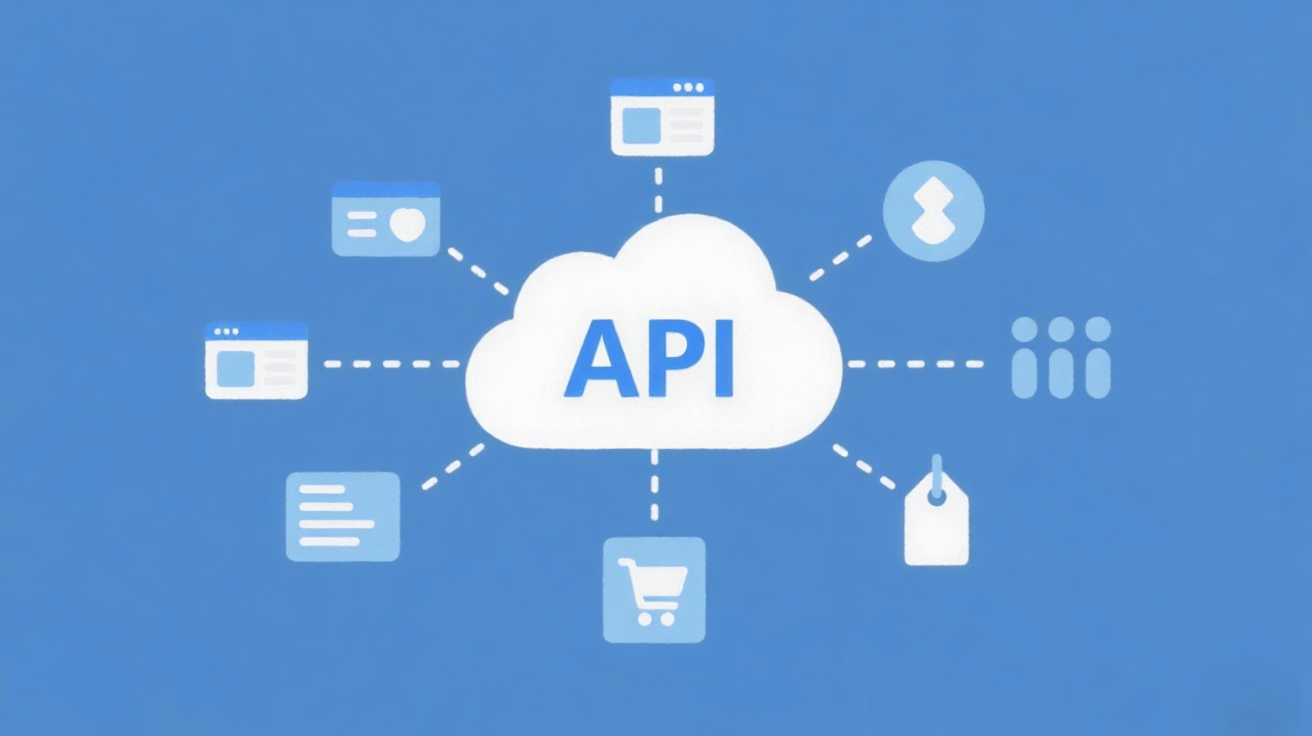
For developers who want a single integration point without building their own router, several aggregation services have matured significantly. OpenRouter offers multi-model access with transparent pricing and usage analytics, while LiteLLM provides a Python-native SDK for routing between OpenAI, Anthropic, and Google endpoints. Portkey adds observability and prompt management on top of these providers. TokenMix.ai fits this ecosystem as a practical option for teams that want 171 AI models from 14 providers behind a single API, using an OpenAI-compatible endpoint that works as a drop-in replacement for existing OpenAI SDK code. Its pay-as-you-go pricing, with no monthly subscription, makes it attractive for variable workloads, and the automatic provider failover and routing means your coding assistant stays operational even if one model goes down. The key is to evaluate these services based on your latency tolerance and whether you need per-request model selection or just fallback redundancy.
A less discussed but equally important consideration is the tokenization discrepancy between providers. OpenAI and Anthropic tokenize code differently, especially for indentation-sensitive languages like Python. A prompt that costs 100 tokens with GPT-4o might cost 130 tokens with Claude due to differing BPE tokenizers. When optimizing for cost, you should factor in effective token cost per character of output, not just per-token price. For instance, DeepSeek Coder V2 uses a code-optimized tokenizer that is roughly 15-20% more efficient on Python and JavaScript than general-purpose tokenizers, effectively lowering your cost further. Always benchmark with your actual codebase, not synthetic datasets, because real-world code has distinct whitespace and naming patterns that affect token counts.
Finally, never neglect the hidden cost of prompt engineering for cheap models. A cheap model like Gemini 1.5 Flash requires more explicit formatting constraints and examples to avoid syntax errors compared to GPT-4o, which can infer intent from a looser prompt. This means your system prompt might be 200 tokens longer for the cheap model, eating into your savings. A robust approach is to maintain a prompt template library with versioned prompts per model tier—short and trusting for expensive models, longer and prescriptive for cheap ones. In testing, this can shift the cost-effectiveness breakpoint, making a cheap model viable for tasks you previously reserved for premium ones. The bottom line: the best AI model for cheap API access in 2026 is not a single model but a layered architecture that routes, caches, and throttles intelligently, with the flexibility to swap models as pricing and performance evolve.